

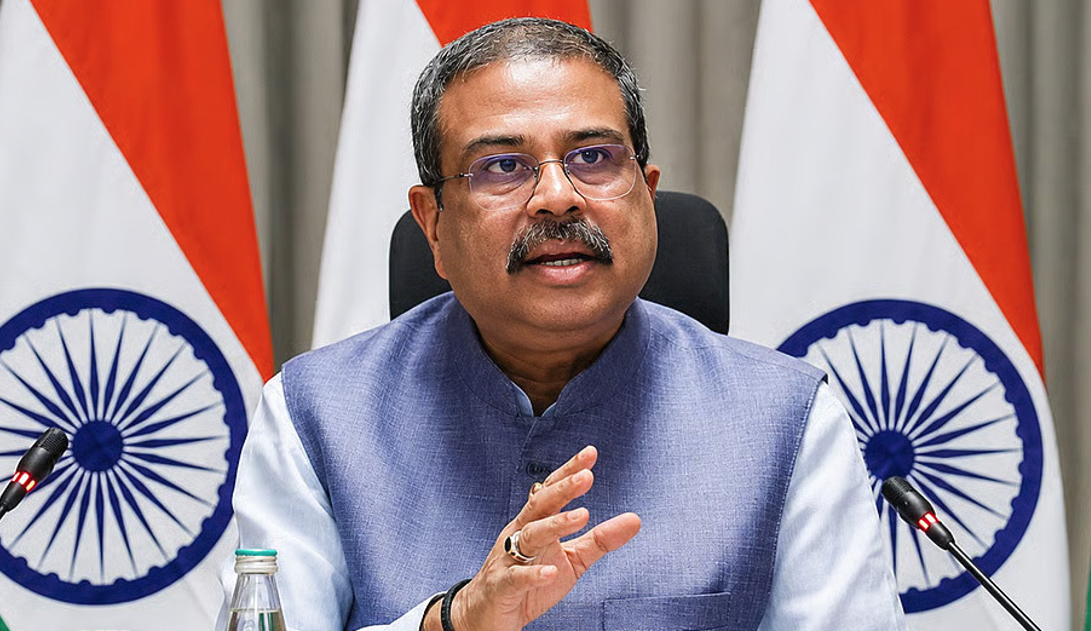

Dharmendra Pradhan Resigns as Education Minister, ending his tenure after weeks of nationwide protests over alleged examination irregularities and demands for accountability. His resignation marks one of the most significant political developments in India’s education sector in recent years and has prompted the government to announce a new phase of education reforms.
The resignation follows sustained demonstrations led by students and youth groups who expressed concerns over examination paper leaks and the need for greater transparency in the country’s examination system. As public pressure intensified, the government accepted Pradhan’s resignation and moved quickly to appoint a successor.
Why Did Dharmendra Pradhan Resign?
The immediate trigger for the resignation was growing public anger over alleged examination paper leaks and concerns about the integrity of competitive examinations.
Student organizations organized protests in several cities, demanding stronger safeguards against exam malpractice, accountability from education authorities, and reforms to restore confidence in the examination process. Over time, these protests gained nationwide attention and increased political pressure on the government.
Although the government had initially defended its handling of the situation, the continuing demonstrations eventually led to Pradhan stepping down from his position.
Student Protests Gain Momentum
The protests were largely driven by students preparing for competitive examinations and those affected by reported examination irregularities.
Protesters called for:
- Greater transparency in examinations.
- Stronger measures to prevent paper leaks.
- Faster investigations into alleged malpractice.
- Improved accountability within examination agencies.
- Comprehensive reforms to restore public trust.
Many students argued that fair examinations are essential because millions of young people depend on them for higher education and career opportunities.
Government Announces Education Reforms
Soon after the resignation, Prime Minister Narendra Modi announced the formation of a high-level task force to review India’s examination system and recommend reforms.
According to government announcements, the committee will focus on:
- Improving examination security.
- Using technology to reduce fraud.
- Increasing transparency.
- Strengthening investigation procedures.
- Introducing stricter penalties for examination-related crimes.
The government has also indicated that new legislation will be introduced to strengthen the legal framework against examination malpractice.
Pralhad Joshi Takes Charge
Following Dharmendra Pradhan’s resignation, senior BJP leader Pralhad Joshi was appointed as the new Union Education Minister.
Joshi inherits one of the most challenging portfolios in the government. His immediate priorities are expected to include restoring confidence in the examination system, implementing reforms, and addressing concerns raised by students across the country.
Dharmendra Pradhan’s Tenure
Dharmendra Pradhan served as India’s Education Minister since 2021.
During his tenure, the ministry focused on:
- Implementing the National Education Policy (NEP).
- Expanding digital education initiatives.
- Promoting skill development.
- Strengthening higher education institutions.
- Supporting innovation and research.
Despite these initiatives, recent examination controversies overshadowed many of the ministry’s achievements and eventually led to his resignation.
Political Reactions
Pradhan’s resignation has sparked strong reactions across the political spectrum.
Opposition parties described the move as a response to sustained public pressure and renewed calls for accountability in the education sector. Student organizations welcomed the decision but emphasized that leadership changes alone would not solve deeper structural issues.
Many education experts also noted that rebuilding trust would require long-term institutional reforms rather than short-term measures.
Why This Matters for Students
The resignation is significant because India’s competitive examinations affect millions of students every year.
Students are looking for:
- Fair examination procedures.
- Secure question paper management.
- Transparent recruitment processes.
- Faster investigation of irregularities.
- Equal opportunities based on merit.
Restoring confidence in these systems remains one of the government’s biggest challenges.
Challenges Ahead
The new Education Minister will face several immediate priorities, including:
- Reforming examination processes.
- Strengthening cybersecurity and paper security.
- Improving coordination among examination agencies.
- Enhancing transparency in recruitment exams.
- Communicating reforms clearly to students and parents.
Successfully implementing these measures will be critical to rebuilding public confidence.
Broader Impact on Education Policy
The resignation has reignited national discussions about examination reforms and educational governance.
Experts believe that future reforms may include greater use of digital technologies, improved monitoring systems, enhanced encryption for examination papers, and independent oversight mechanisms to reduce the risk of malpractice.
If implemented effectively, these measures could modernize India’s examination system and improve its credibility.
What Happens Next?
The Ministry of Education is expected to continue working on proposed reforms while the newly appointed minister begins reviewing ongoing policies.
Students and educational institutions will closely watch the government’s next steps, particularly any legislative changes and improvements in examination management.
The success of these reforms will likely determine whether confidence in India’s education system can be restored in the coming months.
Conclusion
The news that Dharmendra Pradhan Resigns as Education Minister marks a significant turning point for India’s education sector. Triggered by nationwide protests over examination-related concerns, the resignation reflects growing public demand for transparency, accountability, and meaningful reform.
With Pralhad Joshi now leading the Ministry of Education, attention turns to how quickly and effectively the government can implement promised reforms. Students, parents, and educators alike will be watching closely as India seeks to strengthen its examination system and rebuild trust in one of the country’s most important public institutions.
Read Also / Sonam Wangchuk Ends 26-Day Hunger Strike After Government Assurances









Leave a comment