

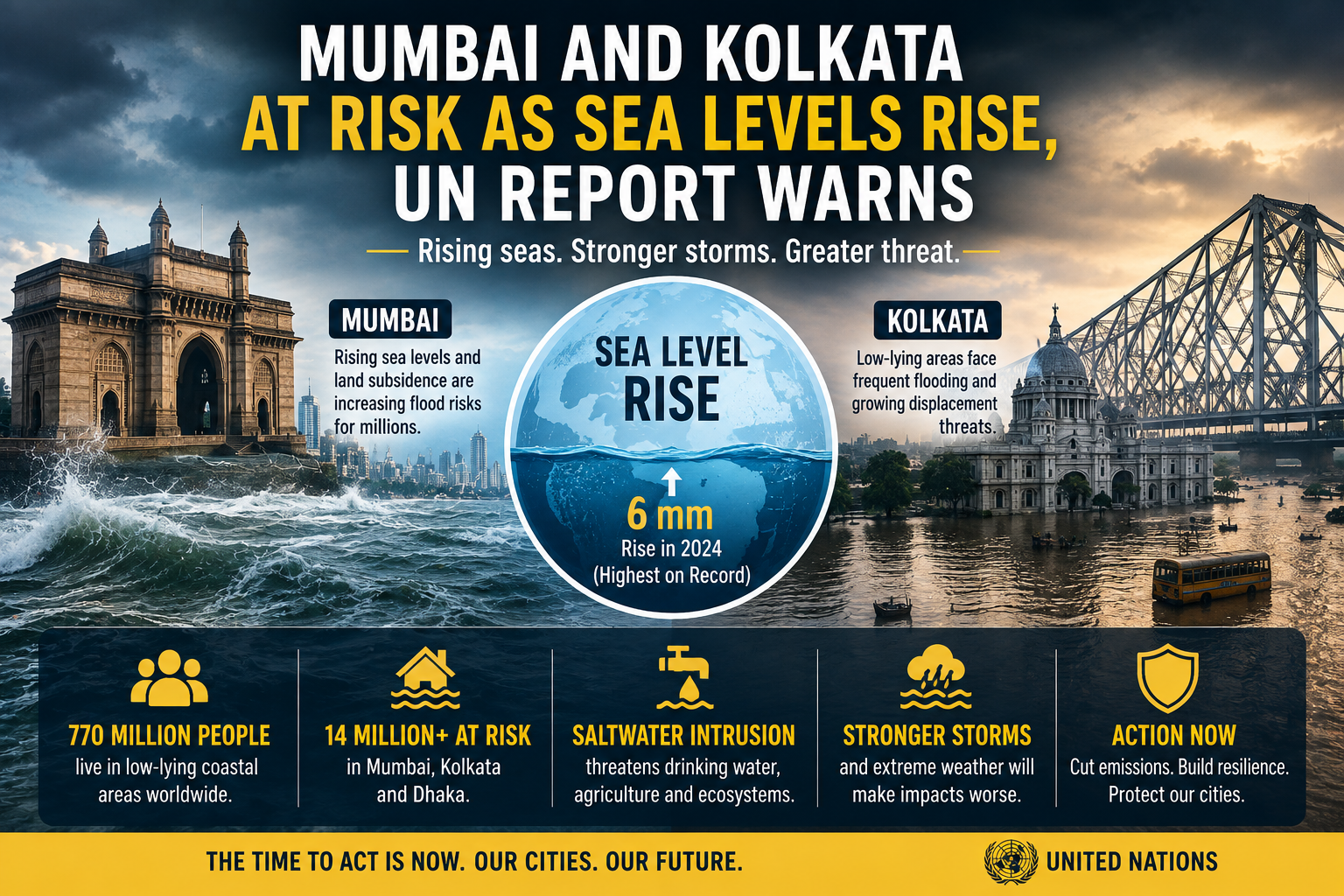

Mumbai and Kolkata are facing growing risks from rising sea levels, according to a new report highlighted by the United Nations in India. The report warns that low-lying coastal and delta cities are increasingly exposed to flooding, displacement and damage to infrastructure.
The UN report, published on September 3, 2026, says sea-level rise is no longer a distant environmental concern. It is already affecting communities, economies and infrastructure around the world. Mumbai and Kolkata have been identified among the South Asian cities where rising seas and land subsidence are intensifying the risks.
The warning comes as climate change continues to increase ocean temperatures and accelerate the melting of glaciers and ice sheets.
Why Mumbai and Kolkata Are Vulnerable
Mumbai and Kolkata have different geographical features, but both are exposed to coastal and flooding risks.
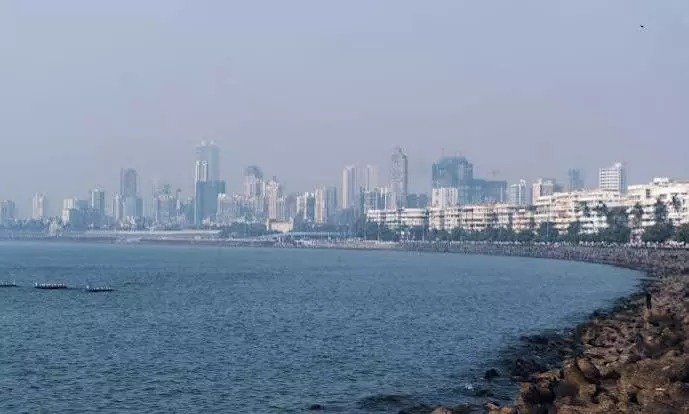
Mumbai is a densely populated coastal city located along the Arabian Sea. Large parts of the city are relatively low-lying, while heavy rainfall can already create serious flooding during the monsoon season.
Kolkata is located in the lower Ganges-Brahmaputra delta region. Its low elevation makes the city and surrounding areas vulnerable to flooding and rising water levels.
The UN says the effects of sea-level rise can become more severe when land subsidence occurs. In simple terms, land subsidence means that the ground gradually sinks. When land falls while sea levels rise, coastal communities can face greater flooding risks.
More Than 14 Million People Face Risk
One of the most concerning findings in the UN report relates to low-lying South Asian delta cities.
The report highlights Mumbai, Kolkata and Dhaka as cities where sea-level rise is contributing to a growing risk of displacement. More than 14 million people in these areas are identified as being at immediate risk of losing their homes to permanent inundation.
Permanent inundation happens when land is regularly or permanently covered by water. Such changes can affect homes, roads, public services and local economies.
The threat is therefore larger than occasional flooding. Long-term sea-level rise could create pressure on communities that live and work in vulnerable coastal areas.
Rising Seas Can Affect Drinking Water
Sea-level rise can create another serious problem through saltwater intrusion.
When seawater moves into freshwater systems, wells and underground water sources can become contaminated. The UN warns that saltwater intrusion can affect drinking water, agriculture, irrigation and groundwater ecosystems.
This issue can be particularly important for densely populated coastal regions.
Farmers may face problems when agricultural soil becomes more saline. At the same time, communities that depend on groundwater could face increasing pressure on freshwater supplies.
For cities such as Mumbai and Kolkata, the consequences could extend beyond individual neighbourhoods. Water systems, transport networks, businesses and other essential services can also be affected.
Global Sea Levels Are Rising Faster
The UN report points to a major acceleration in global sea-level rise.
According to the report, average ocean levels are increasing because of warming waters and melting glaciers and ice sheets. In 2024, the annual increase reached nearly 6 millimetres, which the UN described as the highest level recorded.
Around 770 million people, or approximately one in every 10 people worldwide, currently live in coastal areas less than five metres above the high-tide line.
This makes sea-level rise a global issue rather than a problem limited to small island nations.
Mumbai and Kolkata Could Face More Flooding Pressure
For Mumbai, rising sea levels could add another layer of pressure to an already complex flooding environment.
Heavy rainfall, coastal flooding, drainage problems and land-use changes can combine during extreme weather events. Higher sea levels can make it harder for floodwater to drain into the ocean.
Kolkata faces similar concerns because of its location within a major delta system. Low-lying communities in and around the city could become increasingly exposed as sea levels continue to rise.
The UN does not suggest that either city will suddenly disappear underwater. Instead, the report warns that climate-related risks are increasing and that preparation is becoming increasingly important.
Economic and Infrastructure Risks
The impact of rising seas will not be limited to residential areas.
Ports, roads, railways, power systems, businesses and other critical infrastructure can be exposed to rising mean and extreme sea levels. The UN says coastal economic activity and essential services are also increasingly vulnerable.
Mumbai is one of India’s most important financial and commercial centres. Its port, transportation networks and large business districts make climate resilience particularly important.
Kolkata is also an important economic and transport centre for eastern India. Damage to infrastructure could have consequences far beyond areas directly affected by flooding.
UN Calls for Urgent Climate Action
The UN report calls for stronger international cooperation and faster action to address sea-level rise.
Among its recommendations are accelerated reductions in greenhouse gas emissions, stronger early-warning systems, greater financing for climate adaptation and improved scientific data collection. Support for communities at risk is also highlighted.
Adaptation could involve stronger coastal protection, improved drainage systems, better flood forecasting and more resilient infrastructure.
For cities like Mumbai and Kolkata, long-term planning will be essential. Urban development decisions made today could influence how communities cope with future climate risks.
What the Warning Means for India
The Mumbai Kolkata sea level rise warning is part of a much larger global climate challenge.
India has a long coastline and millions of people live in coastal areas. Rising seas can threaten homes, jobs, freshwater supplies and infrastructure if adequate preparation is not undertaken.
The UN’s message is not that disaster is inevitable. Instead, it emphasizes that the scale of future damage will depend heavily on decisions made now.
Reducing emissions can limit the amount of future warming and sea-level rise. At the same time, cities can invest in adaptation measures that protect residents and critical infrastructure.
A Growing Climate Challenge for India’s Coastal Cities
The latest UN report puts Mumbai and Kolkata among the South Asian cities facing serious and growing sea-level risks. The combination of rising seas and land subsidence could increase flooding and displacement pressures in vulnerable areas.
The challenge will require cooperation between governments, scientists, businesses and local communities.
For Mumbai and Kolkata, climate resilience is likely to become an increasingly important part of urban planning. The choices made today could determine how effectively both cities protect their people, infrastructure and economies in the decades ahead.
Also Read | AI and Technology Remain Major Drivers of New Business Investment in India













Leave a comment