


Saudi Arabia, Turkey and Pakistan Activate Defence Pact
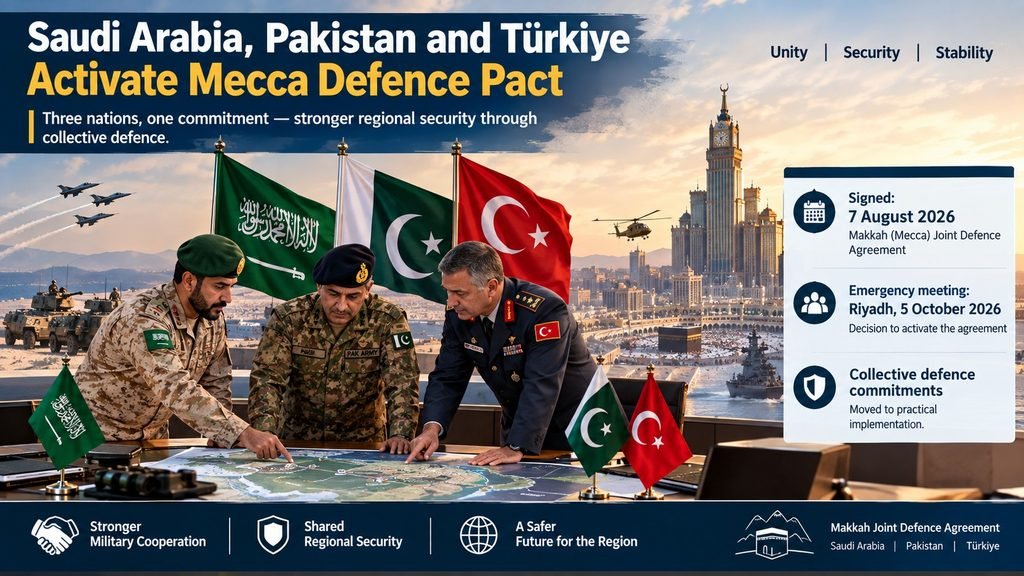
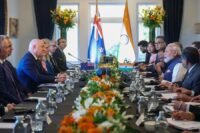
Saudi Arabia, Pakistan and Turkey have moved to activate their collective defence agreement, marking a major new step in military cooperation between the three countries. The decision was taken during an emergency meeting of the Strategic Political and Defence Committee of the Makkah Alliance for Defense in Riyadh on October 5, 2026, as security tensions around Saudi Arabia and Yemen continue to rise.
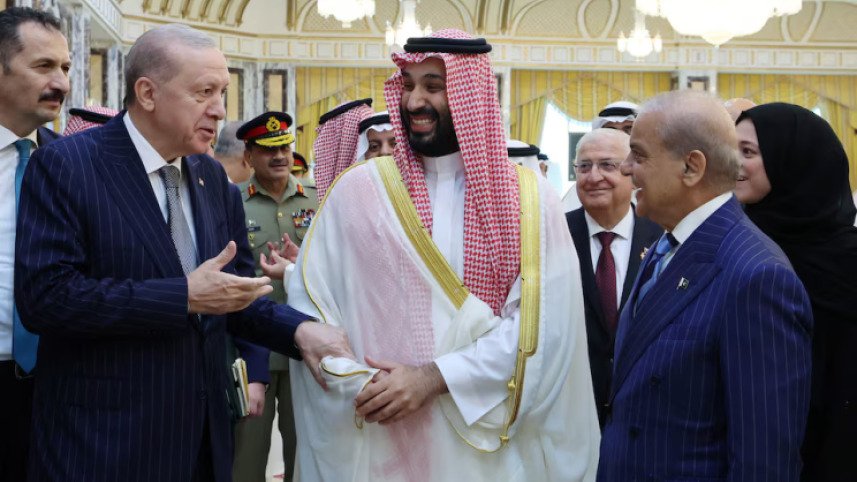
The agreement is formally known as the Makkah Joint Defence Agreement. It was signed in Makkah on August 7 by Saudi Crown Prince and Prime Minister Mohammed bin Salman, Turkish President Recep Tayyip Erdogan and Pakistani Prime Minister Shehbaz Sharif. The agreement says that an armed attack against one of the three countries is to be regarded as an attack against all three.
The latest decision does not simply repeat that political commitment. The three countries have now agreed to move toward practical implementation, including the provision and rapid deployment of agreed military forces and capabilities in Saudi Arabia, subject to national laws and approved arrangements.
Why Was the Agreement Activated?
The move comes amid a sharp increase in fighting involving Yemen’s Iran-backed Houthi movement and Saudi Arabia.
Saudi-backed Yemeni government forces have launched a major offensive around the strategic Bab el-Mandeb Strait, while Saudi Arabia has carried out airstrikes against Houthi positions. The conflict has also raised concerns about attacks on Saudi cities, airports and economic infrastructure.
The Makkah Alliance said the three countries condemned attempted attacks on Makkah and Madinah, as well as attacks on Saudi cities and civilian and economic facilities. The joint statement said the countries considered the security of each member an integral part of their collective security.
This security environment has given the relatively new alliance an immediate test.
What Does the Collective Defence Agreement Mean?
The central principle of the pact is collective defence.
According to the Turkish government’s announcement when the agreement was signed, the agreement is designed to strengthen collective deterrence against aggression. It states that an armed attack on any one of the three countries would be considered an attack against all three. It also calls for broader defence cooperation among the members.
In simple terms, the agreement creates a framework in which Saudi Arabia, Pakistan and Turkey can coordinate more closely when one member faces a serious security threat.
However, the activation should not automatically be interpreted as a declaration of a new war involving all three states. The October 5 decision refers to agreed military forces and capabilities, rapid deployment and practical implementation. The exact scale and type of each country’s contribution will depend on the arrangements approved by the governments.
Pakistan and Turkey Prepare for a Bigger Role
Pakistan has publicly pledged to defend Saudi Arabia under the new agreement.
Pakistani Defence Minister Khawaja Muhammad Asif said Pakistan would support Saudi Arabia against Houthi attacks using all available means, although he did not confirm whether Pakistani forces would take part directly in airstrikes.
Turkey has also been strengthening its military relationship with Saudi Arabia. Reuters reported that Turkish and Pakistani officials have been discussing implementation of the agreement as the regional situation worsens. Turkish and Pakistani officials were among those involved in the emergency Riyadh meeting.
The activation therefore gives both countries a more formal framework for responding to threats affecting the kingdom.
New Leadership for the Alliance
The Riyadh meeting also focused on building the alliance’s institutional structure.
The three countries appointed Lieutenant General Nauman Mahmood (Ret.) of Pakistan as the first Secretary-General of the Makkah Alliance for Defense for a three-year term. Saudi and Pakistani official statements described the appointment as part of the effort to develop the alliance’s institutions and improve coordination.
The appointment suggests that the three countries want the agreement to become a functioning defence framework rather than remain only a political declaration.
Why Saudi Arabia Is Central to the Pact
Saudi Arabia is currently at the center of the regional security crisis.
The kingdom faces threats from missile and drone attacks linked to the conflict in Yemen, while important infrastructure and transport routes remain exposed. Reuters reported that Riyadh is seeking stronger defensive support as it considers military options aimed at restoring control over areas around the Bab el-Mandeb shipping route.
Protecting oil facilities, airports, cities and shipping infrastructure is therefore a major priority.
The new agreement allows Saudi Arabia to seek coordinated assistance from two important partners with significant military capabilities.
Importance for the Middle East
The Saudi Arabia-Turkey-Pakistan defence agreement could influence the balance of security cooperation in the wider Middle East.
Saudi Arabia has traditionally relied heavily on security partnerships with the United States and other Western states. The new pact adds another regional framework involving two countries with strong military capabilities and longstanding ties to Riyadh.
Reuters has described the wider environment as a period in which Gulf countries are exploring new security arrangements amid uncertainty about the U.S. regional role.
For Pakistan and Turkey, closer defence cooperation with Saudi Arabia could also increase their regional diplomatic and strategic influence.
Could the Pact Expand?
The alliance may not remain limited to its original three members.
Pakistan’s Foreign Minister Ishaq Dar said several countries have expressed interest in joining the defence framework, although new members would be considered only after the pact becomes fully operational.
That means the October 5 decision could be an early stage in the development of a broader regional security structure.
Whether the alliance expands will depend on how successfully the three founding members coordinate their defence policies and respond to the current crisis.
Risks and Challenges
The agreement also carries risks.
If fighting in Yemen expands or Houthi attacks intensify, the three countries could face difficult decisions about how far their military commitments should go. Direct involvement by foreign forces could widen the conflict and increase pressure on regional countries.
At the same time, the members will need to maintain coordination with other major powers, including the United States, while managing their relationships with Iran and other regional actors.
The alliance’s success will therefore depend not only on military strength but also on diplomacy, communication and careful decision-making.
Conclusion
The activation of the Saudi Arabia, Turkey and Pakistan collective defence agreement marks a significant development in Middle Eastern security.
The Makkah Joint Defence Agreement, signed on August 7, states that an armed attack on one member will be treated as an attack on all. On October 5, the three countries agreed to begin practical implementation and prepare for the rapid deployment of agreed military forces and capabilities in Saudi Arabia.
The move comes as fighting between Saudi-backed forces and Iran-backed Houthis intensifies in Yemen and concerns grow about attacks on Saudi territory and vital infrastructure.
Also Read | Taiwan Uses Water Cannon on Chinese Fishing Boat After It Refuses to Leave Restricted Waters










Leave a comment