



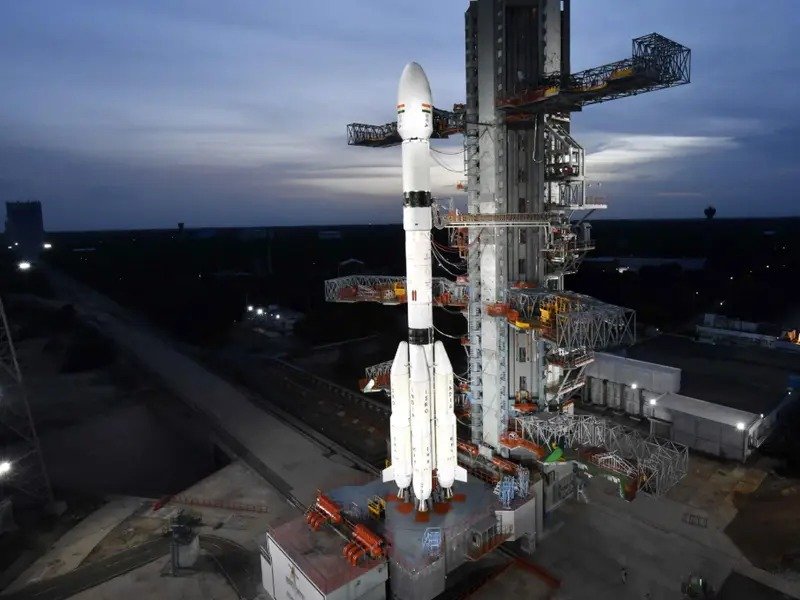
The Indian Space Research Organisation (ISRO) is preparing for a major space mission as it gets ready to launch the EOS-05 satellite aboard the GSLV-F17 rocket. The launch is scheduled for September 4, 2026, at 2:55 AM IST from the Second Launch Pad at the Satish Dhawan Space Centre in Sriharikota, Andhra Pradesh.
The mission is attracting attention because EOS-05 will become India’s first imaging satellite designed to operate from a geosynchronous orbit. The satellite is expected to provide repeated observations of large areas of Earth and strengthen India’s capabilities in weather monitoring, disaster management, agriculture and environmental observation.
GSLV-F17 Will Carry EOS-05 Into Space
EOS-05 will be launched using the GSLV-F17, which is the 19th flight of India’s Geosynchronous Satellite Launch Vehicle. According to ISRO, the rocket will place the satellite into a Sub-Geosynchronous Transfer Orbit, also known as Sub-GTO.
The satellite will not immediately reach its final operational position. After separation from the rocket, its onboard propulsion system will be used to gradually raise its orbit and place it in the intended geosynchronous position.
This approach will allow the satellite to remain over nearly the same region of Earth for extended periods. As a result, more frequent images and observations can be collected compared with many conventional Earth observation satellites in lower orbits.
Why EOS-05 Is an Important Mission
The ISRO EOS-05 satellite launch is significant because it will introduce a new type of Earth observation capability for India.
Traditional low-Earth-orbit satellites move around the planet and observe a particular region whenever they pass overhead. EOS-05 is designed to operate much farther away, at roughly 36,000 kilometres above Earth, allowing it to repeatedly monitor broad areas.
This capability can be especially useful when fast-changing events need to be tracked. Weather systems, cyclones, floods and forest fires can develop quickly, so frequent observations can provide valuable information to authorities and scientists.
The satellite is also expected to support agriculture and environmental monitoring. Data collected from space can help officials understand changes on the ground and improve planning during emergencies.
EOS-05 Can Support Disaster Management
One of the major applications of EOS-05 will be disaster monitoring. Natural disasters often require fast and reliable information, especially when roads, communication networks or other infrastructure are damaged.
Frequent satellite observations can help officials track the movement and spread of floods, cyclones and large fires. The information can also be used to support relief operations and emergency planning.
EOS-05 is therefore expected to become an important part of India’s broader Earth observation infrastructure.
Its continuous regional viewing capability could improve the speed at which information is collected and delivered to agencies responsible for disaster response.
A Major Step for Weather Monitoring
Weather forecasting is another important area where EOS-05 could make a difference.
The satellite’s geosynchronous position will allow it to repeatedly observe the same broad region. This can be useful for monitoring cloud formations, severe weather and developing cyclones.
More frequent observations can give meteorologists additional information when they track rapidly changing weather systems. Such data can support better forecasts and early-warning systems.
For a country as large and geographically diverse as India, stronger weather and disaster monitoring can provide benefits across many states and regions.
EOS-05 Mission Follows Earlier Setback
The upcoming mission also has a strong connection with an earlier unsuccessful attempt.
In August 2021, the GSLV-F10 mission carrying the earlier EOS-03, also known as GISAT-1, failed to place the satellite into orbit after an anomaly in the rocket’s cryogenic upper stage.
The new EOS-05 mission is therefore being closely watched by the Indian space community. A successful launch would represent another important step toward establishing India’s geosynchronous imaging capability.
It would also demonstrate the reliability of the GSLV after several years of development and operational experience.
ISRO Returns to the Launch Pad
The GSLV-F17 mission comes after a significant gap in India’s launch schedule. Reports said the mission could end a launch gap of around seven to eight months for the country’s space programme.
Preparations have been progressing at Sriharikota. The GSLV-F17 vehicle was moved from the Vehicle Assembly Building to the Umbilical Tower on August 28 as mission activities continued.
ISRO has also confirmed that the mission is scheduled for early morning on September 4.
Where to Watch the EOS-05 Launch
Space enthusiasts will be able to follow the mission through ISRO’s official live-streaming platforms. ISRO has published a dedicated live-streaming page for the GSLV-F17/EOS-05 mission.
The launch is scheduled for 2:55 AM IST on Friday, September 4, 2026. Viewers are expected to closely follow the countdown, liftoff, stage separation and satellite deployment.
A successful deployment will mark a major achievement for India’s Earth observation programme.
What the Mission Means for India
The ISRO EOS-05 satellite launch represents more than another rocket launch. It is an important test of India’s ability to develop and operate advanced imaging satellites from geosynchronous orbit.
The satellite is expected to strengthen applications linked to weather, agriculture, environmental monitoring and disaster response. Its ability to repeatedly observe large regions could also improve the country’s ability to respond to fast-moving events.
For ISRO, the mission offers an opportunity to demonstrate a new space-based observation capability while rebuilding momentum after a period with fewer launches.
As the countdown moves toward September 4, attention will remain focused on Sriharikota. A successful GSLV-F17 flight could open a new chapter in India’s Earth observation programme and give the country a more powerful eye in the sky.
Also Read : Yamuna Boat Accident: Two Indian Army Commandos Missing After Training Boat Capsizes














Leave a comment