

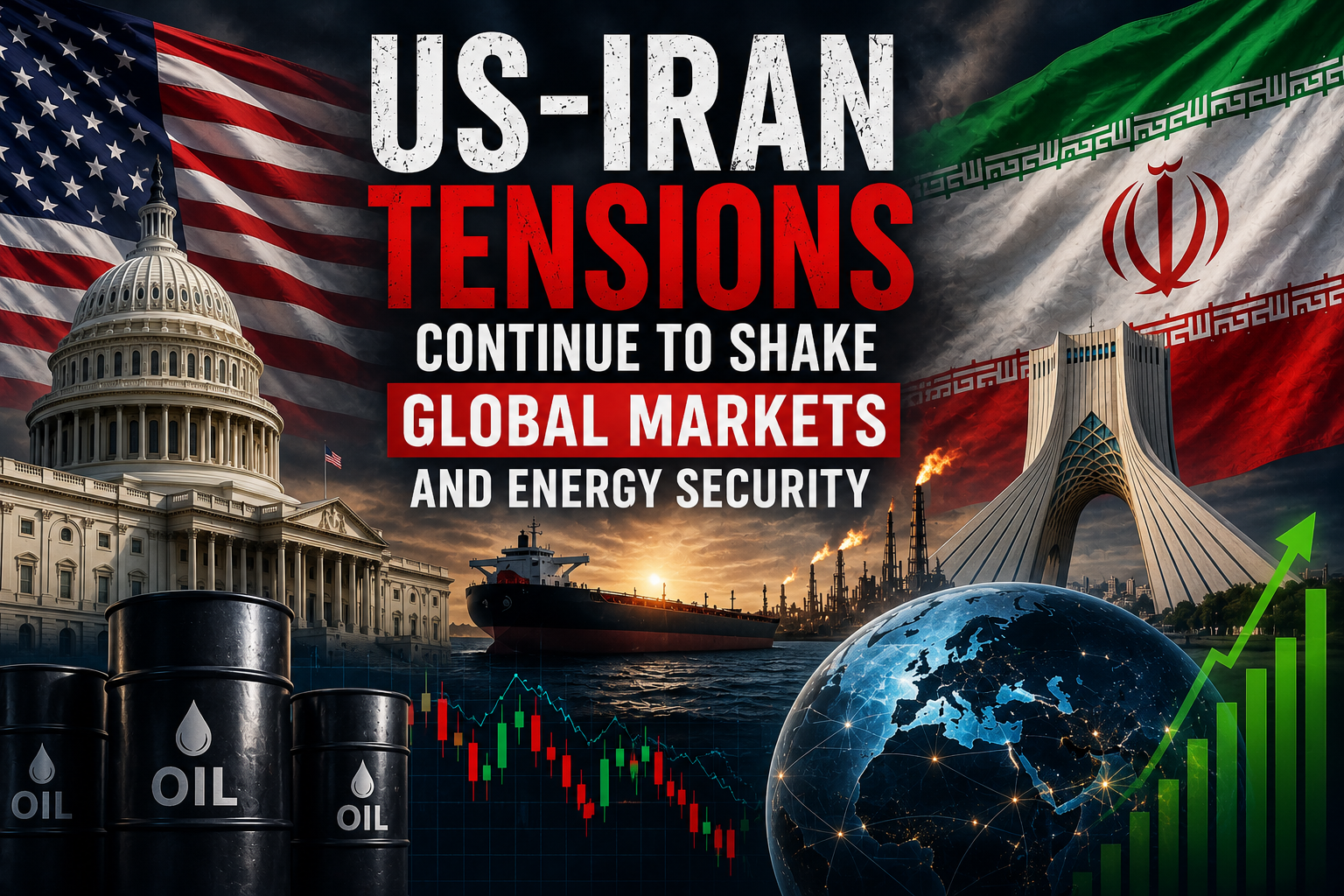

The US-Iran tensions global markets story remains one of the most closely watched developments in international affairs. Renewed geopolitical uncertainty in the Middle East has increased concerns over energy security, global trade, and financial market stability. Investors, governments, and businesses are closely monitoring the situation as every new development has the potential to influence oil prices and economic confidence worldwide.
The United States and Iran have remained at the center of regional tensions for years. Whenever relations worsen, global markets often react quickly because the Middle East plays a vital role in the world’s energy supply. Recent developments have once again highlighted how geopolitical events can affect economies far beyond the region.
Why the US-Iran Situation Matters
The Middle East is home to some of the world’s largest oil and natural gas producers. Any increase in military or political tensions creates uncertainty about energy supplies and international shipping routes.
The Strait of Hormuz, one of the busiest maritime passages in the world, carries a significant share of global crude oil exports every day. Any disruption in this strategic waterway can affect oil availability and transportation costs.
As a result, investors often respond immediately to developments involving the United States and Iran.
Global Markets React to Uncertainty
Financial markets generally dislike uncertainty, and geopolitical tensions often increase market volatility.
Following reports of rising tensions, investors have closely watched stock exchanges, commodity markets, and currency movements. Energy companies, airlines, shipping firms, and manufacturing businesses are particularly sensitive to fluctuations in oil prices.
Safe-haven assets such as gold sometimes attract increased investment during periods of geopolitical instability.
Market analysts believe uncertainty may continue until diplomatic progress becomes clearer.
Energy Security Comes Into Focus
Energy security has become one of the biggest concerns for governments across the world.
Many countries depend on imported oil and natural gas from the Middle East. Any interruption in supply could affect fuel availability, electricity production, transportation, and industrial operations.
Governments are therefore reviewing strategic petroleum reserves while encouraging greater energy diversification through renewable sources and alternative suppliers.
Long-term energy planning has become increasingly important in today’s uncertain geopolitical environment.
Impact on Oil Prices
Oil prices often respond quickly to geopolitical developments.
When concerns grow about possible supply disruptions, crude oil prices may rise because traders anticipate reduced availability or higher transportation risks.
Higher oil prices can increase fuel costs, raise inflation, and place additional pressure on businesses and consumers.
Countries that import large amounts of crude oil may experience higher energy bills if market uncertainty continues.
Shipping and Global Trade
The global shipping industry is also closely monitoring developments.
Many international cargo vessels pass through important Middle Eastern maritime routes. Any increase in regional tensions could lead to higher insurance costs, shipping delays, and increased transportation expenses.
Global supply chains, which have already faced multiple disruptions in recent years, may experience additional challenges if uncertainty persists.
Businesses continue reviewing contingency plans to reduce potential risks.
Diplomatic Efforts Continue
Despite heightened tensions, diplomatic communication remains active.
Several countries and international organizations continue encouraging dialogue to reduce the risk of further escalation. Diplomacy remains the preferred path for addressing disagreements and maintaining regional stability.
International leaders have repeatedly emphasized the importance of avoiding actions that could increase military confrontation.
Continued negotiations may help restore confidence in both political and financial markets.
Effects on the Global Economy
The economic impact of geopolitical tensions extends beyond energy markets.
Higher fuel prices increase transportation costs, which can affect food prices, manufacturing expenses, and consumer goods.
Businesses may delay investment decisions during periods of uncertainty, while financial institutions monitor market risks more carefully.
Central banks also consider energy price movements when evaluating inflation and economic growth.
The situation demonstrates how closely global economies remain interconnected.
India and Other Import-Dependent Countries
Countries that rely heavily on imported crude oil, including India, carefully monitor developments in the Middle East.
Any sustained increase in international oil prices can influence fuel costs, inflation, and trade balances.
Governments often review energy policies, diversify import sources, and strengthen strategic reserves to reduce long-term risks.
Energy efficiency initiatives may also become more important if global prices remain elevated.
Businesses Prepare for Volatility
Companies operating in transportation, aviation, logistics, and manufacturing continue assessing potential risks.
Many organizations use financial strategies such as hedging to manage fuel price fluctuations.
Others review supply chains and procurement plans to reduce dependence on a single region.
Corporate planning has increasingly focused on resilience and flexibility in response to global uncertainties.
Investor Sentiment Remains Cautious
Investors continue following official statements from governments, energy agencies, and international organizations.
Stock markets often react to changes in geopolitical risk, although long-term performance usually depends on broader economic conditions.
Financial experts recommend focusing on diversified investment strategies during periods of heightened uncertainty.
Market confidence may improve if diplomatic progress reduces regional tensions.
International Community Calls for Stability
Several governments have urged restraint and emphasized peaceful dialogue.
International organizations continue encouraging cooperation to prevent further escalation while protecting global trade and energy supplies.
Maintaining stability remains a priority because prolonged conflict could have significant humanitarian and economic consequences.
The coming weeks may prove important for diplomatic engagement.
What Happens Next?
Future developments will depend on diplomatic discussions, regional security conditions, and official policy decisions.
Governments, investors, and businesses are expected to continue monitoring the situation closely.
Energy markets will likely remain sensitive to developments involving the United States and Iran until greater clarity emerges.
Analysts believe diplomacy remains the most effective path toward reducing uncertainty and restoring confidence.
Conclusion
The US-Iran tensions global markets issue continues to influence international finance, energy security, and global trade. Rising geopolitical uncertainty has reminded governments and businesses of the importance of stable energy supplies and resilient economic planning.
Although financial markets have shown sensitivity to recent developments, diplomatic efforts remain ongoing. A peaceful resolution would help strengthen market confidence, stabilize energy prices, and reduce risks for the global economy. Until then, policymakers, investors, and consumers will continue watching the Middle East closely as one of the world’s most strategically important regions.












Leave a comment