

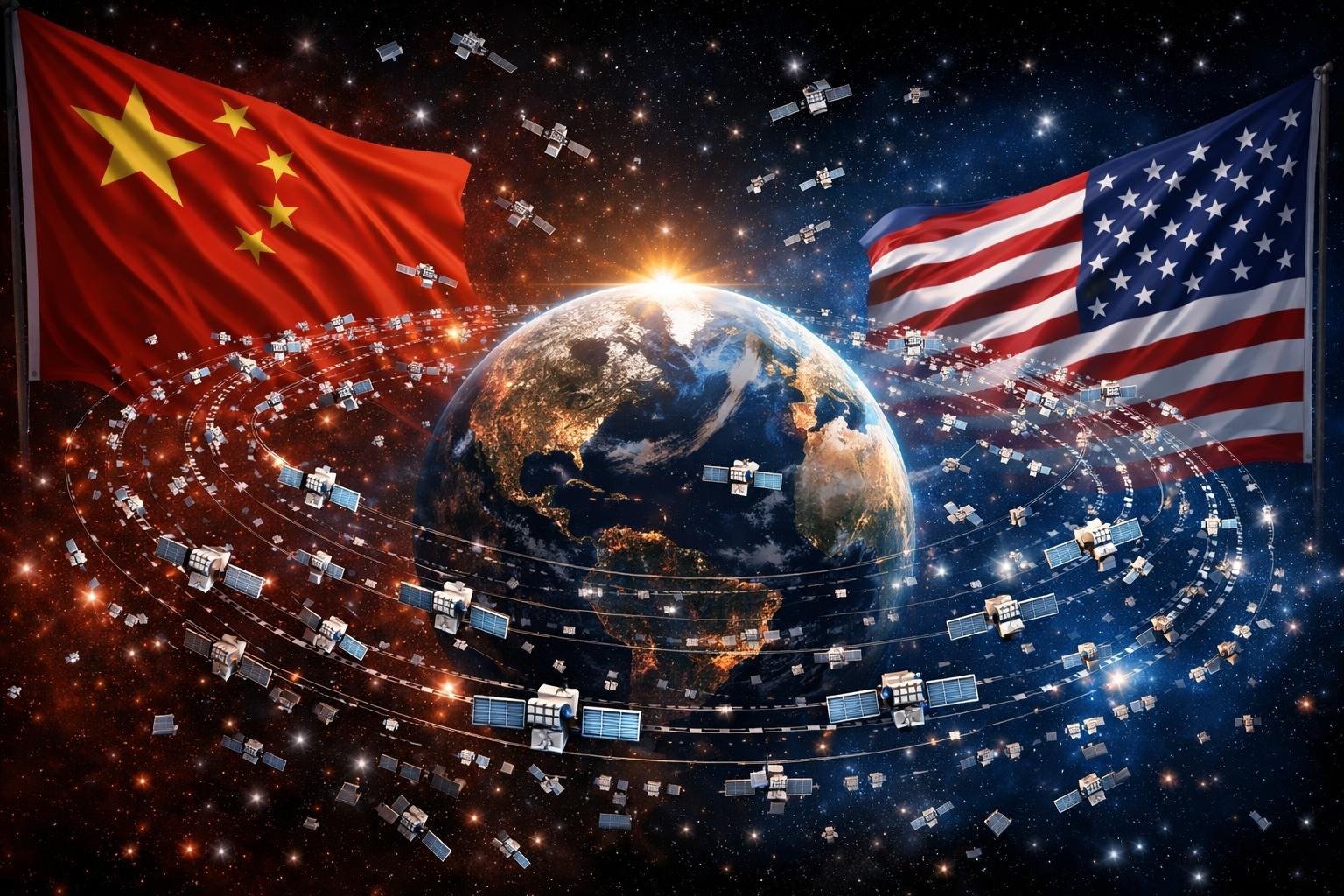

Beijing/Washington: China has warned that the deployment of US weapons in outer space could fuel a new international arms race, after Washington publicly acknowledged for the first time that it has deployed weapons designed to operate in orbit. Beijing urged the United States to stop expanding its military capabilities in space and said such moves could increase strategic instability.
The warning comes after US Air Force Secretary Troy Meink said that the United States has deployed what he described as “on-orbit space control weapons.” He said the systems are intended to protect US forces against hostile actions, but the announcement did not provide detailed information about their capabilities or exact locations.
The disclosure has renewed international debate about the future of military activity in outer space and whether major powers are moving toward a new phase of strategic competition.
China Raises Concern Over Military Expansion in Space
Chinese Foreign Ministry spokesperson Guo Jiakun called on Washington to stop what Beijing described as military expansion in outer space.
China said the United States should work to preserve strategic stability instead of increasing military capabilities in orbit. Chinese state media and military analysts have also argued that the deployment of space weapons could encourage other countries to build similar systems in response.
Beijing’s concern centers on what security experts often describe as a security dilemma. One country may develop new weapons because it believes it needs protection, while another country can see the same weapons as a threat and respond by developing countermeasures.
That process can lead to a cycle of military expansion even when neither side initially intends to create a wider arms race.
United States Says Weapons Are Defensive
Washington has presented its space capabilities as part of efforts to protect US military forces.
Secretary Meink said the United States has fielded weapons that can operate in orbit to provide what officials call space control. However, the Pentagon has not publicly disclosed many details about the systems, including their precise design, numbers or operational missions.
The United States has previously warned about anti-satellite capabilities developed by countries including China and Russia. American officials have argued that the ability to protect satellites and military systems is increasingly important because modern armed forces depend heavily on space-based communications, navigation and surveillance.
The new acknowledgment therefore represents a significant public disclosure, even though details remain limited.
Why Space Has Become a Military Priority
Satellites are essential to modern life as well as national security.
They support GPS and navigation, communications, weather forecasting, Earth observation and financial systems. Military forces also rely on satellites for secure communications, missile warning, intelligence gathering and battlefield coordination.
Because of this dependence, governments increasingly regard satellites and other space infrastructure as strategic assets.
The ability to interfere with, disable or defend those systems could have a major impact during a military crisis. This has pushed the United States, China and Russia to invest heavily in space-related military capabilities.
Anti-Satellite Technology Is Already a Concern
The debate over space weapons is not entirely new.
Major powers have tested or developed anti-satellite, or ASAT, systems capable of interfering with or destroying satellites. Such technologies can include missiles launched from the ground, electronic jamming and other systems designed to disrupt space-based capabilities.
Previous ASAT tests have also raised concerns about space debris. Destroying a satellite in orbit can create thousands of pieces of debris that may threaten other spacecraft.
The growing number of civilian and commercial satellites makes the problem more complicated. Companies operating communication and internet constellations now share the same orbital environment with military and government systems.
The Outer Space Treaty
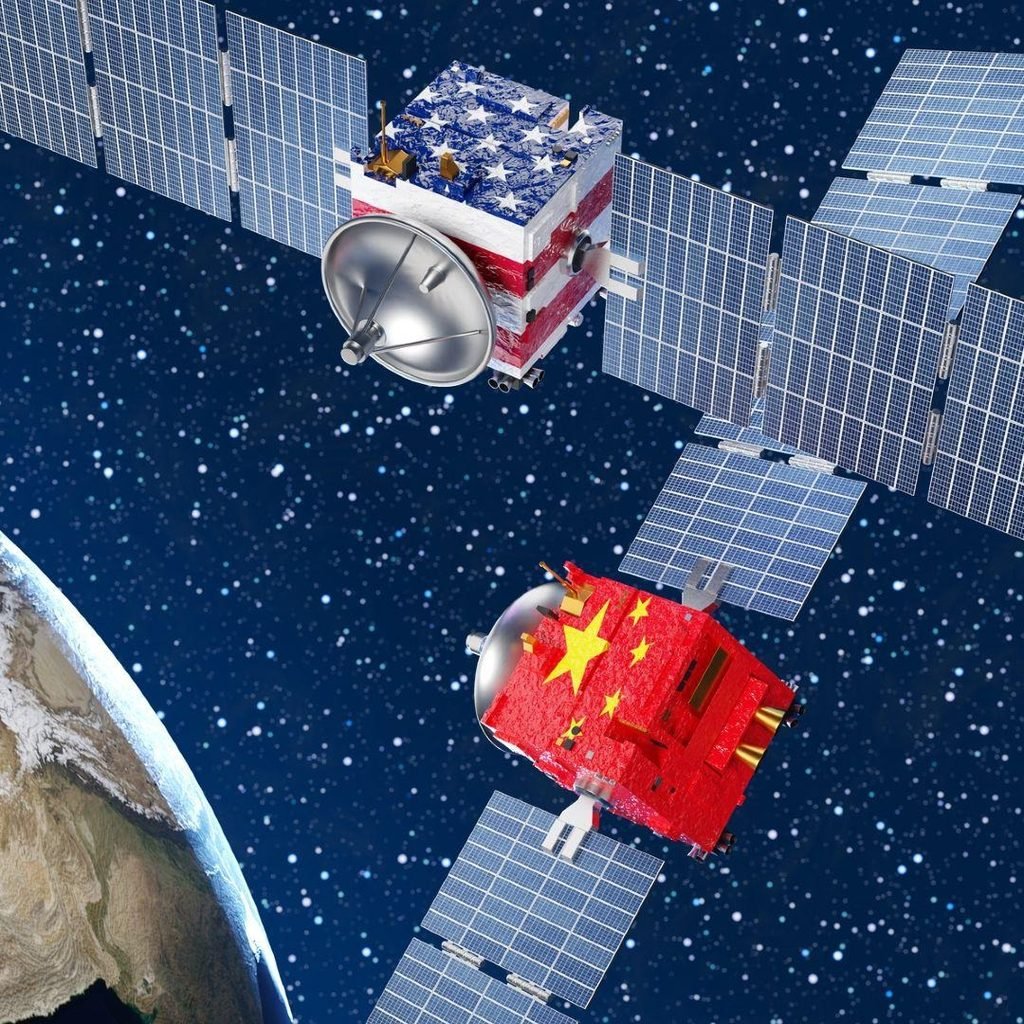
The United States and China are both parties to the 1967 Outer Space Treaty, which establishes principles for the peaceful use of outer space.
The treaty prohibits countries from placing nuclear weapons or other weapons of mass destruction in orbit or stationing them on celestial bodies. It does not, however, ban every type of conventional military activity or weapon system in space.
That distinction has contributed to continuing disagreements about what types of military systems should be considered acceptable.
The latest US announcement is therefore unlikely to end the legal debate. Instead, it could lead to renewed discussions about whether additional international rules are needed for conventional weapons and military operations in orbit.
China and the US Face Wider Strategic Competition
The dispute over space weapons comes amid broader tensions between Washington and Beijing.
The two countries already compete in areas such as advanced technology, artificial intelligence, semiconductors, military capabilities and influence in the Indo-Pacific.
Space is increasingly becoming another area of competition.
China has developed a major space programme with capabilities including human spaceflight, lunar exploration, satellite systems and advanced military space technology. The United States remains a leading space power and operates a dedicated Space Force, established in 2019.
Officials in both countries view space technology as important to national security and economic competitiveness.
Russia Also Part of the Debate
China is not the only country raising concerns about the militarization of space.
Russia has also accused the United States of increasing its military presence in orbit and has raised concerns about space-based weapons. Washington, meanwhile, has previously warned about Russian and Chinese anti-satellite developments.
That means the debate involves more than two countries. Military planners in Europe and Asia are also watching developments because a major change in space capabilities could affect their own security planning.
Could This Become a New Arms Race?
China’s warning specifically focuses on the possibility of an arms race in space.
Whether that happens will depend on how other countries respond to the latest US disclosure.
If governments believe they need similar weapons to protect their satellites, they could accelerate their own programmes. Those developments could then encourage Washington to expand its capabilities further.
On the other hand, countries could pursue confidence-building measures, transparency agreements or new international rules to reduce uncertainty.
Experts have long argued that clearer communication and agreed limits could help lower the risk of misunderstandings during a crisis.
What Happens Next?
The latest dispute is likely to increase pressure for greater transparency about military activities in orbit.
Governments will continue to monitor developments involving satellites, anti-satellite systems and other space-control technologies. Diplomatic discussions could also return to questions about responsible behavior, debris prevention and the rules governing military operations in space.
For now, China’s warning reflects growing concern that the competition among major powers is moving into an increasingly important strategic arena.
The United States says its space weapons are intended to protect its forces, while China argues that the deployment risks encouraging other countries to build their own offensive capabilities. With both sides investing heavily in space technology, the future of military activity beyond Earth is likely to remain a major issue in global security discussions.
Also Read | Iran-US Conflict Sends Oil Prices Above $100 as Global Supply Risks Grow










Leave a comment