

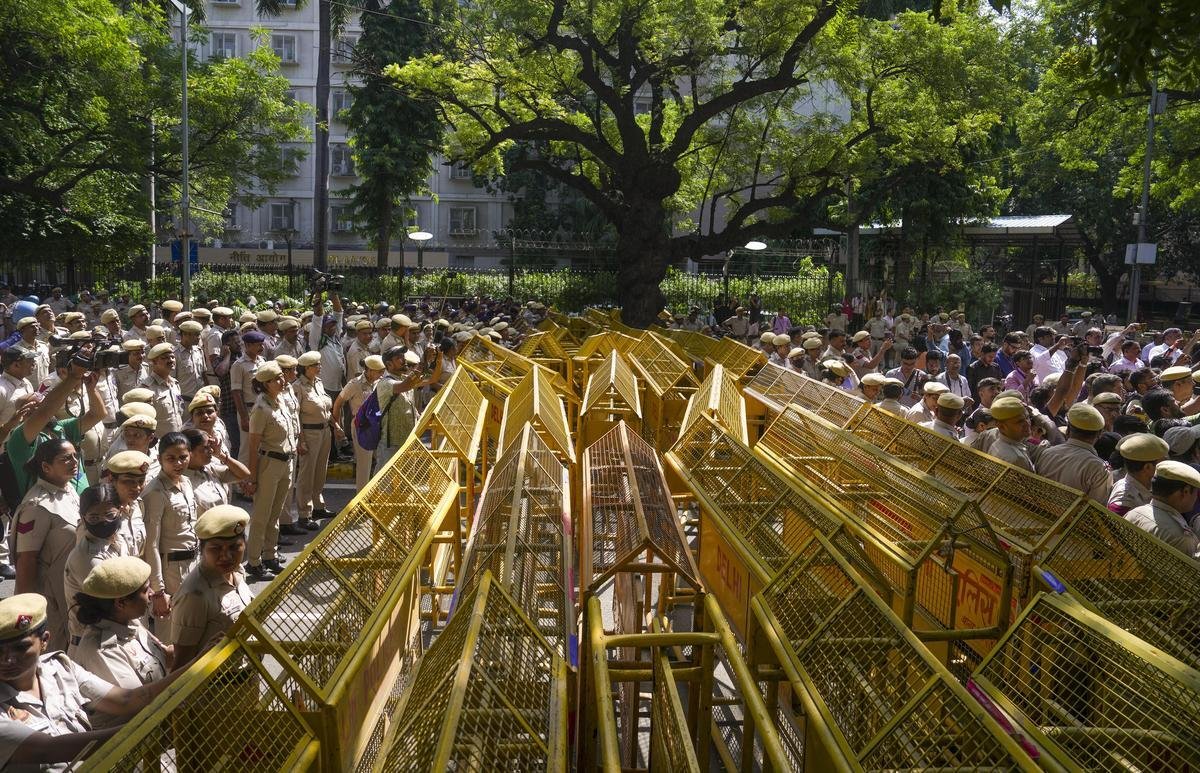

New Delhi witnessed heightened security on Monday, October 12, 2026, as opposition parties prepared for a major protest against the Election Commission of India. The Delhi Election Commission protest has intensified following allegations of irregularities in the revision of electoral rolls.
Congress leader Rahul Gandhi and other opposition leaders announced a march towards the Supreme Court, demanding the resignation of Chief Election Commissioner (CEC) Gyanesh Kumar.
Authorities introduced traffic restrictions and temporarily closed six Delhi Metro stations as a precautionary measure.
The controversy has raised important questions about voter rights, election transparency and the role of India’s constitutional institutions.
Why Are Protests Taking Place in Delhi?
The protests are linked to the Election Commission’s Special Intensive Revision (SIR) of electoral rolls.
The SIR process involves checking voter records to identify duplicate, deceased, relocated and otherwise ineligible entries.
However, opposition parties allege that the exercise has resulted in the removal of eligible voters from electoral lists.
Congress and other opposition parties claim that the process could disproportionately affect certain communities and benefit the ruling Bharatiya Janata Party (BJP).
The Election Commission has rejected allegations of political bias and maintains that the revision aims to improve the accuracy of voter records.
The BJP has also denied the opposition’s accusations.
These competing claims have become the central issue behind the demonstrations.
Rahul Gandhi Announces March Towards Supreme Court
Congress leader Rahul Gandhi called for a major demonstration under the campaign titled “Chalo Delhi – March for Democracy.”
The opposition announced plans to gather near the Connaught Place–Barakhamba Road junction at approximately 1:30 PM on October 12.
The march was intended to draw attention to alleged problems in voter registration and demand accountability from the Election Commission.
Opposition leaders also planned to submit a memorandum to Chief Justice of India Surya Kant.
However, reports said the Chief Justice declined a request for a meeting and indicated that the concerns should be addressed through appropriate legal proceedings.
Rahul Gandhi criticised the restrictions imposed in Delhi and accused the government of preventing citizens from expressing their concerns.
The opposition has continued demanding Gyanesh Kumar’s resignation.
Six Delhi Metro Stations Closed Amid Protests
The Delhi Metro Rail Corporation (DMRC) announced temporary entry and exit restrictions at six Metro stations on Monday.
The affected stations were:
- Rajiv Chowk
- Patel Chowk
- Central Secretariat
- Janpath
- Mandi House
- Barakhamba Road
According to the announcement, entry and exit restrictions were scheduled from 6 AM to 4 PM.
Interchange facilities remained available at interchange stations.
Delhi Police also introduced traffic diversions in parts of central Delhi.
The restrictions were intended to manage crowds and maintain security during the planned demonstrations.
Commuters travelling through central Delhi were advised to check official Metro and traffic updates before beginning their journeys.
Thousands Detained During Earlier Demonstrations
The latest protest followed several days of demonstrations in the national capital.
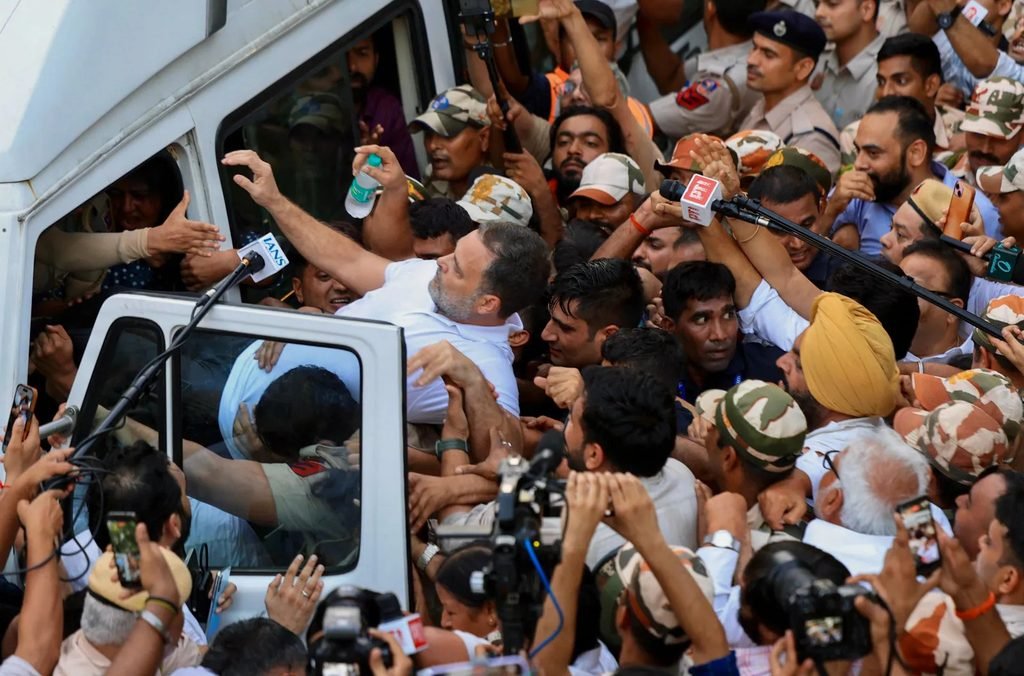
On October 10, police detained thousands of protesters as authorities attempted to prevent a large gathering at Jantar Mantar.
Participants included members of a youth-led protest movement known as the Cockroach Janta Party (CJP).
The movement has attracted attention through social media campaigns and demonstrations over public issues.
Its supporters have joined opposition parties in demanding greater transparency in the voter list revision process.
Reports also described restrictions on public transport and movement during the weekend protests.
Several detained protest leaders were subsequently released.
The police response has drawn criticism from opposition leaders and civil society groups, who argue that peaceful demonstrations should be allowed.
Authorities have defended security arrangements as necessary to maintain public order.
What Is the Special Intensive Revision of Electoral Rolls?
The Special Intensive Revision is an exercise conducted by the Election Commission to verify and update voter lists.
Its purpose is to help ensure that electoral records contain accurate information.
During the process, officials may examine voter details and identify entries requiring correction or removal.
The controversy concerns the scale of the revisions and whether eligible citizens have sufficient opportunities to protect or restore their registration.
Reports indicate that more than 130 million entries have been removed during the wider verification exercise.
However, this figure should not be interpreted as proof that 130 million eligible voters were wrongly deleted. It includes categories such as deceased, relocated and untraceable individuals.
The Election Commission says eligible voters who were incorrectly removed can seek re-enrolment.
Opposition parties argue that the process requires stronger safeguards to prevent wrongful exclusions.
What Has the Election Commission Said?
The Election Commission has maintained that the electoral roll revision is impartial and intended to protect the integrity of elections.
It has denied favouring any political party.
The BJP has similarly rejected accusations that the exercise is designed to influence election outcomes.
Opposition leaders, however, continue to question the procedures used during verification.
The disagreement has increased political tensions and brought the administration of electoral rolls under public scrutiny.
Why Does This Controversy Matter?
Accurate voter lists are essential for conducting free and fair elections.
If ineligible or duplicate entries remain on electoral rolls, they can create administrative problems.
At the same time, removing eligible voters could prevent citizens from exercising their democratic rights.
This makes transparency, fair verification procedures and accessible correction mechanisms important.
The ongoing controversy also highlights the need to balance public security with the right to peaceful protest.
What Happens Next?
The opposition is expected to continue demanding answers about the voter list revision process.
The Supreme Court’s handling of related legal proceedings could become an important part of the controversy.
Further developments may include new demonstrations, court hearings and additional statements from the Election Commission.
The situation remains fluid, and official announcements will be important in determining what happens next.
Conclusion
The Delhi Election Commission protest has developed into a major political controversy involving opposition parties, youth movements and election authorities.
The temporary closure of six Metro stations, heavy security arrangements and demands for the resignation of Gyanesh Kumar show how strongly the dispute has escalated.
While opposition parties allege electoral irregularities, the Election Commission and BJP deny political wrongdoing.
The central question remains whether the voter list revision process can maintain public confidence while ensuring that every eligible citizen has a fair opportunity to vote.
Also Read / UP Cabinet Approves Renaming Jewar Airport as Narendra Modi International Airport






Leave a comment