

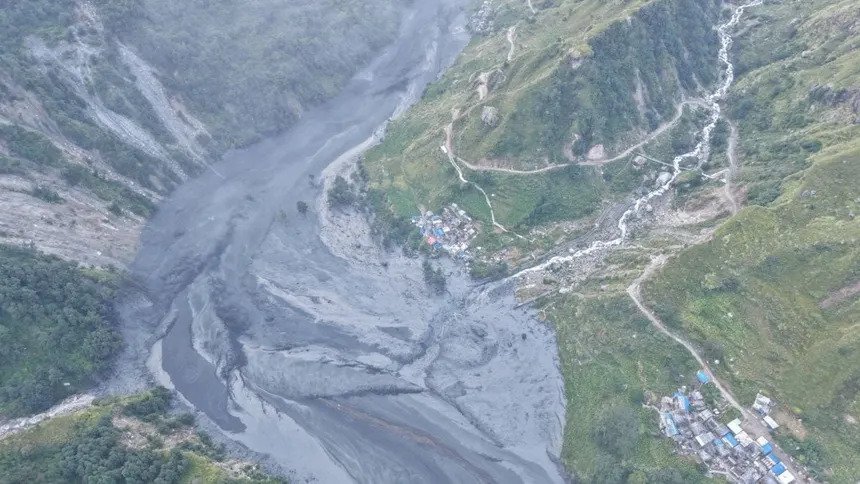

Powerful torrents of muddy water, rocks and debris swept through Nepal’s Budhi Gandaki River on October 11, 2026, causing severe flooding in the mountainous Gorkha district.
The Budhi Gandaki River flood damaged homes, bridges, trekking routes and hydropower infrastructure, forcing authorities to issue emergency warnings for downstream communities.
The river’s powerful current was captured in dramatic footage showing muddy floodwaters rushing through narrow Himalayan valleys.
According to reports from Reuters and Associated Press, at least five people were reported missing following the disaster.
Rescue teams were deployed to evacuate residents and assist tourists stranded in remote areas.
What Happened to Nepal’s Budhi Gandaki River?
The flash flood struck the Budhi Gandaki river system in northern Gorkha during the early hours of Sunday, October 11.
Water carrying large amounts of mud, sediment and rocks surged downstream, damaging settlements along the river.
The flooding affected areas near Chumnubri Rural Municipality, including communities that depend on mountain roads and suspension bridges.
The International Centre for Integrated Mountain Development (ICIMOD) initially reported that a landslide may have blocked part of the river system.
When the temporary barrier gave way, a sudden release of water and debris may have caused the destructive flooding.
The event began at approximately 4 AM local time.
link video | Budhi Gandaki River Flood: Powerful Torrents
What Caused the Powerful River Torrents?
Investigators have been examining whether a combination of an avalanche and landslide triggered the flood.
A technical assessment reported by Nepalese media on October 13 linked the disaster to an avalanche near the headwaters of Ungilung Khola.
The avalanche reportedly occurred at an altitude of around 5,500 metres and was followed by a large landslide carrying snow, water and debris.
The material moved into the river system, producing a powerful downstream surge.
Earlier assessments had suggested that a landslide created a temporary natural dam before the water was released.
The exact sequence of events remains subject to further scientific investigation.
Five People Reported Missing
The flooding left at least five people missing, according to reports published after the disaster.
Search-and-rescue operations were launched in affected mountain communities.
Nepalese military personnel used helicopters and ground teams to reach areas cut off by damaged roads and bridges.
Rescuers also delivered essential supplies to residents affected by the flooding.
The difficult mountain terrain complicated rescue efforts, especially where normal access routes had been destroyed.
Authorities continued assessing the damage and searching for missing residents.
More Than 100 Foreign Trekkers Stranded
The disaster also disrupted tourism in Nepal’s popular Manaslu trekking region.
Reuters reported on October 12 that more than 100 foreign trekkers had been stranded at different locations.
Floodwaters damaged walking trails and bridges used by tourists and local communities.
The Manaslu region attracts international visitors who travel through remote Himalayan villages.
October is normally an important trekking season, making the disruption particularly significant for tourism businesses.
Rescue teams and local authorities worked to help stranded travellers reach safer locations.
Visitors were advised to follow official instructions and avoid damaged routes.
Houses, Bridges and Hydropower Infrastructure Damaged
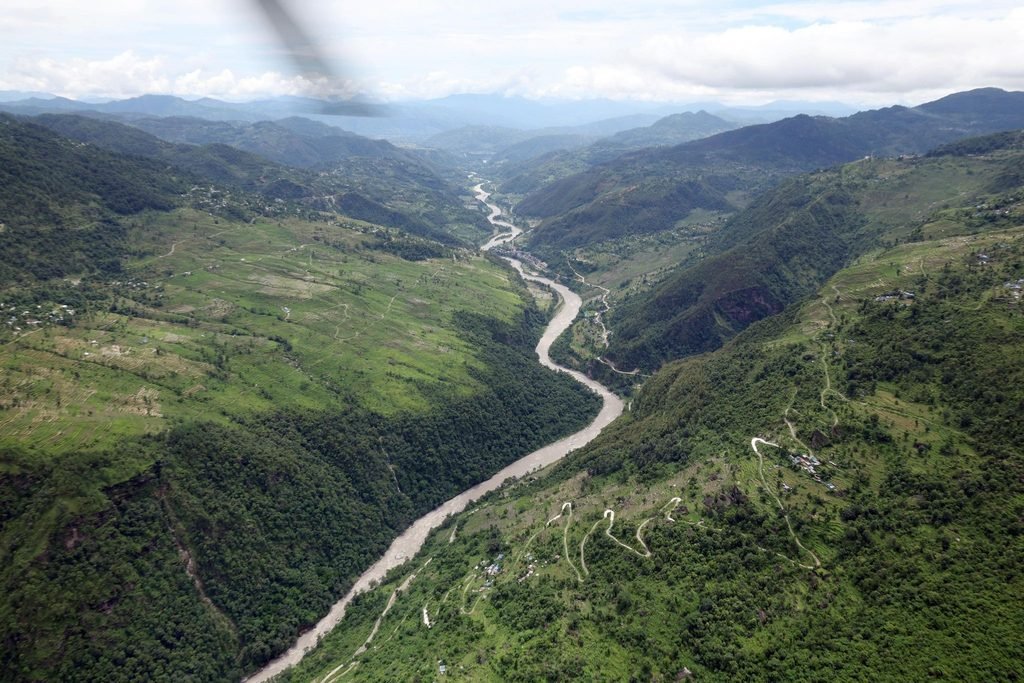
The powerful floodwaters destroyed or damaged several houses and bridges in Gorkha district.
Early damage estimates varied because rescue teams could not immediately reach every affected settlement.
The flood also affected hydropower construction facilities and communication infrastructure.
Suspension bridges are essential in Nepal’s mountain communities, where rivers often separate villages from schools, markets and medical services.
When these bridges are destroyed, residents may be forced to travel much longer distances to reach essential services.
Repairing damaged infrastructure will be an important part of the recovery process.
Why Were Flood Alerts Issued Downstream?
The Budhi Gandaki River flows into the Trishuli River, which connects to the wider Narayani river system.
A sudden surge in one river can create dangerous conditions farther downstream.
Nepal’s National Disaster Risk Reduction and Management Authority issued warnings to communities along vulnerable riverbanks.
Authorities advised residents to move to higher ground and avoid areas close to rising water.
Warnings covered districts including Gorkha, Dhading, Tanahun, Chitwan and Nawalparasi.
Officials also monitored changing river levels because additional surges were possible.
How Did Early Warnings Help Residents?
Nepalese disaster officials said early alerts played an important role in helping residents reach safer areas.
According to The Kathmandu Post, authorities received information about the flooding early on October 11 and quickly sent warning messages to downstream communities.
Local officials also used public announcements to warn people about rising water levels.
These measures gave residents an opportunity to move away from dangerous riverbanks.
The incident highlights the importance of rapid communication during mountain floods.
Why Are Himalayan Rivers Vulnerable to Flash Floods?
Himalayan rivers often flow through steep valleys surrounded by unstable mountain slopes.
Landslides, avalanches and sudden releases of trapped water can produce powerful floods with little warning.
Unlike ordinary flooding caused by prolonged rainfall, a landslide-related flood may develop rapidly.
The moving water can carry rocks, soil and debris, increasing its destructive force.
Climate change is also affecting the Himalayan environment through rising temperatures and changes in snow, ice and rainfall.
However, further research is needed to determine whether climate change contributed directly to this particular event.
What Happens Next?
Nepalese authorities are continuing damage assessments and recovery efforts in affected areas.
Scientists are studying the landslide and avalanche to better understand the disaster.
Officials are also evaluating the condition of damaged bridges, roads and hydropower facilities.
Restoring access to isolated villages remains an important priority.
Conclusion
The Budhi Gandaki River flood demonstrates the destructive force of sudden mountain floods.
Powerful torrents of water, mud and debris damaged communities, stranded trekkers and left several people missing.
The disaster has renewed attention on landslide monitoring, early warning systems and emergency preparedness in Nepal’s Himalayan regions.
Also Read | Iranian Girl Disassembles and Reassembles AK-47 in 21 Seconds; Viral Video Sparks Global Debate











Leave a comment