

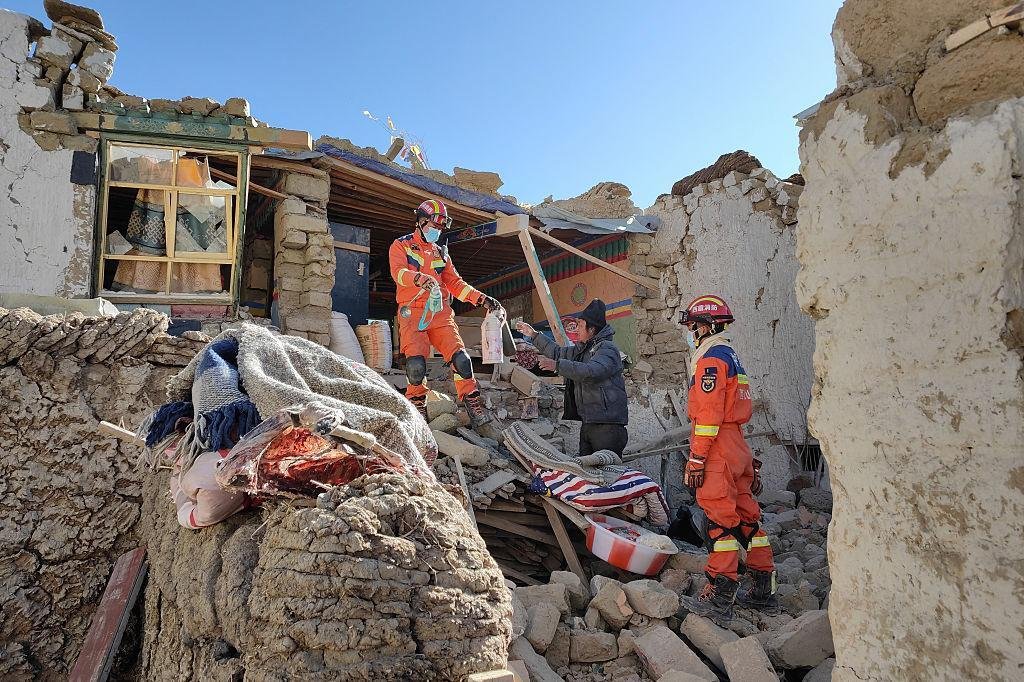

A powerful 7.0 magnitude earthquake struck Tibet late on Thursday, October 22, 2026, causing deaths, injuries and extensive damage to homes in the mountainous region.
According to the latest Reuters report, at least 16 people have died and 76 others have been injured.
Earlier reports gave different casualty figures, including 18 deaths. Authorities are continuing to assess the situation as rescue operations progress.
The Tibet earthquake 2026 has forced thousands of residents to leave their homes, while emergency teams work to assist affected communities.
When and Where Did the Tibet Earthquake Occur?
The earthquake struck at approximately 10:33 PM local time on October 22.
Its epicentre was located in the Nagqu region of northern Tibet, within China’s Tibet Autonomous Region.
The affected area is mountainous, sparsely populated and located at a high altitude.
According to the United States Geological Survey, the earthquake measured magnitude 7.0.
India’s National Center for Seismology also recorded a magnitude 7.0 earthquake in Tibet at approximately 8:03 PM Indian Standard Time.
The powerful shaking was felt across communities near the epicentre, forcing residents to leave buildings and seek safety outdoors.
How Many People Were Killed or Injured?
Casualty figures have changed as emergency workers have reached affected locations.
Initial reports confirmed 16 deaths and 32 injuries.
The injury count later increased to 65.
A subsequent Reuters update reported 76 injured people, while the confirmed death toll remained at 16.
Some earlier international reports cited 18 deaths, highlighting differences between preliminary assessments.
The final casualty count may change as authorities complete their investigations and search operations.
Hundreds of Homes Damaged
The earthquake caused serious damage to residential buildings and local infrastructure.
Early reports indicated that at least 339 houses had collapsed.
Other buildings developed structural cracks, raising concerns about their safety during aftershocks.
Families were forced to leave damaged homes and move to safer areas.
In remote mountain communities, damaged roads and communication networks can make emergency assistance more difficult.
Authorities are assessing the extent of the destruction and identifying buildings that may be unsafe.
More Than 12,000 People Relocated
According to China’s state news agency Xinhua, more than 12,000 people have been relocated to safer locations.
Temporary shelters are being arranged for families unable to return home.
Emergency supplies, including tents, folding beds, prefabricated housing units, warm clothing and other necessities, have been sent to the affected region.
These supplies are particularly important because temperatures in high-altitude Tibetan communities can fall sharply at night.
Providing shelter, food, drinking water and medical assistance remains a priority.
Rescue Teams Continue Emergency Operations
Chinese authorities launched an emergency response shortly after the earthquake.
More than 300 police officers were sent to the affected area to assist with rescue operations, evacuations and damage assessments.
Additional emergency personnel have also been mobilised.
Rescue teams are checking damaged buildings, helping injured residents and distributing essential supplies.
Chinese President Xi Jinping called for urgent search-and-rescue efforts and medical treatment for people affected by the disaster.
Authorities are also working to restore damaged infrastructure and improve access to remote communities.
Hundreds of Aftershocks Recorded
The danger did not end after the initial earthquake.
The China Earthquake Networks Center reported more than 400 aftershocks following the main tremor.
Aftershocks are smaller earthquakes that occur in the same general region after a larger seismic event.
Although many are relatively weak, stronger aftershocks can damage buildings already weakened by the original earthquake.
Residents have therefore been advised to remain cautious and avoid unsafe structures.
Emergency workers must also consider the possibility of further shaking while conducting rescue operations.
Why Is Tibet Prone to Powerful Earthquakes?
Tibet is located in one of the world’s most seismically active regions.
The Tibetan Plateau lies within a broad zone where the Indian tectonic plate continues to push against the Eurasian plate.
This movement helped form the Himalayan mountain range.
Pressure builds within the Earth’s crust over time and can eventually be released through earthquakes.
The region has experienced several destructive earthquakes in the past.
In January 2025, a major earthquake struck Tibet’s Tingri area, killing more than 100 people.
These events highlight the continuing earthquake risk faced by communities across the Himalayan region.
Was the Earthquake Felt in India?
The earthquake occurred in Tibet, north of India’s northeastern states.
India’s National Center for Seismology recorded the tremor and published its location and magnitude.
However, the recording of an earthquake by Indian authorities does not necessarily mean that damaging shaking occurred within India.
There were no confirmed reports in the sources reviewed of major earthquake damage in India from this event.
Residents should rely on official seismic and disaster-management agencies for accurate information.
What Happens Next?
Rescue teams will continue searching damaged areas and helping displaced families.
Authorities are expected to provide further updates on casualties, infrastructure damage and emergency shelter arrangements.
Medical care, temporary housing and restoring essential services will remain important in the coming days.
The situation is still developing, and casualty figures may change as more information becomes available.
Conclusion
The Tibet earthquake 2026 has caused significant loss of life and widespread disruption in northern Tibet.
At least 16 deaths and 76 injuries have been reported, while thousands of residents have been moved to safer locations.
The disaster highlights the challenges of responding to powerful earthquakes in remote, high-altitude communities.
As rescue operations continue, the priority remains protecting survivors, treating the injured and providing safe shelter.
Also Read | King Fahd Airport Attack in Saudi Arabia: One Confirmed Dead, Eight Injured in Dammam












Leave a comment