

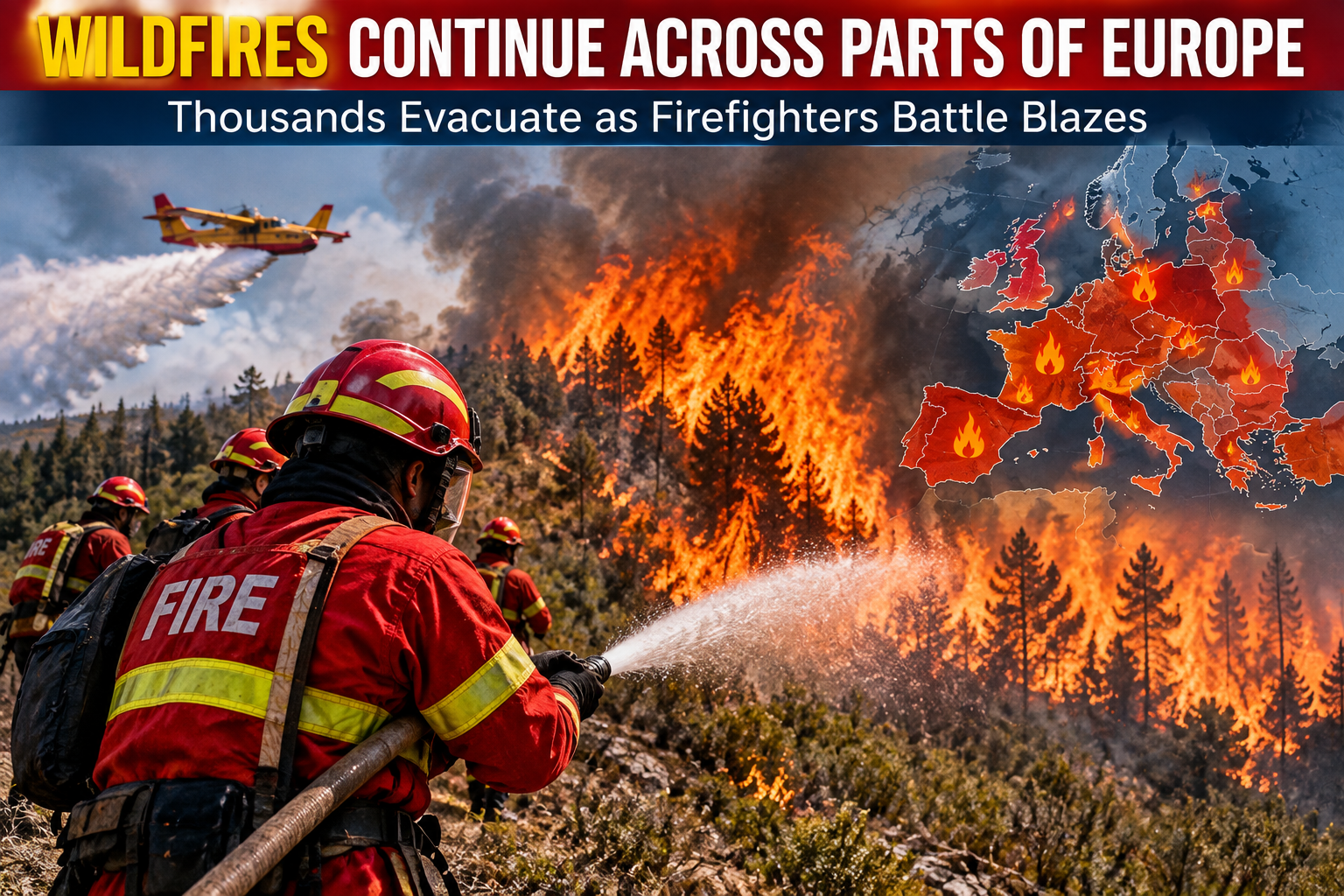

The Wildfires Continue Across Parts of Europe, with firefighters battling multiple blazes as extreme heat, dry vegetation, and strong winds create dangerous conditions. Several countries have reported fast-moving forest fires, prompting mass evacuations, road closures, and emergency responses.
Authorities across Europe have urged residents and tourists to remain alert as wildfire risks remain high. Emergency services continue working around the clock to contain the flames and protect homes, forests, and critical infrastructure.
The latest wave of wildfires has once again highlighted the growing challenge of managing natural disasters during increasingly severe summer weather.
Thousands Forced to Leave Their Homes
Wildfires have forced thousands of residents to evacuate from affected regions.
Emergency authorities have established temporary shelters while local governments coordinate relief efforts. Families have been moved to safer locations as firefighters continue containing active fire zones.
Many tourists have also been advised to leave affected holiday destinations until conditions improve.
Officials continue monitoring evacuation areas and are providing regular public safety updates.
Firefighters Battle Difficult Conditions
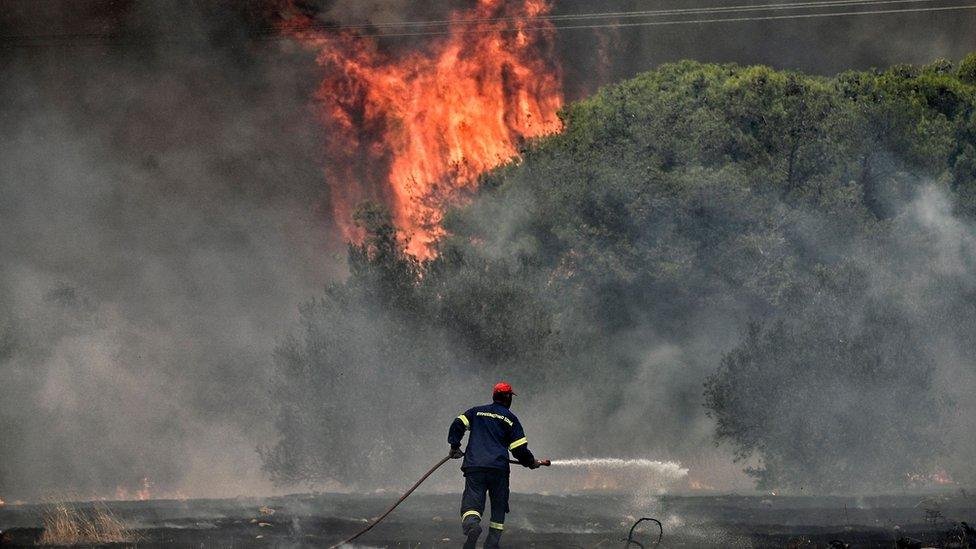
Firefighters across several European countries are facing extremely challenging conditions.
High temperatures, low humidity, and powerful winds have allowed flames to spread rapidly through forests and rural communities.
Ground crews, helicopters, and water-dropping aircraft have been deployed to slow the spread of the fires.
Additional emergency personnel have been mobilized to strengthen firefighting operations in the hardest-hit regions.
Heatwave Increases Wildfire Risk
Meteorologists say prolonged heatwaves have significantly increased wildfire danger across Europe.
Extended periods of hot and dry weather have left forests, grasslands, and vegetation highly vulnerable to ignition.
Even small sparks can quickly develop into large wildfires under these conditions.
Weather forecasts indicate that elevated temperatures may continue in several areas over the coming days.
Transportation Faces Disruptions
Wildfires have disrupted transportation in several affected regions.
Road closures have been introduced near active fire zones to ensure public safety and allow emergency vehicles to operate efficiently.
Some rail services have experienced delays, while local authorities have advised motorists to avoid unnecessary travel near wildfire areas.
Air quality has also been affected in some locations because of heavy smoke.
Emergency Services Coordinate Response
National emergency agencies continue working closely with local governments.
Rescue teams, firefighters, police officers, and medical personnel are coordinating evacuation efforts while protecting communities threatened by advancing flames.
Authorities have also deployed drones and satellite technology to monitor fire movement and identify high-risk areas.
International cooperation has strengthened the overall emergency response.
Environmental Damage Continues to Grow
The ongoing wildfires have caused significant environmental damage.
Large areas of forest have been destroyed, affecting wildlife habitats and biodiversity.
Environmental experts warn that recovering from major forest fires may take many years.
The loss of vegetation also increases the risk of soil erosion and flooding during future rainfall.
Tourism Industry Feels the Impact
Europe’s tourism sector has also been affected by the wildfire crisis.
Several popular tourist destinations have experienced cancellations as visitors adjust travel plans due to safety concerns.
Hotels, local businesses, and transport operators are monitoring the situation while supporting evacuation measures where necessary.
Tourism officials continue encouraging travelers to follow official advisories before visiting affected regions.
Climate Conditions Under Scrutiny
Scientists continue studying the relationship between climate conditions and wildfire activity.
Many experts believe rising temperatures, prolonged droughts, and changing weather patterns have contributed to longer and more intense wildfire seasons across Europe.
Although individual fires have multiple causes, climate trends are increasing the likelihood of extreme fire conditions in many regions.
Governments continue investing in wildfire prevention and climate adaptation strategies.
Public Asked to Remain Vigilant
Authorities continue asking residents to follow fire safety guidelines.
People have been advised to avoid lighting campfires, burning vegetation, or performing activities that could accidentally ignite dry grass or forests.
Residents living near fire-prone areas should remain prepared to evacuate if conditions change rapidly.
Public cooperation has become an important part of reducing wildfire risks.
Recovery Will Take Time
Even after active fires are contained, recovery efforts are expected to continue for months.
Environmental restoration, rebuilding damaged infrastructure, and supporting displaced communities will require significant resources.
Governments have already begun assessing the economic and environmental impact of the fires.
Financial assistance programs may be announced for affected families and businesses.
Looking Ahead
Emergency services remain focused on controlling active fires while preparing for possible new outbreaks.
Weather conditions will continue influencing firefighting operations in the coming days.
Authorities are strengthening surveillance systems, early warning technologies, and forest management practices to reduce future wildfire risks.
Experts emphasize that preparedness remains one of the most effective tools for protecting lives and property.
Conclusion
The Wildfires Continue Across Parts of Europe, creating one of the region’s most serious environmental and humanitarian challenges this summer. Thousands of people have been evacuated, firefighters continue risking their lives to protect communities, and authorities remain on high alert as extreme weather conditions persist.
Read Also | US-Iran Tensions Continue to Shake Global Markets and Energy Security











Leave a comment