

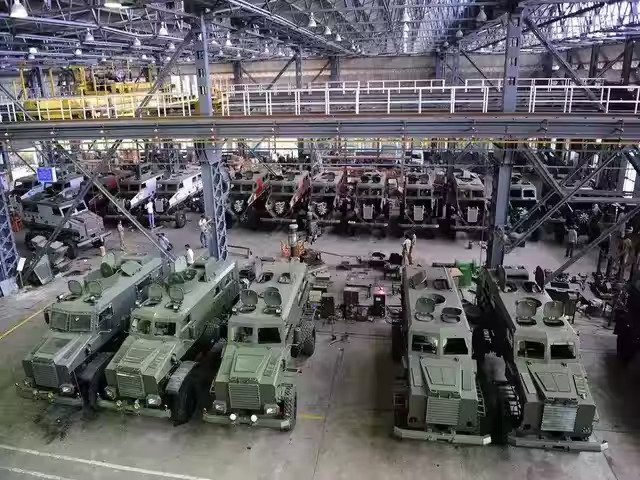

Raymond, the Indian business group famous for its premium suits and clothing, is making headlines for a very different reason.
The group is expanding its presence in aerospace, defence-related engineering and automotive manufacturing, supported by a capital investment programme of approximately ₹1,000 crore.
The Raymond defence industry investment reflects a major transformation for a company that many Indians still associate with its famous clothing brand.
However, Raymond is not entering the defence sector for the first time. Its engineering business has already developed capabilities in aerospace and defence components.
The latest investment is intended to expand manufacturing capacity and strengthen its position in advanced engineering.
What Is Raymond’s ₹1,000 Crore Investment Plan?
According to Raymond Limited’s FY2025–26 annual report, the company has committed approximately ₹1,000 crore in combined capital expenditure to expand manufacturing facilities.
The investment supports the group’s engineering operations, including aerospace and automotive component manufacturing.
Earlier reports identified planned manufacturing projects in Andhra Pradesh, including facilities in the Anantapur region.
The expansion is designed to help Raymond serve customers requiring advanced, high-precision components.
Importantly, the ₹1,000 crore figure should not be understood as spending exclusively on weapons or defence equipment.
It represents a broader manufacturing expansion programme across specialised engineering businesses.
Why Is a Clothing Brand Entering Aerospace and Defence?
For generations, Raymond has been recognised for fabrics, formalwear and its famous advertising identity, The Complete Man.
However, the Raymond Group has evolved beyond textiles.
Over recent years, it has reorganised its businesses to give different divisions greater independence.
Raymond Lifestyle Limited now operates separately from Raymond Limited’s engineering business.
Raymond Realty has also become a separate listed company.
This restructuring allows the engineering company to concentrate on industrial technology, precision manufacturing, aerospace and defence.
Therefore, it is more accurate to say that Raymond’s engineering business is expanding into advanced manufacturing rather than its clothing division suddenly producing military equipment.
How Did Raymond Enter the Defence Sector?
Raymond’s entry into aerospace and defence-related manufacturing began before the latest investment announcement.
A major development was its acquisition of a controlling stake in Maini Precision Products.
Raymond’s annual report for FY2023–24 recorded a 59.25% stake acquisition valued at ₹682 crore.
Maini Precision Products brought experience in manufacturing complex engineering components for aerospace, defence and automotive customers.
This acquisition helped Raymond strengthen its technical capabilities and enter specialised industrial markets.
The company subsequently reorganised its engineering operations into focused businesses serving different industries.
This strategy created a foundation for further expansion.
What Will Raymond Manufacture?
Raymond’s engineering operations focus on precision components and specialised manufacturing.
These products require accurate measurements, reliable materials and strict quality control.
In aerospace, precision components can be used in aircraft engines and other complex systems.
The company also serves automotive manufacturers through products such as ring gears and other engineered components.
Defence-related manufacturing involves similarly demanding quality and reliability standards.
Raymond’s aerospace and defence business works with global industrial customers, including major original equipment manufacturers.
However, manufacturing components for defence customers is not the same as manufacturing complete fighter aircraft, missiles or weapons systems.
How Could the Investment Benefit Andhra Pradesh?
The manufacturing expansion could support industrial development in Andhra Pradesh.
Earlier reporting identified two planned manufacturing units in the Anantapur district, covering aerospace and automotive components.
The proposed projects were associated with investment of roughly ₹1,000 crore and the potential creation of approximately 5,400 jobs.
These are projected employment opportunities, not confirmed jobs already created.
Large manufacturing facilities can also create opportunities for suppliers, logistics companies and technical service providers.
If completed as planned, the projects could strengthen Andhra Pradesh’s position in India’s advanced manufacturing sector.
How Does This Support Make in India?
India has been encouraging domestic manufacturing through initiatives such as Make in India and Atmanirbhar Bharat.
Aerospace and defence manufacturing are important areas because they require specialised technology and dependable supply chains.
Companies that manufacture high-quality components domestically can help build India’s industrial capabilities.
They may also create opportunities to supply international aerospace and defence manufacturers.
Raymond’s expansion fits within this broader trend.
However, the long-term impact will depend on successful project execution, customer orders, technology development and production quality.
What Are the Challenges Raymond Could Face?
Entering specialised manufacturing markets brings significant opportunities, but it also involves challenges.
Aerospace and defence components must meet demanding technical and safety requirements.
Manufacturers may need certifications, extensive testing and long approval processes before supplying major customers.
Building factories and purchasing equipment also require substantial investment.
Additionally, revenue growth depends on securing contracts and delivering products consistently.
Competition from established Indian and international manufacturers could create further pressure.
Raymond will need to maintain quality, control costs and build long-term customer relationships.
What Does This Mean for Raymond’s Future?
Raymond Limited is positioning itself as an engineering-focused company with opportunities in several industrial sectors.
Its FY2025–26 annual report stated that its aerospace and defence subsidiary achieved 26% year-on-year revenue growth.
The company’s engineering operations also benefited from demand for precision automotive components.
These developments suggest that advanced manufacturing has become an important part of Raymond’s business strategy.
Nevertheless, future growth is not guaranteed.
Investors and industry observers will be watching how the company converts its expansion plans into production capacity, contracts and sustainable earnings.
Conclusion
The Raymond defence industry investment marks an important stage in the group’s transformation from a business famous for clothing into a diversified industrial organisation.
Its approximately ₹1,000 crore capital expenditure programme is intended to expand advanced manufacturing, including aerospace and automotive operations.
The company already has experience in defence-related engineering through its earlier acquisitions and business restructuring.
If successfully implemented, the expansion could create employment opportunities, strengthen domestic manufacturing and support India’s industrial ambitions.












Leave a comment