

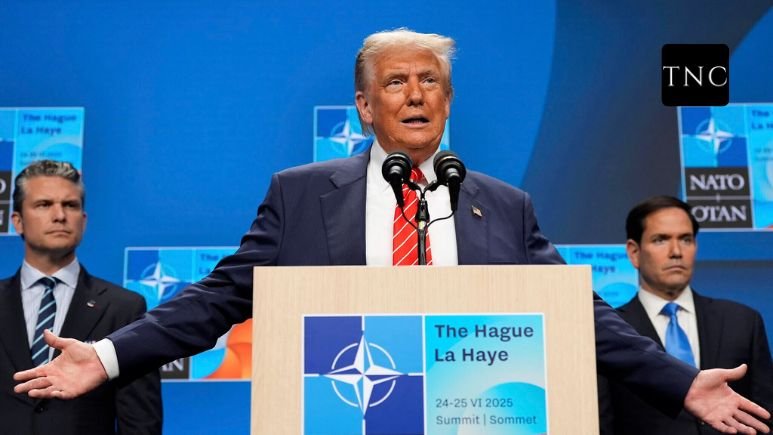

US President Donald Trump has announced an immediate Russia Ukraine energy ceasefire, claiming that both countries have agreed to stop attacking each other’s energy infrastructure. However, the announcement has created confusion after Ukrainian President Volodymyr Zelenskyy said he was waiting for details, while Russia had not publicly confirmed the agreement.
The announcement came on Sunday, October 11, 2026, amid growing concerns over attacks on power plants, oil refineries and other energy facilities.
Despite Trump’s statement, Ukrainian officials reported continued Russian strikes on energy infrastructure.
The development has raised an important question: Has a ceasefire actually been agreed upon, or is the United States still trying to secure one?
What Did Donald Trump Announce?
On October 11, Trump announced through his Truth Social platform that Russia and Ukraine had agreed to an energy ceasefire taking effect immediately.
According to Trump, the arrangement would stop attacks on energy infrastructure.
However, he did not provide details about the agreement, including its duration, monitoring arrangements or enforcement measures.
The White House did not immediately clarify the announcement.
An energy ceasefire would be different from a complete ceasefire because it would focus on protecting energy facilities rather than ending all military operations.
Without confirmation from both countries, the status of the proposed agreement remains uncertain.
What Did Ukrainian President Zelenskyy Say?
Ukrainian President Volodymyr Zelenskyy responded cautiously to Trump’s announcement.
He said Ukraine supported efforts to reduce attacks and protect civilian infrastructure but was waiting for further information from Washington.
In an interview with Axios, Zelenskyy indicated that Trump’s announcement had come as a surprise.
Ukraine has repeatedly said it would consider stopping attacks on Russian oil refineries if Moscow agreed to stop targeting Ukrainian energy facilities.
Zelenskyy also discussed the announcement with international leaders, including NATO Secretary-General Mark Rutte and leaders from Canada and Finland.
His response suggests that Ukraine remains open to an agreement, provided Russia follows the same conditions.
Has Russia Confirmed the Energy Ceasefire?
As of the latest reports on October 12, Moscow had not publicly confirmed the energy ceasefire announced by Trump.
This is an important detail because an effective ceasefire requires both sides to accept and follow its conditions.
Russia has continued military operations in Ukraine despite international calls for an end to attacks.
The absence of an official Russian confirmation has raised doubts about whether the agreement is operational.
Until both governments clarify their positions, Trump’s announcement cannot be treated as proof that the fighting has stopped.
Russian Attacks Continue Despite Trump’s Announcement
Ukrainian officials reported fresh Russian attacks on energy infrastructure after Trump’s statement.
According to Zelenskyy, Russian forces continued targeting facilities that provide electricity and other essential services.
Reports also described a Russian glide-bomb strike affecting a power plant in Kharkiv.
Attacks on electricity infrastructure can leave homes, hospitals and businesses without reliable power.
Ukraine’s energy network has suffered repeated damage during the war, making repairs and uninterrupted electricity supplies important concerns.
Continued attacks could make negotiations more difficult and reduce confidence in any proposed ceasefire.
Why Are Energy Facilities Being Targeted?
Energy infrastructure has become an important part of the Russia–Ukraine conflict.
Russia has repeatedly attacked Ukraine’s electricity generation and distribution facilities.
Ukraine has also carried out drone strikes against Russian oil refineries and other energy-related targets.
Such attacks can weaken fuel supplies, damage industrial operations and place economic pressure on the opposing country.
However, civilians can suffer serious consequences when electricity and heating systems are damaged.
An energy ceasefire could reduce these risks, even if fighting continues elsewhere.
It could also create an opportunity for broader diplomatic negotiations.
How Are Global Oil Prices Connected to the Ceasefire?
The proposed ceasefire comes during a period of uncertainty in international energy markets.
The conflict involving Iran has increased concerns about global oil and fuel supplies.
At the same time, attacks on Russian refineries have created additional pressure on energy markets.
Trump has pushed Ukraine to reduce attacks on Russian oil infrastructure as his administration looks for ways to address high diesel prices.
The United States has also faced criticism over a proposed arrangement involving Russian diesel supplies.
Critics argue that easing restrictions on Russian energy could provide Moscow with additional revenue while the war continues.
Following Trump’s ceasefire announcement, Brent crude prices fell by approximately 2%, according to Reuters market reporting on October 12.
However, oil prices are influenced by several factors, and a temporary market reaction does not prove that the ceasefire will succeed.
Could the Energy Ceasefire Lead to Peace?
A successful agreement to stop attacks on energy facilities could be a limited but meaningful step towards reducing the impact of the war.
It could protect essential infrastructure and help restore confidence between negotiating parties.
However, major disagreements remain over territory, security guarantees and the conditions for ending the conflict.
Zelenskyy has also proposed a broader 60-day ceasefire as a condition that could allow Ukraine to hold elections under appropriate legal arrangements.
A temporary halt to energy attacks would not resolve these larger political and military disputes.
What Happens Next?
The immediate focus will be on whether Russia formally accepts the proposed energy ceasefire.
Ukraine is also waiting for clearer details from the United States.
International observers will be watching for changes in military activity, especially attacks on power plants and oil refineries.
Any confirmed reduction in strikes could provide an opening for further negotiations.
However, continued attacks would raise serious doubts about the agreement’s effectiveness.
Conclusion
Donald Trump’s announcement of a Russia Ukraine energy ceasefire has created fresh hopes for reducing attacks on critical infrastructure.
However, with Moscow yet to confirm the agreement and Ukraine reporting continued Russian strikes, the situation remains uncertain.
The coming days will be important in determining whether the announcement leads to a genuine reduction in attacks or becomes another unsuccessful diplomatic effort.
Also Read | Nepal Budhi Gandaki Flood: Landslide Triggers Flash Floods












Leave a comment