

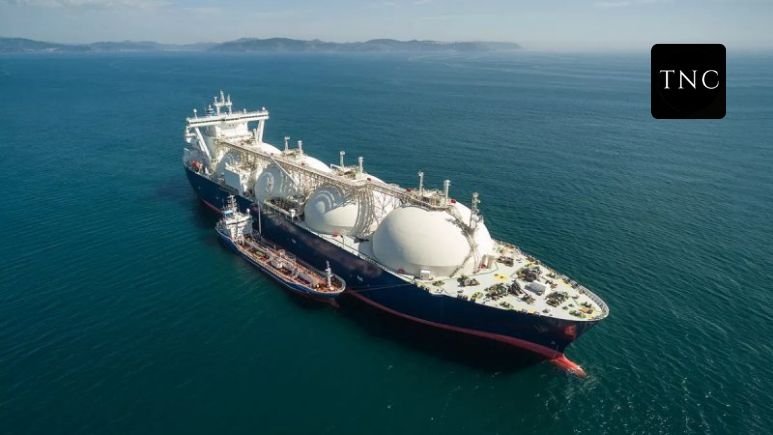

The lights inside a power terminal near Shanghai never dim. Even at 3 a.m., operators monitor giant digital dashboards tracking fuel arrivals from across the globe. Last week, one shipment drew unusual attention: an LNG tanker from Qatar that had slipped through the Strait of Hormuz with its tracking signal briefly disappearing along the way.
For energy traders, that silence meant one thing the ship was attempting one of the world’s most politically dangerous journeys.
The vessel, Al Rayyan, emerged days later near Oman, still moving toward China. Another tanker, Fuwairit, quietly followed a similar route toward Pakistan. Their voyages unfolded against the backdrop of a tense standoff involving Iran, the United States, and Gulf states, with commercial shipping through Hormuz reduced to a trickle.
What looks like routine fuel transport is, in reality, a high-stakes test of how far the global energy system can bend before it breaks.
The Strait of Hormuz is not just another shipping lane. It is the narrow maritime artery connecting the Persian Gulf to global markets, and nearly one-fifth of the world’s LNG trade moves through it. Qatar, one of the planet’s largest exporters of liquefied natural gas depends almost entirely on that route to supply customers across Asia.
Now, despite regional conflict and mounting security threats, Qatar appears determined to keep at least part of that trade alive.
The tankers crossing Hormuz are doing so under extraordinary conditions. Shipping data shows several vessels temporarily switched off their public tracking systems while navigating the strait, a tactic increasingly used in conflict zones to reduce exposure to threats.
Before the conflict escalated earlier this year, roughly three LNG tankers exited Hormuz every day. Since the fighting began, only a handful have successfully made the passage.
That slowdown is already reshaping global energy markets.
China, India, Pakistan, South Korea, and other Asian economies rely heavily on Gulf gas supplies to power factories, electricity grids, and industrial systems. In 2024, more than 80 percent of LNG moving through Hormuz was destined for Asia. China alone was among Qatar’s biggest buyers.
If those shipments stop, the consequences move far beyond fuel prices.
Gas shortages can trigger electricity rationing. Fertilizer production becomes more expensive. Manufacturing costs climb. Food inflation often follows. Energy analysts increasingly warn that a prolonged Hormuz disruption would ripple through nearly every major economy.
The broader geopolitical message is equally important.
Qatar’s shipments signal that Gulf exporters are unwilling to surrender critical trade routes entirely, even under military pressure. But they also reveal how fragile the system has become. Some earlier LNG vessels reportedly turned back before crossing the strait. Others waited offshore for days.
Behind the scenes, governments and shipping firms are calculating risk hour by hour: Is the cargo worth the danger? Will insurers still cover the voyage? Could a single missile strike freeze global gas markets overnight?
So far, the answer appears to be cautious persistence.
Even India has begun receiving fresh LNG movements from the Gulf again, a sign that exporters are attempting to restore at least partial trade flows.
But the numbers reveal how limited that recovery remains. Global LNG traffic through Hormuz is still far below normal levels, and energy companies remain deeply exposed to any escalation involving Iran or the surrounding Gulf states.
The quiet movement of a few LNG tankers through the Strait of Hormuz is more than a shipping story. It is a warning about how dependent the modern world remains on a narrow strip of water surrounded by geopolitical tension. As long as global energy flows hinge on Hormuz, every tanker that crosses it will carry not just fuel but the weight of the world economy.
Also Read / Pakistan Blinked: The Risky Bet Behind Islamabad’s Decision to Wait Out the LNG Crisis.










Leave a comment