

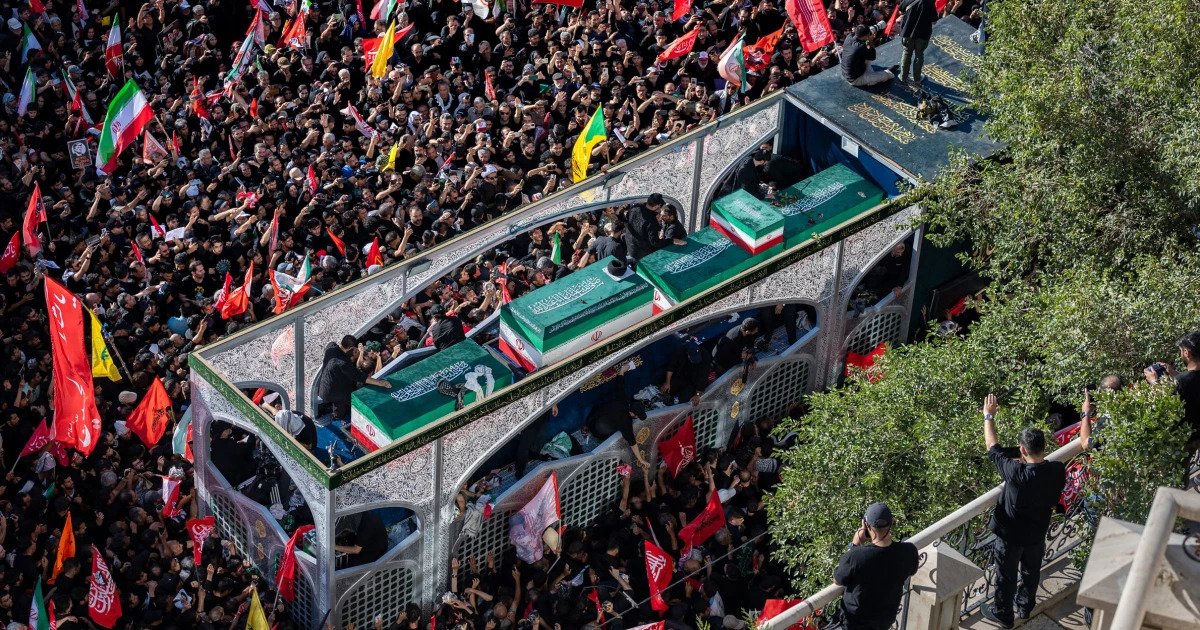

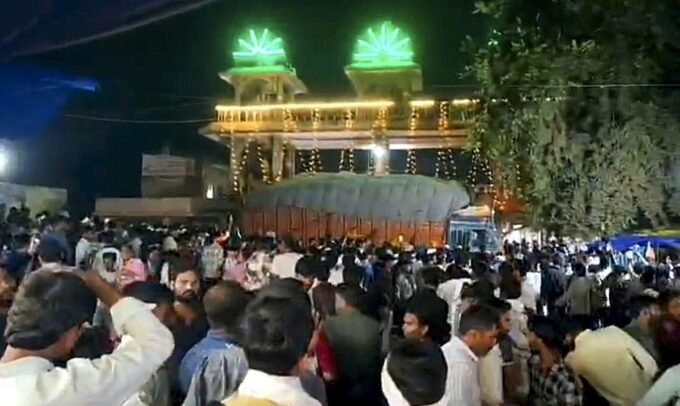
Mashhad, Iran – Iran witnessed one of the largest public gatherings in its modern history as the country’s late supreme leader was laid to rest in the holy city of Mashhad. Hundreds of thousands of mourners lined the streets, carrying flags, portraits, and religious banners while paying tribute during an emotional funeral procession.
The burial ceremony attracted religious scholars, senior military officials, government representatives, and citizens from across Iran, all gathered to honor the nation’s highest political and religious authority.
The funeral procession began early in the morning, with crowds stretching for several kilometers through Mashhad’s main streets before arriving at the designated burial site near one of the city’s most significant religious landmarks.
Throughout the day, mourners recited prayers, chanted religious verses, and observed moments of silence as the funeral cortege slowly advanced toward its final destination.
Massive Security Presence
Authorities deployed thousands of security personnel to maintain order during the ceremony. Police, military units, and emergency medical teams remained stationed throughout the city to assist the enormous crowds.
Officials temporarily closed major roads and restricted vehicle access around central Mashhad to facilitate the procession.
Despite the extraordinary number of attendees, organizers described the ceremony as orderly, with volunteers assisting elderly mourners and distributing water amid warm weather conditions.
National Mourning
The government declared several days of national mourning, during which flags were flown at half-staff and public institutions suspended normal activities.
Religious centers throughout Iran held memorial prayers, while television networks broadcast continuous coverage of the funeral ceremonies and retrospective programs highlighting the late leader’s decades-long role in shaping Iran’s political and religious institutions.
Markets, schools, and many government offices remained closed as citizens participated in memorial events.
Leaders Attend Funeral
Senior political leaders, military commanders, and prominent clerics attended the state funeral alongside foreign delegations from several countries.
Speakers praised the late supreme leader’s influence on Iran’s domestic governance and foreign policy while calling for national unity during the upcoming political transition.
Several officials emphasized the importance of preserving stability and maintaining constitutional processes following the burial ceremony.
Mashhad at the Center of Historic Ceremony
Mashhad, regarded as one of the holiest cities in the Islamic world, became the focal point of national attention as pilgrims and mourners arrived from every province.
Hotels, transportation hubs, and public accommodations operated at full capacity as authorities worked to manage the unprecedented influx of visitors.
Religious institutions organized additional prayer services throughout the city, allowing citizens who could not attend the central ceremony to pay their respects.
International Reactions
World leaders extended condolences following news of the leader’s passing, with several governments expressing hopes for regional stability during Iran’s political transition.
Analysts noted that developments in Tehran would likely influence diplomatic relations, energy markets, and regional security dynamics in the coming months.
International observers are expected to closely monitor Iran’s constitutional succession process and future policy direction.
Political Transition Begins
Attention now shifts toward Iran’s leadership transition and the constitutional mechanisms responsible for selecting a new supreme leader.
Political analysts believe the coming weeks will be significant as religious authorities and state institutions begin consultations regarding the country’s future leadership.
Experts suggest that continuity and institutional stability are likely to remain priorities during the transition period.
Legacy Remembered
Supporters described the late supreme leader as one of the most influential figures in Iran’s modern history, noting decades of leadership through periods of political change, regional conflict, and international negotiations.
Historians believe the leader’s legacy will continue to shape debates about Iran’s domestic governance, foreign policy, and role in the Middle East for years to come.
As the funeral concluded in Mashhad, thousands remained gathered in prayer long after the official ceremony ended, reflecting the significance of the occasion for many citizens.
The burial marks the closing of a historic chapter in Iran’s political and religious leadership while opening a new period that will attract close attention from governments, analysts, and observers around the world.






Leave a comment