

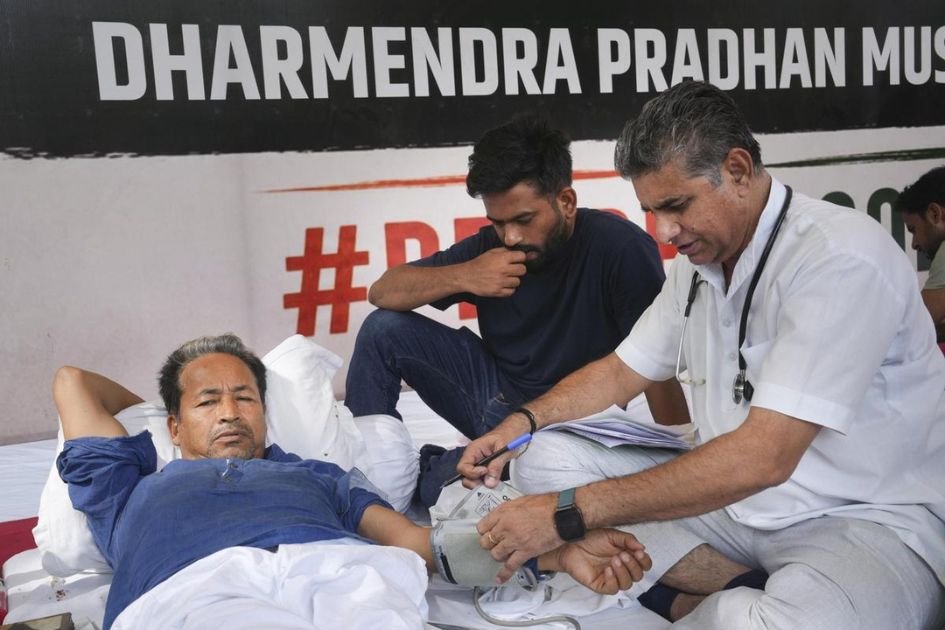

Leh, Ladakh: Environmentalist, education reformer, and Ramon Magsaysay Award recipient Sonam Wangchuk has entered a critical phase of his hunger strike, intensifying concerns over his health while drawing renewed attention to his demands for constitutional protections and sustainable development in Ladakh.
The protest, which has gained support from environmental activists, students, and civil society groups across India, seeks stronger legal safeguards for the ecologically fragile Himalayan region. Wangchuk has consistently argued that rapid development without adequate environmental protection could threaten Ladakh’s unique ecosystem and traditional way of life.
As his fast continues, supporters have urged the government to engage in meaningful dialogue, while medical experts closely monitor his condition.
Why Is Sonam Wangchuk on Hunger Strike?
The hunger strike is centered on demands related to Ladakh’s governance and environmental future. Wangchuk and several local organizations have repeatedly called for constitutional safeguards that they believe are necessary to preserve the region’s ecological balance and cultural identity.
Among the key issues highlighted during the protest are:
- Greater constitutional protection for Ladakh.
- Stronger environmental safeguards against unchecked development.
- Protection of local communities and indigenous rights.
- Sustainable infrastructure planning.
- Greater public participation in policy decisions affecting the region.
Supporters argue that these measures are essential to balance economic growth with long-term environmental conservation.
Health Concerns Intensify
As the hunger strike enters a more critical stage, doctors have expressed concern about Wangchuk’s health. Prolonged fasting can lead to dehydration, nutritional deficiencies, muscle loss, and other serious medical complications.
Medical teams have reportedly been monitoring his condition regularly, while supporters continue to gather peacefully at the protest site.
Activists have appealed to the authorities to prioritize dialogue before the situation deteriorates further.
Nationwide Support Grows
The protest has attracted attention well beyond Ladakh.
Environmental groups, student organizations, retired government officials, and social activists have expressed solidarity with Wangchuk’s campaign through peaceful demonstrations and online campaigns.
Social media platforms have witnessed increasing public discussion under hashtags supporting environmental protection and constitutional safeguards for Ladakh.
Many citizens believe the movement highlights broader concerns about balancing development with environmental sustainability.
Environmental Concerns at the Center
Ladakh is widely regarded as one of India’s most environmentally sensitive regions.
Experts have long warned that climate change, glacier retreat, water scarcity, and increasing tourism present significant challenges for the Himalayan ecosystem.
Wangchuk has consistently advocated development models that prioritize:
- Renewable energy.
- Water conservation.
- Glacier protection.
- Sustainable tourism.
- Community-led development.
Supporters argue that long-term planning is necessary to preserve Ladakh’s fragile environment for future generations.
Government Yet to Reach a Breakthrough
Government representatives have previously held discussions with Ladakh-based organizations on various administrative and developmental issues. However, no comprehensive agreement has yet addressed all the concerns raised by Wangchuk and other local stakeholders.
Officials have reiterated their commitment to Ladakh’s development while emphasizing the need for continued dialogue with community representatives.
Observers believe constructive negotiations could help reduce tensions and identify solutions acceptable to all parties.
Public Response
The hunger strike has generated mixed reactions nationwide.
Many supporters praise Wangchuk for using peaceful democratic methods to raise awareness about environmental conservation and local governance.
Others believe complex constitutional and administrative matters require broader consultations involving multiple stakeholders before any major policy changes are implemented.
Despite differing opinions, the protest has succeeded in bringing Ladakh’s environmental challenges into the national spotlight.
Sonam Wangchuk’s Legacy
Sonam Wangchuk is widely recognized for his work in education, innovation, and climate resilience.
He gained international recognition through:
- Innovative education reforms in Ladakh.
- Development of artificial glacier technology (“Ice Stupas”) to address water shortages.
- Promotion of sustainable mountain development.
- Advocacy for renewable energy.
- Environmental conservation initiatives.
His work has inspired environmentalists and educators both in India and abroad.
The Road Ahead
As the hunger strike continues, attention is focused on whether renewed negotiations between the government and Ladakh representatives can lead to meaningful progress.
Policy experts suggest that future discussions may include:
- Environmental impact assessments.
- Sustainable tourism policies.
- Climate adaptation strategies.
- Local governance reforms.
- Long-term ecological protection measures.
Finding common ground could help address concerns while supporting Ladakh’s development goals.
Conclusion
Sonam Wangchuk’s hunger strike has evolved into a significant public campaign highlighting the future of Ladakh’s environment, governance, and sustainable development. As concerns about his health grow, many citizens and organizations are urging constructive dialogue to address the issues raised through peaceful democratic engagement.
Regardless of the eventual outcome, the protest has brought national attention to the challenges facing one of India’s most ecologically sensitive regions. The coming days are expected to be crucial as stakeholders look for solutions that balance development, environmental conservation, and the aspirations of the people of Ladakh.










Leave a comment