


Jessica Head opened her phone to find her notifications drowning in rage, direct messages, comments, threats, insults. Some came in English. Others arrived in Hindi and Telugu. Many were too graphic to repeat. What unsettled her most was not the anger aimed at her husband, Australian batter Travis Head. It was the flood of messages targeting relatives, friends, and even old wedding photographs posted years earlier.
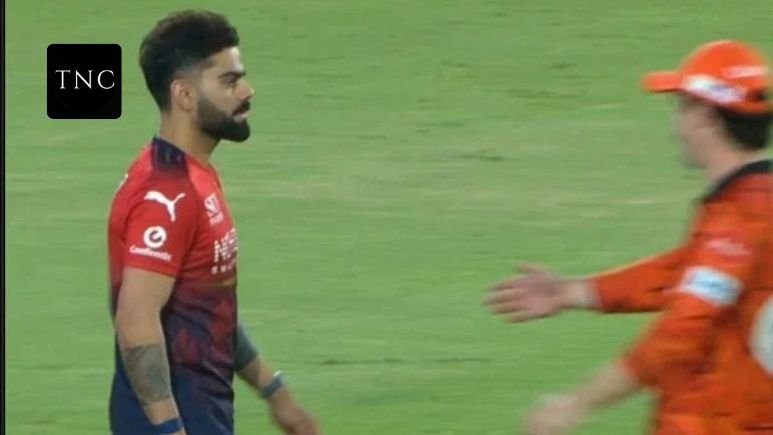
Hours earlier, millions of cricket fans had watched a tense Indian Premier League clash between Royal Challengers Bengaluru and Sunrisers Hyderabad spiral beyond sport. Cameras caught an on-field verbal exchange between Virat Kohli and Head. Then came the moment that detonated online debate: the post-match handshake that never happened.
For many fans, it was another dramatic chapter in cricket’s oldest currency confrontation. For the Head family, it became something darker. Jessica later described the backlash as “a repeat” of the online abuse they endured after Australia’s victories over India in recent ICC tournaments.
Cricket has always sold intensity. The IPL, in particular, thrives on tribal loyalties, superstar egos, and theatrical pressure. But the Kohli-Head episode exposed how quickly modern fandom can mutate into digital vigilantism. A disagreement between two elite athletes did not stay on the boundary rope. It spilled into Instagram comment sections, private inboxes, and family spaces that had nothing to do with the match itself.
The confrontation itself was brief. During Bengaluru’s steep chase against Hyderabad, Kohli and Head exchanged heated words after a delivery. Kohli reportedly mocked Head’s “impact player” role while emotions boiled over in the middle overs. Later, as players lined up after Hyderabad’s win, television cameras appeared to show Kohli walking past Head without shaking hands. Within minutes, clips flooded social media feeds across India and Australia.
That should have been the end of it.
Instead, the internet turned the spat into a loyalty test.
Cricket’s biggest stars command fan bases that operate less like audiences and more like online armies. Kohli, one of the most followed athletes on the planet, inspires unmatched devotion. Supporters defend him with the intensity usually reserved for political movements or football ultras. Most fans celebrate passionately but harmlessly. A smaller, toxic minority weaponizes anonymity.
Jessica Head said the abuse quickly spread beyond the couple themselves. Friends and family members reportedly became targets of threatening messages and harassment campaigns.
The pattern is becoming familiar in global sport. Athletes are no longer the only public figures exposed after high-profile contests. Wives, girlfriends, parents, and children increasingly absorb collateral damage from fan outrage. Social media erased the old barrier between stadium emotion and private life. One viral clip now triggers millions of reactions within minutes, and algorithms reward outrage more aggressively than restraint.
Former India opener Wasim Jaffer later argued that tensions should have ended with a handshake. Others defended Kohli’s competitiveness as part of his personality. Former cricketer Irfan Pathan described Kohli’s behavior as “Australian-style intensity” fierce, emotional, combustible.
But the larger issue is no longer about whether Kohli should have shaken hands.
It is about how sports culture increasingly confuses aggression with entitlement.
Athletes understand sledging. They accept pressure, hostility, and criticism as part of elite competition. What they cannot fully control is the digital mob that forms afterward. In the age of screenshots and viral outrage, a five-second confrontation can unleash days of abuse aimed at people who never stepped onto the field.
Even some Indian cricket voices condemned the backlash. Journalist Bharat Sundaresan criticized what he called “tribalistic” trolling and argued that online fandom has become dangerously personal.
The irony is hard to ignore. Cricket markets itself as a gentleman’s game while its online ecosystem grows increasingly vicious. Rivalries that once ended at the boundary line now linger indefinitely on phones carried into bedrooms, schools, airports, and family dinners.
The Bottom Line: the Kohli-Head clash was never the real story. Cricket rivalry is normal. Abuse directed at families is not. When fandom stops seeing athletes as human beings, sport stops being sport and starts becoming something far uglier.
Also Read / The Shadow That Wouldn’t Lift: How Dhoni’s Presence Without Playing Hurt CSK More Than His Absence .












Leave a comment