


At a child care home in Maharashtra’s Latur district, dinner had just ended when the staff gathered in the office to discuss salaries that had not arrived in months. A caretaker who had spent a decade looking after abandoned children stared at a ledger filled with unpaid dues. In another room, a counselor helped a teenage girl finish her homework under the dim glow of an emergency light because the institution had delayed paying its electricity bill again.
Nobody in the building talked about politics. But everyone knew the reason being discussed in courtrooms across the state: the government claimed there was not enough money.
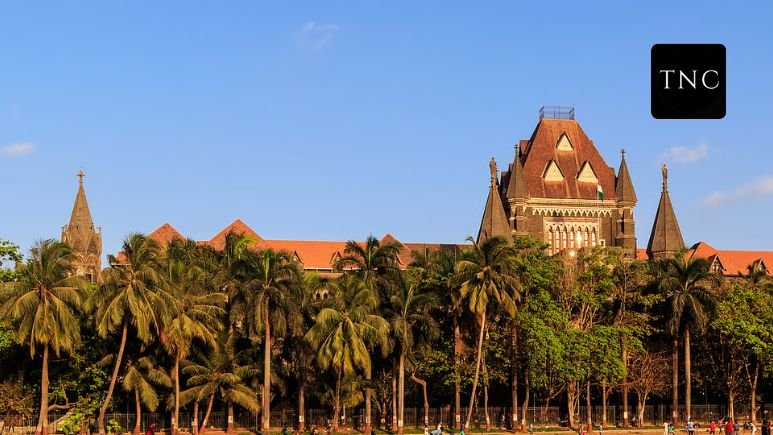
This week, the Bombay High Court delivered a sharp rebuke to the Maharashtra government after NGO-run child care institutions alleged that salary grants meant for employees had been denied or delayed while massive welfare spending continued under the popular Ladki Bahin scheme. The court questioned how a state could justify financial support for one welfare programme while homes caring for vulnerable children struggled to survive.
The case has become more than a legal dispute over grants. It has exposed the uncomfortable arithmetic of modern governance: when governments aggressively expand politically popular welfare schemes, what happens to institutions that care for people who cannot vote, protest, or trend on social media?
According to court observations reported this week, the judges warned that denying aid to children’s homes could violate the constitutional guarantee of equality under Article 14. The bench argued that the welfare, rehabilitation, and protection of children carry a higher constitutional obligation.
The petitioners were not corporate contractors or political opponents. They were cooks, caretakers, counsellors, clerks, and superintendents working in children’s homes operated by NGOs and charitable trusts. Many of these institutions care for children abandoned by families, rescued from abuse, or pushed into the system by poverty and trafficking.
The timing of the controversy matters.
Over the past two years, welfare politics in Maharashtra has increasingly revolved around direct cash-transfer schemes. The Mukhyamantri Majhi Ladki Bahin Yojana emerged as one of the state’s most visible programmes, offering financial support to eligible women and becoming politically central ahead of elections. But critics and activists have repeatedly raised concerns about budget strain, implementation gaps, and irregularities in beneficiary selection. An RTI response cited recently revealed that thousands of ineligible beneficiaries, including men, allegedly received payments under the scheme, while recovery mechanisms remain unclear.
That backdrop made the High Court’s remarks unusually pointed.
Courts in India rarely challenge the political logic of welfare programmes directly. But this time, the judges appeared to ask a deeper question: Is governance becoming more focused on headline schemes than on maintaining fragile social institutions already performing essential public duties?
The answer may shape more than one state budget.
Across India, governments increasingly favour direct-benefit schemes because they are immediate, measurable, and politically visible. A monthly transfer reaches a citizen’s bank account and creates a direct emotional link between voter and state. Institutional funding, by contrast, is slow, invisible, and bureaucratic. Nobody celebrates a functioning orphanage until it stops functioning.
That imbalance creates dangerous incentives.
Child care homes, rehabilitation centres, shelter homes, and grassroots NGOs often operate on thin margins. Delayed grants do not merely disrupt paperwork; they destabilise entire ecosystems of care. Staff leave. Nutrition suffers. Maintenance collapses. Children absorb the instability long before policymakers notice it.
The High Court’s intervention signals growing judicial discomfort with that model of selective welfare prioritisation. The bench has now directed the state to formulate a policy framework regarding salary aid for NGO-run institutions within six months.
For Maharashtra, the controversy arrives at a politically sensitive moment. Welfare expansion remains electorally powerful, but fiscal pressure is intensifying. Governments across India face competing demands: subsidise consumption, fund infrastructure, maintain social services, and contain deficits all at once.
Eventually, every budget reveals what a state truly values.
And sometimes that truth surfaces not in assembly speeches, but inside an overcrowded child care home where workers wait for salaries while trying to convince abandoned children that the world has not forgotten them.
Welfare schemes may win elections, but institutions protect societies. When governments fund visibility over vulnerability, courts eventually step in to ask who gets left behind.
Also Read / Turkman Gate Clashes: Court Remands 8 Accused to 12-Day Judicial Custody.












Leave a comment