


Dubai:
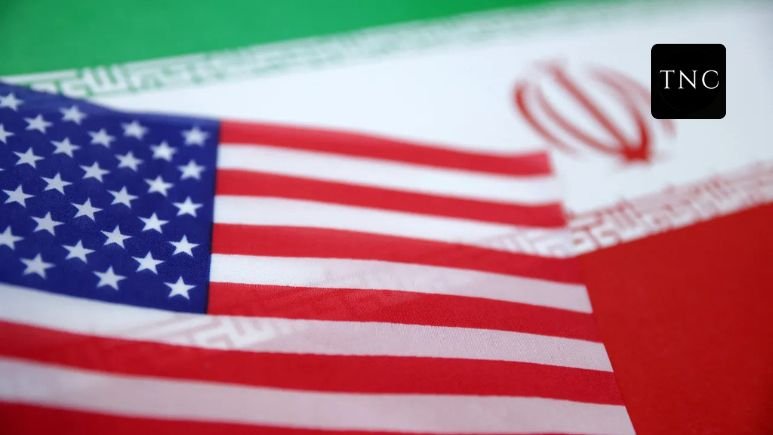
Iran submitted a 14-point response to a US peace proposal on Saturday, calling for all outstanding issues between the two countries to be resolved and the war permanently ended within 30 days, rather than a two-month ceasefire extension as the US had proposed, according to Iran’s semi-official Tasnim news agency and state broadcaster Press TV. The proposal was transmitted to the United States through a Pakistani intermediary, Iranian state-linked Nour News Agency reported. Iran’s Foreign Ministry spokesperson Esmaeil Baghaei subsequently confirmed on state television that the United States had sent a response to the proposal, which was under review in Tehran.
The 14-point plan represents Iran’s formal rebuttal to a nine-point framework put forward by the United States. It was structured as a direct counter to the US position, with Iran’s deputy foreign minister, Kazem Gharibabadi, stating that the proposal was “aimed at the permanent end” of the war, according to Iranian state broadcaster IRIB.
Key Points — Iran’s 14-Point Proposal:
| No. | Key Point | Details |
| 1 | 30-Day Resolution Window | All issues to be resolved and the war permanently ended within 30 days. Iran rejected a two-month ceasefire extension, insisting on a full termination of the war. |
| 2 | Guarantees Against Future Aggression | Written guarantees from the US and Israel against future military attacks, citing past strikes on Iranian nuclear sites and officials. |
| 3 | US Military Withdrawal | Withdrawal of US military forces from regions surrounding Iran. |
| 4 | Sanctions Removal | Complete lifting of all US sanctions on Iran, including those tied to the nuclear program and post-February 2026 conflict. |
| 5 | Release of Frozen Assets | Unfreezing Iranian assets worth billions held in international financial institutions. |
| 6 | End Naval Blockade | Lifting of the naval blockade of Iranian ports; proposal does not include Iran committing to minesweeping the Strait of Hormuz. |
| 7 | End All Hostilities (Including Lebanon) | Full cessation of military actions, including Israel’s operations in Lebanon. |
| 8 | New Hormuz Mechanism | Creation of a new system to govern navigation and security in the Strait of Hormuz, a key global trade route. |
| 9 | Uranium Enrichment Rights | Explicit recognition of Iran’s right to uranium enrichment under the Nuclear Non-Proliferation Treaty (NPT). |
| 10 | War Reparations | Payment for damages caused by US and Israeli military operations in Iran since February 28, 2026. |
| 11–14 | Three-Phase Structure | Phase 1: Ceasefire and transition to permanent peace (30 days). Phase 2: Bilateral normalization with sanctions relief and asset release. Phase 3: Strategic regional dialogue including Middle Eastern nations, with roles for China and Russia in enforcement. |
Trump’s Response — Washington / Palm Beach:
President Donald Trump said on Saturday evening that he had been briefed on the “concept of the deal” and would soon review the full wording of the proposal. “They told me about the concept of the deal. They’re going to give me the exact wording now,” Trump told reporters before departing Palm Beach for Miami. By Sunday, Trump confirmed in an interview with Israeli broadcaster Kan News that he had reviewed the proposal and that it was “not acceptable.” The White House did not issue a formal written statement on the rejection.
“They told me about the concept of the deal. They’re going to give me the exact wording now. I can’t imagine that it would be acceptable.”
President Donald Trump, speaking to reporters at Palm Beach, Florida, Saturday, May 2, 2026
Trump also reiterated on Saturday that if Iran “misbehaves,” there was a possibility that US strikes could resume, stating: “If they do something bad, there is a possibility it could happen.” He further characterised Iran as “desperate” for a settlement because the country had been “decimated” by months of conflict and a naval blockade. Trump separately proposed a new plan to reopen the Strait of Hormuz at the mouth of the Persian Gulf.
Separately, Trump pushed back on remarks he had made on Friday evening in which he had said, “Frankly, maybe we’re better off not making a deal at all. Do you want to know the truth? Because we can’t let this thing go on.” On Saturday he told reporters: “I said that if we left right now, it would take them 20 years to rebuild. But we’re not leaving right now.”
Pakistan as Mediator — Islamabad:
Pakistan’s role as an intermediary between the two parties remained central to the diplomatic exchange. Iran transmitted its 14-point proposal to Washington through a Pakistani intermediary, consistent with the channel used in prior rounds of communication. Two Pakistani officials, speaking to the Associated Press on condition of anonymity as they were not authorised to speak to the media, confirmed that Pakistan’s Prime Minister, Foreign Minister and Army Chief were continuing to actively encourage the United States and Iran to engage in direct dialogue. Pakistan has hosted previous rounds of negotiations between the two sides.
Oman’s Role — Muscat:
On Sunday, Iranian Foreign Minister Abbas Araghchi spoke by telephone with Oman’s Foreign Minister Badr al Busaidi, who had overseen previous rounds of indirect talks between the US and Iran before the current phase of fighting began. Oman played a parallel mediating role in earlier back-channel communications between Tehran and Washington.
US Special Envoy Confirms Dialogue Continues:
US Special Envoy Steve Witkoff confirmed publicly that the United States and Iran were “in conversation,” indicating that diplomatic contact had not been severed despite Trump’s rejection of the proposal. The three-week ceasefire, which has been in effect since mid-April, was described by multiple sources as “fragile” but holding.
Also Read / The Lights Went Out in Islamabad and the Strait of Hormuz Was to Blame .











Leave a comment