


Dubai: Since the United States and Israel launched Operation Epic Fury on February 28, 2026, no country outside Iran and Israel has absorbed a heavier volume of Iranian fire than the United Arab Emirates. As of April 9, 2026, the UAE Ministry of Defence reported that Iran had fired a total of 537 ballistic missiles, 2,256 drone attacks and 26 cruise missiles at targets within UAE territory. The attacks have killed 13 people, including two military personnel, one civilian contractor and 10 civilians, and injured 224 others. Most projectiles were intercepted by UAE air defence systems, but debris and impact effects resulted in confirmed casualties and structural damage across Abu Dhabi and Dubai.
The intensity of the targeting has raised a central question among Gulf security analysts, diplomats and residents: why is Iran striking the UAE harder than any other country in the region?
The answer, according to analysts and documents reviewed from multiple sources, lies across five intersecting factors: the presence of US military bases on Emirati soil, the Abraham Accords normalisation with Israel, the UAE’s role as a critical global economic hub, a pre-planned Iranian escalation doctrine, and a territorial dispute that predates the current conflict by decades.
Factor 1: Al Dhafra Air Base and US Military Presence
In the first four days of the conflict, the UAE suffered the highest number of strikes, both intercepted and successful, among all six Gulf Cooperation Council states, followed by Kuwait and Bahrain all of which host US military bases.
The UAE is home to Al Dhafra Air Base, which houses thousands of US military personnel, advanced aircraft, and surveillance assets. It also hosts Camp de la Paix, housing French forces. Both installations were targeted in the opening salvos of Iran’s retaliatory strikes on February 28.
Iran’s Islamic Revolutionary Guard Corps stated that all US military assets throughout the region were considered “legitimate targets,” and claimed that all US and Israeli military targets in the Middle East had been struck by the “powerful blows of Iranian missiles.”
Secretary of Defense Pete Hegseth said at the Pentagon that the ceasefire remained in force and that American forces had no intention of entering Iranian waters. “We’re not looking for a fight. But Iran cannot be allowed to block innocent countries and their goods from international waterways,” Hegseth told reporters.
Factor 2: The Abraham Accords and Israeli Security Ties
Abu Dhabi’s ties with Israel spanning cybersecurity, defence, and intelligence have heightened Iran’s threat perception of the UAE, despite the restoration of full diplomatic ties between Abu Dhabi and Tehran in 2022 following Emirati diplomatic outreach beginning in 2019. The Abraham Accords normalisation agreement between the UAE and Israel, signed in September 2020, fundamentally altered how Tehran assessed the Gulf state as a security threat.
The strikes against the UAE are described in documents and communications attributed to the late Supreme Leader Ali Khamenei as part of a plan he designed before his death. The plan ordered that in the case of war with the United States and Israel, Iran would cause regional chaos across the Middle East, with the stated purpose of pushing Gulf neighbours to pressure Washington and Tel Aviv for a halt to attacks on Iran.
Conservative Iranian newspaper Kayhan, whose editor-in-chief is appointed by the Supreme Leader, had previously warned that the Abraham Accords had turned the UAE into a “legitimate, easy target.”
Factor 3: Targeting the UAE’s Economic Infrastructure
Struck locations in the UAE have included Dubai International Airport, the Shah gas field, Abu Dhabi’s Ruwais Industrial Complex which houses the country’s largest oil refinery Fujairah’s oil trading hub, and two Amazon data centres, disrupting consumer applications and banking services. Debris from intercepted weapons caused fires at Jebel Ali Port, the Burj Al Arab hotel, and the Dubai International Financial Centre Innovation Hub.
A fire broke out at the Ruwais Industrial Complex as a result of an Iranian drone strike, causing Abu Dhabi National Oil Company to shut down its refinery, a facility that would otherwise produce 922,000 barrels of oil per day. A drone strike near Dubai International Airport resulted in severe injuries to four people of Ghanaian, Indian and Bangladeshi nationalities. A tower in the Dubai Creek Harbour area was hit by a drone, causing a fire.
Iran also targeted Fujairah, the emirate on the Gulf of Oman that serves as the terminus of a pipeline the UAE has used to route some of its oil exports without using the Strait of Hormuz. Fujairah is home to extensive oil storage facilities and represents the UAE’s primary sea access point outside the strait. Authorities in Fujairah confirmed that one drone sparked a fire at a key oil facility, wounding three Indian nationals.
Sultan Al Jaber, Chief Executive of Abu Dhabi National Oil Company, described the cumulative targeting of energy infrastructure across the Gulf as “global economic warfare.”
Factor 4: Airspace, Surveillance and the Abraham Accords Intelligence Architecture
All GCC states, including the UAE, temporarily closed their airspace following Iranian strikes on their territories. Commercial planes bound for the UAE, home to the global travel hubs of Dubai and Abu Dhabi, turned around midair during peak attack periods.
Four missile alerts were issued on Monday, May 4, urging UAE residents to seek shelter the first such alerts since the ceasefire began in early April after Iran resumed targeting the UAE in response to the US launch of Project Freedom, the operation to escort commercial vessels through the Strait of Hormuz. The UAE condemned what it called “renewed treacherous Iranian aggression” and called for an immediate halt to the attacks. The UAE’s Foreign Ministry stated in a post on X: “These attacks represent a dangerous escalation and an unacceptable violation.”
Factor 5: The Islands Dispute and Historical Grievances
Iran and the UAE have a longstanding territorial dispute over three islands in the Persian Gulf: Abu Musa, Greater Tunb and Lesser Tunb. The islands have been under Iranian control since November 1971, following the withdrawal of British forces from the Gulf, days before the UAE’s declaration of independence. The UAE has disputed Iran’s sovereignty over Abu Musa, which was agreed in a 1971 memorandum of understanding to be jointly administered.
The Chief of Staff of the Iranian armed forces, Mohammad Bagheri, stated separately that Iran’s strategy toward the UAE had shifted and that the UAE would be held responsible in case of an attack on Iran through the Persian Gulf.
UAE’s Response: Diplomatic Rupture and Crackdown
The United Arab Emirates closed its embassy in Tehran on March 1, 2026, following the series of Iranian missile and drone strikes, effectively terminating the “cautious de-escalation” policy previously pursued by Abu Dhabi. The UAE Ministry of Interior subsequently began a widespread crackdown on IRGC-linked espionage networks within the country. On March 20, it was reported that the UAE State Security Department had uncovered a terror network linking Hezbollah and Iran, with all members arrested for illegal activities including funding terrorism and money laundering.
The UAE is also reportedly considering freezing billions of dollars in Iranian assets, targeting Iranian bank accounts, companies and trade networks in a move that could significantly disrupt Tehran’s access to foreign currency.
UAE President Mohamed bin Zayed Al Nahyan, together with Saudi Crown Prince Mohammed bin Salman, warned that continued Iranian attacks on Gulf states may lead to a regional escalation. UAE foreign minister Sheikh Abdullah bin Zayed Al Nahyan stated that the UAE would not be “blackmailed by terrorists.”
UAE presidential adviser Anwar Gargash said the war needed to end with “a long-term solution for security in the Persian Gulf,” and discouraged any ceasefire arrangement that would not accomplish that objective.
Broader Gulf Targeting: Why Oman Was Spared
For the first time in history, Iran attacked all six Gulf Cooperation Council countries simultaneously: Bahrain, Kuwait, Oman, Qatar, Saudi Arabia and the UAE. Few Gulf monarchies had anticipated this escalation. For decades, the Gulf had remained largely insulated from direct Iranian fire; since the Tanker War of the late 1980s, Tehran had avoided openly targeting the region and had relied instead on proxy groups or operated in other theatres.
Oman remains the least targeted GCC state, and Muscat is the only Gulf capital so far spared from direct attacks, allowing it to keep diplomatic channels open with Tehran and serve as a potential off-ramp channel in peace negotiations. Iran’s new Supreme Leader denied that Tehran was behind any attacks on Oman, signalling that Tehran values its relationship with the Sultanate and seeks to preserve it.
Analysts have concluded that the strikes marked a permanent rupture in the UAE’s strategic assumptions, with Gulf states facing a more dangerous and complex security environment after the war’s conclusion than before it began, regardless of the outcome of ongoing US-Iran peace negotiations.
Current Status: Project Freedom Paused, Blockade Continues:
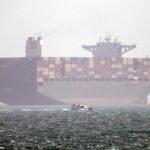
The US military said it fired on Iranian forces and sank six small boats targeting civilian ships during its brief operation to escort vessels through the Strait of Hormuz on Monday. Two American-flagged merchant ships successfully transited the strait before President Trump announced the pause of Project Freedom on Tuesday, citing Pakistan’s request and “great progress” toward a final agreement with Iran. The US naval blockade of Iranian ports remains fully in force.
Iran has increasingly targeted energy and maritime infrastructure across the Gulf throughout the conflict. Strikes hit oil facilities in the UAE, targeted Saudi Arabia’s Shaybah oil field, and damaged Bahrain’s refinery and desalination infrastructure. Demand for oil is falling at the fastest rate seen outside the Covid pandemic as businesses and consumers cut consumption in response to the economic disruption caused by the Hormuz closure.









Leave a comment