

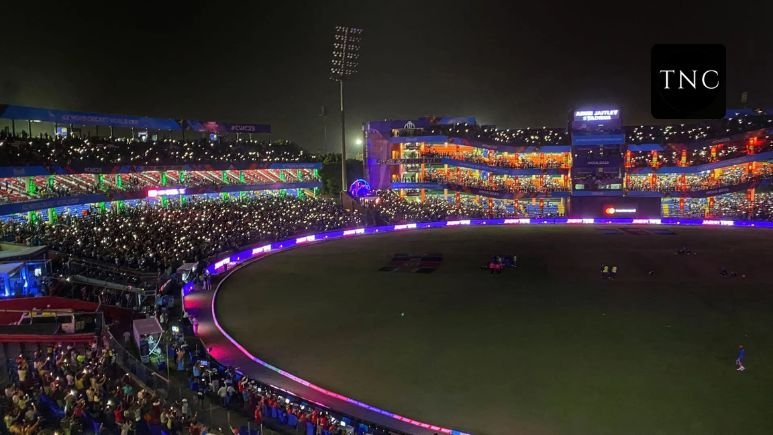

Sanju Samson walked off unbeaten, helmet tucked under his arm, sweat soaking through the blue jersey as cameras chased him toward the dressing room tunnel. Across social media, clips of his timing, those late cuts and effortless lofted drives spread faster than the match highlights themselves. Minutes later, another headline surfaced: Shreyas Iyer, calm as ever after yet another composed IPL captaincy performance, was reportedly in contention to lead India’s T20 side.
By midnight, Indian cricket had done what it always does best turn succession planning into a national argument.
The question was no longer whether India needed a new T20 captain after Suryakumar Yadav. It was about what kind of future the selectors wanted to build. Reports suggested Shreyas Iyer was initially seen as the frontrunner, only for fresh claims to place Sanju Samson ahead in the race.
That matters far beyond one dressing room.
India’s T20 team is entering another transition cycle. The old anchors are fading out. Franchise cricket now shapes public perception faster than bilateral series. And for the first time in years, leadership discussions are being driven not just by seniority, but by adaptability, dressing-room influence, and brand-new expectations about modern T20 cricket.
Samson and Iyer represent two sharply different leadership stories.
Iyer is the establishment candidate. He carries the reputation of a tactical thinker calm under pressure, respected by teammates, and increasingly polished in high-pressure IPL situations. Former players have openly endorsed his leadership credentials, pointing to his ability to manage games without emotional overreaction.
But there is one complication: he has never fully cemented himself in India’s current T20 core.
That is where Samson gains ground.
For years, Samson existed as Indian cricket’s unfinished sentence: gifted, stylish, occasionally brilliant, but perpetually questioned. Then came a dramatic shift. Strong IPL performances, a bigger leadership role, and a standout T20 World Cup campaign transformed the conversation around him. Reports now suggest selectors value the fact that he has already spent significant time inside India’s evolving T20 structure.
In modern cricket, familiarity matters. Captains no longer just set fields. They manage data-heavy strategies, rotating squads, and hyper-specialized roles. Selectors increasingly prefer leaders who already understand the ecosystem.
Samson’s rise also reflects another truth about Indian cricket: perception changes brutally fast.
Just months ago, critics questioned his consistency and fitness. Some former cricketers publicly urged him to improve his conditioning standards. Now, after match-winning IPL knocks and renewed confidence, the same player is being discussed as a long-term national leader.
Iyer’s case, meanwhile, rests on stability. He offers structure in a format increasingly dominated by chaos. Even online fan discussions reveal how divided opinion remains. Some argue India needs a captain already embedded in the T20 XI. Others believe leadership quality should outweigh current squad position.
Behind all this noise sits the real challenge for Indian cricket: choosing identity over popularity.
Does India want a captain who symbolizes continuity and tactical calm? That points toward Iyer.
Or does it want a leader already woven into the aggressive, evolving T20 setup? That strengthens Samson’s case.
Either way, the decision will reveal what Indian cricket values most in the post-superstar era.
The Bottom Line: This is no longer just a captaincy debate. It is a referendum on the future shape of India’s T20 cricket and right now, Sanju Samson’s timing may be better than anyone expected.
Also Read / The Clip That Wouldn’t Stop: How a Few Seconds on a Team Flight Became the IPL’s Latest Crisis.









Leave a comment