

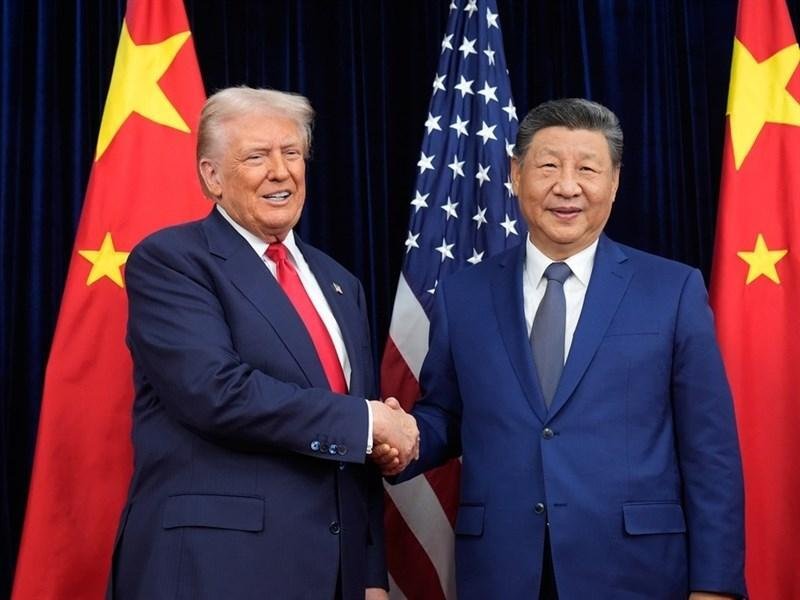

Washington: U.S. President Donald Trump and Chinese President Xi Jinping are scheduled to meet in Washington on September 24, 2026, during Xi’s state visit to the United States from September 23 to 25. The meeting will be their second summit of the year and comes as Washington and Beijing continue to negotiate over tariffs, technology restrictions and broader economic issues.
The upcoming meeting is expected to cover a wide range of subjects, including trade, tariffs, artificial intelligence, rare earths, Taiwan, Iran and the movement of fentanyl precursor chemicals. The two governments have also held preparatory economic discussions ahead of the leaders’ meeting.
Trade and Tariffs at the Centre
Trade is expected to be one of the most important subjects at the summit.
The United States and China have spent much of the past year negotiating tariff arrangements, with both sides seeking to protect their economic interests while avoiding further escalation. China has recently said it hopes to reach an agreement with the United States on reducing import taxes at an early date.
According to Reuters, discussions ahead of the summit include the possible extension of the existing tariff truce and increased Chinese purchases of U.S. goods. Possible purchases reportedly include Boeing aircraft and agricultural products. Washington is also seeking greater Chinese exports of critical minerals that are important to manufacturing and technology industries.
The final outcome will depend on what the two governments are prepared to put into a formal agreement.
Artificial Intelligence Becomes a Major Issue
AI is another increasingly important part of the U.S.-China relationship.
Both countries are competing to develop advanced artificial intelligence systems, but officials are also discussing ways to reduce the risks associated with increasingly powerful AI technologies.
U.S. Treasury Secretary Scott Bessent has said Washington is proposing an AI incident alert system that would allow the two countries to notify each other about serious AI-related incidents that could pose national-security risks. Preparatory talks between Bessent and Chinese Vice Premier He Lifeng have included AI, trade and rare earths.
The proposal reflects an area where Washington and Beijing may have an interest in communication even while competing in AI technology.
Experts cited by the Associated Press say both countries are concerned about risks including cyberattacks, misuse of AI in biological applications and threats to critical infrastructure.
Technology Restrictions Remain a Major Dispute
Cooperation on AI safety does not remove the technology competition between the two countries.
The United States has imposed restrictions on exports of some advanced semiconductor and AI technologies to China. Beijing has opposed many of these measures and has sought relief from technology-related restrictions during trade negotiations.
China, meanwhile, has accelerated efforts to develop domestic alternatives in areas such as advanced semiconductors and artificial intelligence. Chinese technology companies are investing heavily in local chips, computing systems and AI models.
This makes technology policy an important part of the broader relationship, alongside traditional tariff negotiations.
Rare Earths Are Another Key Point
Rare earth elements are likely to receive considerable attention because they are important for products ranging from electric vehicles and electronics to defence equipment.
China is a major supplier of rare earth materials and has previously used export controls as part of its economic policy. The United States wants greater access to these resources and more reliable supply chains. Reuters reported that American officials are seeking increased Chinese exports of critical minerals as part of the current talks.
For businesses, access to rare earths is important because shortages can increase manufacturing costs and disrupt production.
The issue is therefore closely connected to the wider debate over supply-chain security.
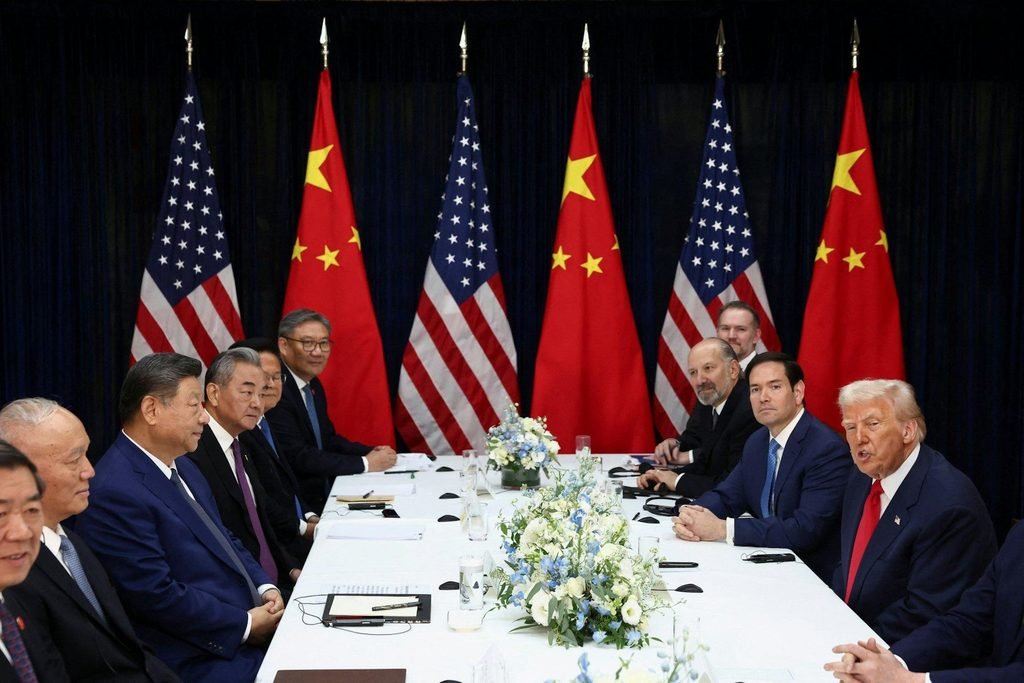
Taiwan and Regional Security
The summit is also expected to touch on Taiwan, one of the most sensitive issues in U.S.-China relations.
Beijing considers Taiwan part of China and opposes moves toward formal Taiwanese independence. Washington maintains longstanding commitments concerning Taiwan while also keeping diplomatic relations with Beijing.
Reuters has reported that Taiwan-related issues are expected to be discussed at the summit alongside military tensions and other regional-security questions.
The leaders are also expected to discuss the wider geopolitical situation, including the conflict involving Iran and its effects on global energy markets.
Fentanyl Supply Also on the Agenda
Another U.S. priority is the movement of chemicals from China that can be used to manufacture fentanyl.
Washington has sought stronger action against shipments of precursor chemicals and related materials. The issue has become part of broader negotiations between the two governments.
According to Reuters, curbing fentanyl precursor shipments from China is expected to be one of the issues discussed by Trump and Xi in Washington.
For China, the issue is linked to wider discussions over trade and economic restrictions.
Financial Markets Watch the Summit
Financial markets are closely watching the meeting because any agreement on tariffs or trade could affect businesses, currencies and commodity prices.
China’s yuan reached its strongest level against the U.S. dollar in more than three and a half years on September 21. Reuters reported that the People’s Bank of China had eased some previous efforts to resist yuan appreciation ahead of the summit, although analysts cautioned that this did not necessarily indicate a long-term change in currency policy.
U.S. and Asian markets have also been influenced by expectations surrounding the meeting. Investors are particularly focused on whether Washington and Beijing can make progress on tariffs and supply-chain issues.
What Both Leaders Want
The two governments enter the meeting with different priorities.
The United States is seeking better market access, greater Chinese purchases of American products, cooperation on fentanyl-related concerns and improved access to critical minerals. Beijing is seeking relief from some technology restrictions and lower U.S. tariffs.
China has also emphasized the importance of dialogue and managing differences rather than allowing disagreements to damage the broader relationship. Its Foreign Ministry described Xi’s visit as an opportunity to improve communication and cooperation.
What Happens After the Meeting?
The Trump–Xi meeting will not resolve every disagreement between the world’s two largest economies. Trade, technology, Taiwan and strategic competition involve long-running differences that extend beyond a single summit.
However, the September 24 meeting will provide an opportunity for the two leaders to discuss those issues directly and potentially set priorities for future negotiations.
For businesses and consumers around the world, the main areas to watch will be tariff levels, access to critical minerals, technology restrictions and the stability of global supply chains. Any changes in these areas could affect manufacturing, technology investment and international trade.
The meeting comes at a moment when the U.S.-China relationship is shaped by both competition and the need for cooperation. With trade, AI, tariffs, rare earths and regional security all on the table, the Washington summit is expected to be closely watched by governments, businesses and financial markets around the world.
Also Read | India-US Tariff Tensions: How New Measures Could Affect Trade and Energy Security










Leave a comment