

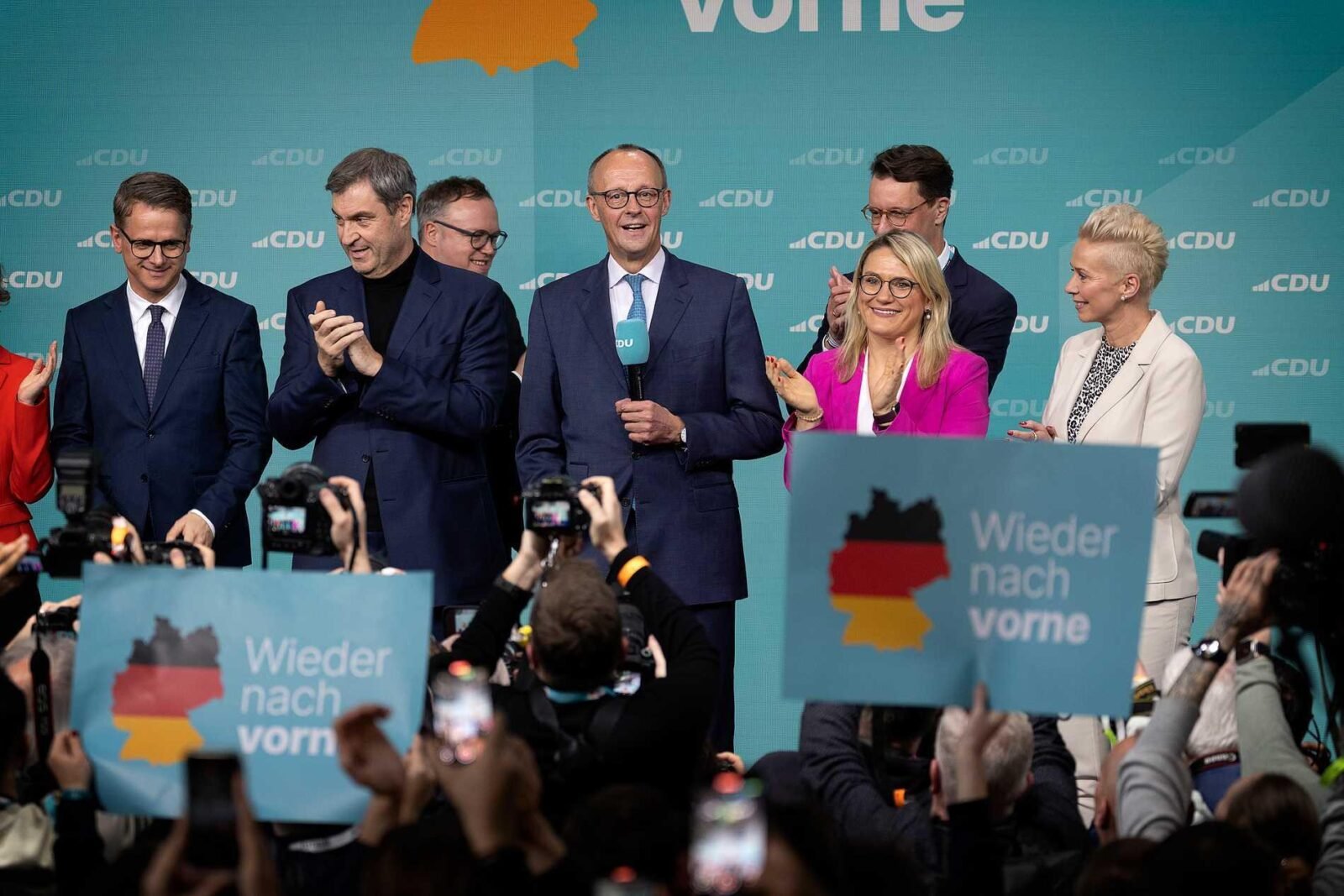

Berlin: Germany’s latest regional elections have created a difficult political moment for Chancellor Friedrich Merz and his Christian Democratic Union (CDU). Elections held on September 20, 2026, in Mecklenburg-Western Pomerania and Berlin produced major changes in the state-level political landscape and increased pressure on Merz to deliver on his government’s economic and social reform programme.
Merz described the result in Mecklenburg-Western Pomerania as a “disaster” for his party, while also saying that he would remain in office and continue pursuing the reforms promised by his government. The results do not automatically change the federal government, but they have opened a new debate inside the CDU about its political direction and leadership.
CDU Falls Below 5% in Mecklenburg-Western Pomerania
The most striking result came in Mecklenburg-Western Pomerania, where the CDU received 4.9% of the vote and therefore failed to cross the state’s 5% threshold for parliamentary representation. It was the first time the CDU had failed to enter a state parliament in a postwar German regional election, according to reporting by Reuters and Le Monde.
The Alternative for Germany (AfD) finished first with about 38.2 — 38.3%, followed by the centre-left Social Democratic Party (SPD) at about 35.5%. The Left Party and Greens also cleared the threshold, while the CDU was left outside the state parliament.
Despite the AfD receiving the largest vote share, the party is expected to remain outside the state government because other major parties have ruled out coalition cooperation with it. The SPD therefore retains a possible route to forming a government with other parties.
Berlin Produces a Different Outcome
Berlin delivered a different result but another setback for Merz’s CDU.
The Left Party (Die Linke) finished first with 25.3%, followed by the CDU with 19% and the AfD with 16.3%. The SPD received around 12.1%. The result means the CDU is set to lose control of Berlin’s state government, while the Left Party could potentially form a coalition with the SPD and Greens.
Housing costs were one of the central issues in the Berlin campaign. The Left Party campaigned on expanding affordable housing, reducing rents in some circumstances and potentially transferring large housing associations into public ownership.
The result therefore shows that voters in the capital and in northeastern Germany responded to different local concerns, even though both elections affected the national political debate.
Why the Results Matter for Merz
Germany’s federal government has not changed because of these regional elections. However, the results create a political test for Merz’s leadership.
The CDU is part of the federal coalition with the SPD, and disagreements have already appeared over issues including pensions, taxes, healthcare and economic reforms. Reuters reported that some SPD figures criticized Merz’s immediate response to the election results, while several CDU state leaders held discussions about the party’s position following the poor performance.
Merz has said that his government was elected for a four-year term and that he intends to continue its programme. He has also argued that structural reforms are necessary to strengthen Germany’s economy.
Economy Is a Major Issue
Economic concerns played an important role in the regional elections.
Germany’s economy has struggled with weak growth, industrial job losses, high energy costs and increasing competition from China. Reuters reported that voters in both states were campaigning against a background of economic uncertainty and rising fuel prices linked to the Middle East conflict.
For Merz, economic recovery has been a major political priority since he became chancellor. The latest results indicate that voters remain concerned about living costs and the pace of economic improvement.
The CDU therefore faces pressure to show progress on growth, employment, energy prices and public services while maintaining its coalition with the SPD.
AfD Gains More State-Level Support
The elections also highlighted the continuing expansion of the AfD.
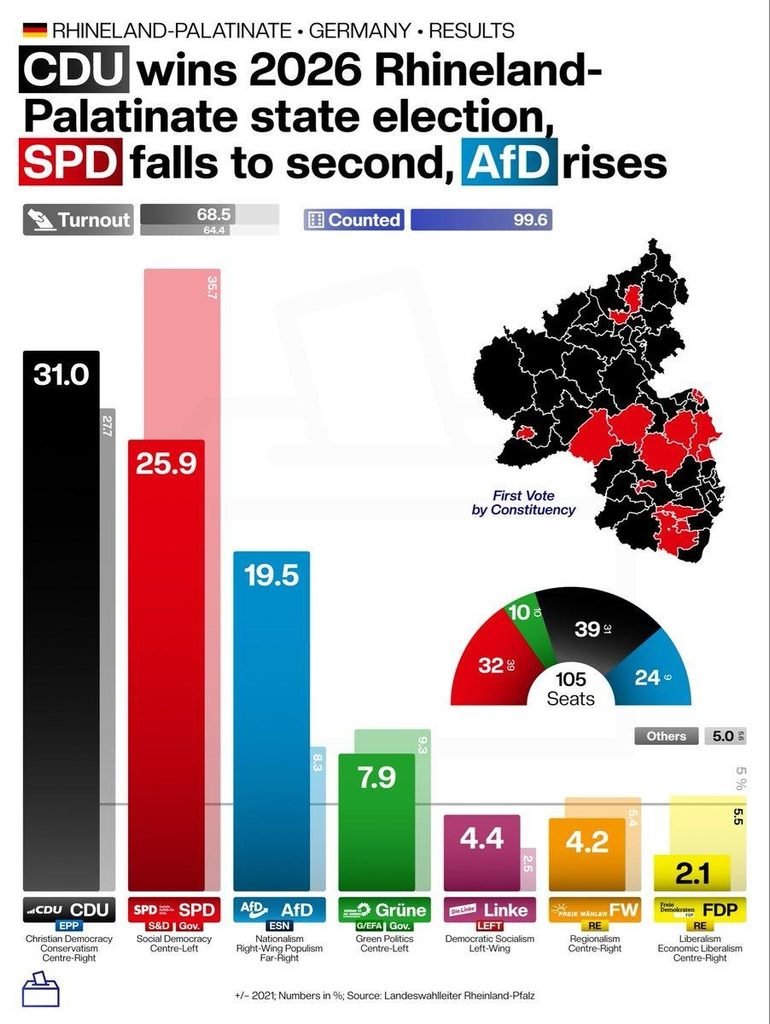
The party became the strongest party in Mecklenburg-Western Pomerania and had earlier won the largest share of votes in Saxony-Anhalt on September 6. Reuters reported that the AfD has become increasingly competitive in state elections while remaining excluded from government by the other major parties’ “firewall” against coalition cooperation.
The AfD has campaigned on stricter immigration policies, opposition to some forms of support for Ukraine and restoring cheaper Russian energy supplies. In Mecklenburg-Western Pomerania, the party also promoted the idea of reviving the Nord Stream gas pipeline, linking the proposal to lower energy costs.
The growing vote share creates a strategic challenge for Germany’s established parties as they consider how to respond to voters who are moving toward both the political right and left.
Coalition Politics Become More Complex
Another important consequence is the growing difficulty of forming stable state governments.
In Mecklenburg-Western Pomerania, preliminary results indicate that a government may require three parties. In Berlin, the Left Party may seek an agreement with the SPD and Greens.
Coalition negotiations can take weeks or months, and each party must balance its policy priorities with the need to secure a parliamentary majority.
This fragmented political landscape could also influence national politics, particularly if disagreements within the CDU-SPD coalition become more public.
What Happens Next for Merz?
Merz has chosen to remain in office and continue his reform programme. The immediate task will be to manage pressure within the CDU while maintaining cooperation with the SPD at the federal level.
The government will also need to address the economic concerns that featured heavily in the regional campaigns. These include high energy costs, industrial restructuring, pensions, housing and the cost of living.
At the same time, the CDU must consider how to respond to the AfD’s stronger regional performance without abandoning its existing position against cooperation with the party.
Looking Ahead
The September regional elections do not determine Germany’s next federal government, and they should not be treated as a direct forecast of the 2029 federal election. They do, however, provide important information about current voter preferences and the challenges confronting the federal coalition.
For Merz, the results mean greater pressure to demonstrate progress on the economy, maintain coalition unity and respond to changing political competition.
The coming months will show whether the CDU can rebuild support at the state level and whether Merz’s government can turn its reform plans into measurable results. For now, Germany’s regional elections have clearly intensified the debate about the direction of the country’s politics and the future of its centre-right government.
Also Read | Trump–Xi Meeting 2026: Trade, AI and Tariffs on the Agenda











Leave a comment