

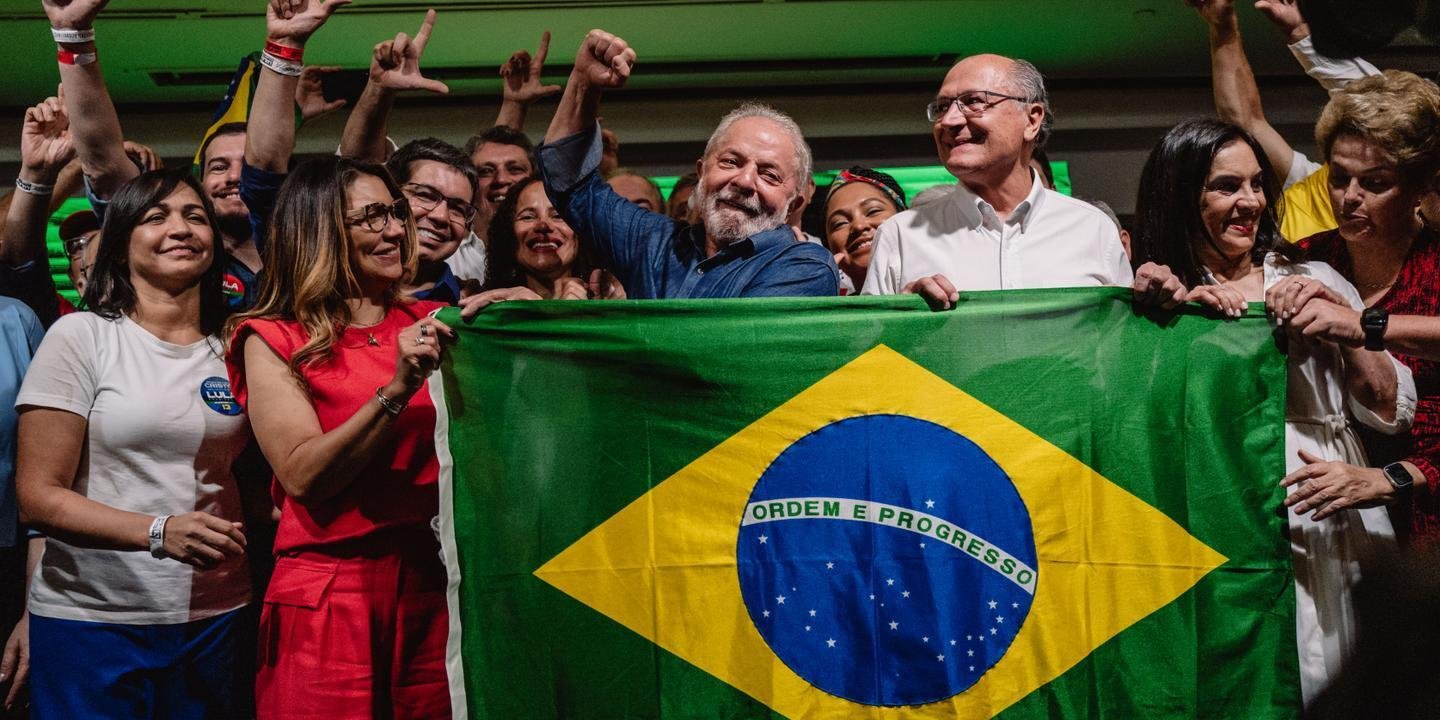

Brazilian President Luiz Inácio Lula da Silva has won a historic fourth presidential term, defeating conservative Senator Flávio Bolsonaro in a closely contested election.
The 80-year-old leader secured approximately 51.8% of the vote, while Bolsonaro received 48.2%, according to Brazil’s electoral court.
The result followed a dramatic turnaround in the October 25 runoff election, surprising political observers who had expected Bolsonaro to perform strongly.
Lula’s victory is particularly significant because he has frequently criticised US President Donald Trump’s policies and defended Brazil’s independence in international affairs.
The Brazil election results 2026 have now placed the country at the centre of discussions about democracy, economic challenges and political divisions across Latin America.
How Did Lula Win Brazil’s Presidential Election?
Brazil held its presidential runoff on Sunday, October 25, after neither candidate secured enough votes to win outright in the first round.
Flávio Bolsonaro, the eldest son of former President Jair Bolsonaro, had finished ahead of Lula in the first round on October 4.
His performance created expectations that Brazil could return to conservative leadership.
However, Lula reorganised his campaign and focused on voters who had not participated in the first round.
He also increased his outreach to undecided voters and communities concerned about household expenses.
Support from Brazil’s poorer northeastern region played an important role in his comeback.
By the end of the runoff, Lula had defeated Bolsonaro by nearly 4.4 million votes.
Why Is Lula’s Fourth Term Historic?
Lula first became Brazil’s president in 2003 and served two consecutive terms until 2010.
He returned to office in January 2023 after defeating Jair Bolsonaro in the 2022 presidential election.
His latest victory gives him an unprecedented fourth presidential term.
The achievement extends a political career spanning more than four decades.
Lula began his political journey as a trade union leader before becoming one of Brazil’s most influential politicians.
His career has included electoral victories, political defeats and major legal controversies.
He was imprisoned following corruption convictions that were later annulled.
Despite these challenges, he returned to the presidency and has now secured another election victory.
Who Is Flávio Bolsonaro?
Flávio Bolsonaro is a Brazilian senator and the eldest son of former President Jair Bolsonaro.
He entered the 2026 presidential race as the main conservative challenger to Lula.
His campaign attracted voters who wanted lower taxes, stronger public security and changes to Brazil’s economic policies.
Flávio also benefited from his father’s political influence and support among conservative voters.
After the election, he refused to concede defeat.
He questioned the decision to extend voting hours at some polling stations and demanded that the election results be annulled.
Brazil’s electoral court, however, declared Lula the winner.
The allegations surrounding the voting process do not, by themselves, establish that the result was invalid.
Why Is Lula Considered a Critic of Donald Trump?
Lula has repeatedly disagreed with US President Donald Trump over trade, tariffs and Washington’s approach to Latin America.
He has also defended Brazil’s participation in BRICS, a group that promotes economic and diplomatic cooperation among major emerging economies.
Lula has argued that countries should have greater freedom to make independent economic and foreign-policy decisions.
During the election campaign, national sovereignty became an important theme.
He presented Brazil as a country that should maintain constructive international relationships without becoming dependent on any major power.
However, relations between Lula and Trump have not always been confrontational.
The two leaders have also held diplomatic discussions and expressed interest in maintaining cooperation.
Lula’s reelection may therefore bring continued disagreements alongside opportunities for negotiation.
What Does Lula’s Victory Mean for Brazil’s Economy?
Brazil is Latin America’s largest economy, making its political direction important for international markets.
Lula faces several major economic challenges during his next term.
These include government debt, high interest rates, household borrowing and pressure on public finances.
His government has supported social welfare programmes, minimum-wage increases and policies aimed at helping lower-income families.
Supporters argue that these measures can reduce inequality and protect vulnerable communities.
Critics, however, question whether the government can maintain spending while controlling debt and inflation.
Investors will closely watch Lula’s plans for economic stability.
The challenge will be balancing social commitments with responsible financial management.
How Could the Election Affect India-Brazil Relations?
India and Brazil maintain strong diplomatic and economic relations.
Both countries participate in BRICS and the G20 and cooperate on issues involving trade, energy, technology and international development.
Prime Minister Narendra Modi congratulated Lula following his election victory.
The two countries have also discussed expanding bilateral trade and cooperation in critical minerals.
Earlier in 2026, India and Brazil agreed to work towards increasing bilateral trade to $30 billion by 2030.
Lula’s continuation in office could provide stability for ongoing diplomatic and commercial discussions.
What Happens Next in Brazilian Politics?
Although Lula has won the presidential election, political uncertainty remains.
Flávio Bolsonaro’s refusal to concede has created additional tension.
Brazil’s institutions will have to address any formal legal challenges through established procedures.
Lula must also work with a Congress containing strong conservative representation.
This could make it difficult to pass major economic and social reforms.
His next presidential term is scheduled to begin in January 2027.
The coming months will reveal how Lula plans to address political divisions and build support for his government.
Conclusion
Lula’s fourth-term victory in Brazil represents one of the most remarkable political comebacks in the country’s recent history.
After trailing in the first round, the veteran leader defeated Flávio Bolsonaro and secured another presidential mandate.
His victory will influence Brazil’s economic policies, relations with the United States and cooperation with international partners, including India.
However, the narrow result also highlights deep political divisions.
As Brazil prepares for another Lula presidency, attention will turn from election celebrations to the challenges of governing.
Also Read | Tibet Earthquake 2026: Powerful 7.0 Magnitude Quake Kills at Least 16, Injures 76











Leave a comment