

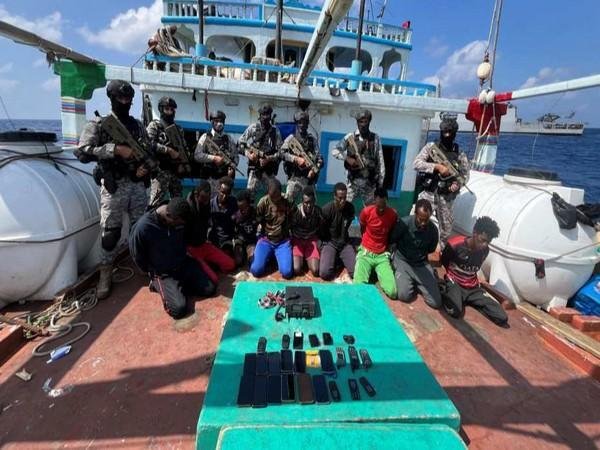

In a remarkable maritime rescue operation, the Indian Navy successfully freed 20 crew members from a fishing vessel hijacked by armed pirates off the coast of Somalia.
The Indian Navy Azini rescue was completed on November 2, 2026, after an operation lasting more than 48 hours in the Arabian Sea.
The mission involved a naval warship, surveillance aircraft, elite marine commandos and support from the Indian Air Force.
According to India’s Ministry of Defence, all 20 crew members were rescued safely, without casualties or injuries.
The successful operation highlights India’s growing role in protecting international shipping routes and responding to maritime emergencies.
What Happened to the Fishing Vessel Azini?
The Iranian fishing vessel Azini was hijacked by armed pirates off the northeastern coast of Somalia on October 29, according to news reports.
The vessel was operating in a region where piracy remains a serious security concern.
Armed groups sometimes seize fishing boats and commercial ships to demand ransom or support further attacks.
After receiving information about the hijacking, Indian naval forces began tracking the vessel.
The Indian Navy recognised that the situation threatened both the crew and other ships travelling through nearby waters.
A rescue mission was launched to locate the vessel, contain the pirates and safely release the people aboard.
How Did the Indian Navy Rescue 20 Crew Members?
The operation required careful planning and coordination between several military units.
A mission-deployed Indian Navy warship was assigned to intercept the hijacked vessel.
According to media reports, INS Kolkata played a leading role in the mission.
The warship received support from maritime surveillance aircraft and other reconnaissance systems.
These assets helped naval personnel identify the vessel’s location and monitor its movements.
The Navy used non-kinetic measures to restrict the pirates’ ability to escape.
This approach helped create conditions for a controlled intervention.
After tracking the vessel, Indian forces carried out a tactical operation and secured the ship.
All 20 crew members were safely released.
Indian Air Force C-17 Supports the Rescue Mission
One of the most impressive parts of the operation was the involvement of the Indian Air Force.
An IAF C-17 transport aircraft conducted a precision airdrop to deploy additional marine commandos.
These personnel supported the Indian Navy’s operation against the armed pirates.
The mission demonstrated how India’s military services can work together during emergencies far from the country’s coastline.
The combination of aerial surveillance, naval operations and specialised commandos helped make the rescue possible.
The Defence Ministry praised the coordination between the Navy and Air Force.
What Are MARCOS Commandos?
MARCOS stands for Marine Commandos, an elite special operations force of the Indian Navy.
These personnel receive specialised training for missions involving maritime security, counterterrorism and difficult rescue situations.
Their capabilities include operating from ships, conducting maritime interventions and responding to threats in challenging environments.
During the Azini rescue, marine commandos helped secure the hijacked vessel.
The mission required careful coordination because the lives of the crew members were at risk.
The successful rescue demonstrates the importance of specialised training and operational preparedness.
Why Was the Hijacked Vessel Considered Dangerous?
The Indian Navy was concerned that pirates might use Azini as a mother ship.
A mother ship is a larger vessel used by pirates to support smaller boats during attacks.
Such vessels can carry supplies, equipment and personnel, allowing pirate groups to operate farther from shore.
This can increase the threat to commercial shipping across a wider area.
By securing Azini, the Indian Navy not only rescued its crew but also prevented the vessel from potentially being used in further piracy operations.
However, the authorities described the mother-ship threat as a possibility, not a confirmed plan.
Operation Conducted More Than 3,000 Kilometres From Mumbai
The rescue took place more than 3,000 kilometres from Mumbai, according to Defence Minister Rajnath Singh.
The distance highlights the Indian Navy’s ability to conduct operations far beyond India’s immediate coastal waters.
The Arabian Sea and nearby shipping routes are important for international trade.
Thousands of commercial vessels travel through the wider Indian Ocean region, carrying fuel, food, manufactured products and other essential goods.
Piracy can threaten the safety of sailors and disrupt the movement of these shipments.
India regularly deploys naval assets to help protect maritime traffic.
Defence Minister Rajnath Singh Praises the Indian Navy
Defence Minister Rajnath Singh congratulated the Indian Navy following the successful rescue.
He praised the coordination between the naval forces and the Indian Air Force.
Singh said the operation demonstrated India’s readiness to respond to maritime security threats.
He also highlighted the country’s commitment to protecting lives and maintaining stability across the Indian Ocean region.
The rescue has attracted attention because of its speed, complexity and successful outcome.
Iran Thanks India for Saving Its Crew
The Iranian Embassy in New Delhi expressed appreciation for the Indian rescue operation.
Iran thanked the Indian Navy and Indian Air Force for helping secure the release of its citizens.
The response reflects the importance of international cooperation during maritime emergencies.
Piracy is not limited to one country’s waters or citizens.
A successful rescue can involve military forces protecting sailors from another nation.
Such operations also strengthen cooperation between countries facing shared maritime security challenges.
Why Is Somali Piracy Still a Concern?
Piracy off Somalia has threatened international shipping for many years.
Although coordinated naval patrols have reduced attacks during certain periods, armed groups continue to pose risks.
Fishing vessels can be particularly vulnerable because they may operate far from shore with limited protection.
Commercial ships also face threats from hijacking, robbery and other forms of maritime crime.
Naval patrols, international cooperation and improved monitoring remain important for protecting crews.
The Azini rescue demonstrates why continued attention to maritime security is necessary.
Conclusion
The Indian Navy Azini rescue is an important example of successful coordination between India’s armed forces.
Over more than 48 hours, naval personnel tracked a hijacked fishing vessel, contained the pirate threat and rescued all 20 crew members.
The operation involved INS Kolkata, surveillance assets, MARCOS commandos and support from an Indian Air Force C-17 aircraft.
Most importantly, the rescue ended with all 20 crew members safe.
The mission reinforces India’s commitment to protecting sailors and maintaining security across the Indian Ocean region.
Also Read | 48 Hours to Reopen Hormuz? Iran Makes High-Stakes Offer to America!












Leave a comment