

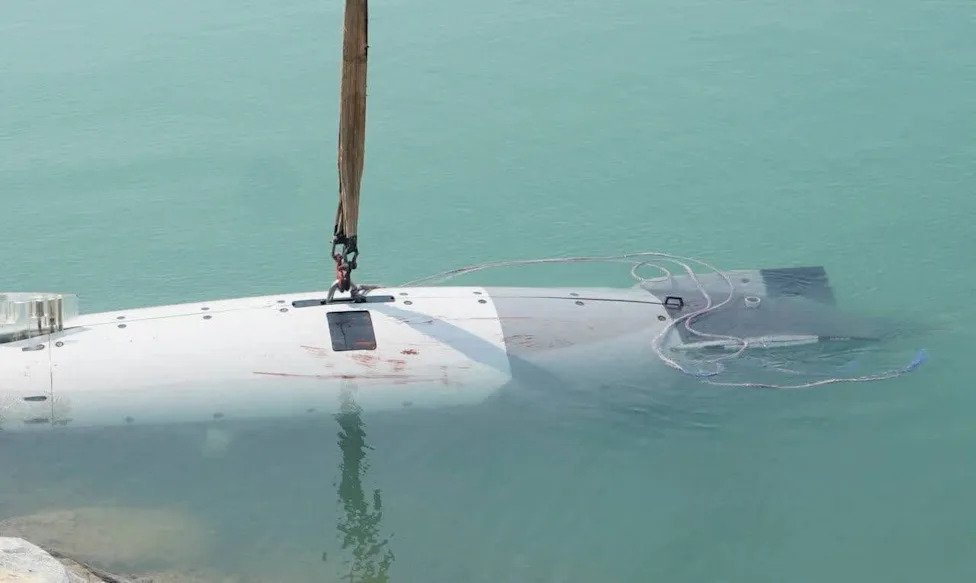

Iran Claims US Submarine Drone Was Captured
Iran has claimed that its forces captured a U.S. underwater military drone near the Strait of Hormuz, adding another dangerous development to the growing confrontation between Tehran and Washington. The Iranian Revolutionary Guard announced the capture on September 8, describing the unmanned vehicle as an advanced American underwater system.
However, the United States has rejected the description of the vehicle as a sophisticated operational submarine. U.S. officials said the equipment was an older autonomous underwater drone that had malfunctioned and remained out of operation before it was recovered by Iranian forces.
The distinction is important because the incident involves an unmanned underwater vehicle rather than a crewed U.S. Navy submarine.
What Was the US Underwater Vehicle?
The vehicle has been identified as a Dive-LD, an autonomous underwater system developed by California-based defense company Anduril. The 19-foot-long vehicle is designed to perform missions such as seabed mapping, underwater infrastructure inspection, intelligence gathering and mine-countermeasure operations.
Iranian officials presented the capture as a significant intelligence and military achievement. Images of the vehicle were also released by Iranian state media.
The Pentagon, however, said the system did not contain classified technology or sensitive information. U.S. officials described it as an older model that had suffered a malfunction. Anduril also confirmed the loss of the vehicle and said such systems are designed to operate in dangerous environments where losses can occur.
Five Iranian Oil Tankers Destroyed
The underwater drone incident came as U.S.-Iran tensions were already rising sharply around the Gulf.
According to U.S. Central Command, American forces destroyed five Iranian crude oil tankers after Iran launched ballistic missile attacks against U.S. Navy warships. Four of the tankers were targeted in the Gulf of Oman, while another was destroyed near Kharg Island, one of Iran’s major oil-export areas.
U.S. officials said crews were warned to leave the vessels before the strikes. The American military described the tankers as part of an Iranian oil network connected to financing for the Islamic Revolutionary Guard Corps.
The attacks have further complicated an already unstable maritime situation.
Why the Strait of Hormuz Matters
The Strait of Hormuz is one of the world’s most important energy routes. Large volumes of oil normally pass through the narrow waterway every day, making any military confrontation in the region a major concern for global markets.
Recent fighting has reduced visibility into how much oil is actually moving through the strait. Tankers have switched off tracking systems, while conflicting estimates have made it difficult for traders and governments to determine the real level of shipping activity.
The uncertainty has already pushed oil prices higher. Brent crude moved close to $100 a barrel as traders reacted to fears about further disruption to Gulf energy supplies.
Iran and US Exchange Threats
The latest confrontation follows months of military tension between Iran and the United States.
Iran has launched attacks against American military assets in the region, while the United States has increased pressure on Iranian oil exports and maritime activity. Washington has also used a naval blockade to restrict Iran’s ability to move crude through the Strait of Hormuz.
Reuters reported that the blockade has sharply reduced Iran’s crude exports, putting additional pressure on Tehran’s finances. Iranian oil loadings reportedly fell significantly during August as tankers remained blocked from moving through the strategic waterway.
Iran, meanwhile, has warned ships against using routes it considers unauthorized and has continued to assert its ability to disrupt shipping in the Gulf.

Is This a US Submarine?
One of the biggest points of confusion surrounding the latest incident is the word “submarine.”
Iran described the captured vehicle in a way that emphasized its military importance, but available reports identify it as an uncrewed underwater vehicle, not a conventional submarine carrying American sailors.
That means there is no confirmed report that Iran captured a crewed U.S. submarine or American naval personnel in the incident.
The U.S. assessment that the vehicle was malfunctioning also changes the military significance of the event. American officials said it did not contain classified systems or sensitive data.
Global Markets Watch the Crisis
Financial markets are closely watching developments around the Strait of Hormuz because prolonged disruption could affect crude supplies, shipping costs and inflation.
The United States has increased military and economic pressure on Iran, while Tehran continues to challenge American operations in the region. Every new attack or maritime incident raises concerns that the confrontation could spread further across the Gulf.
Energy companies, governments and shipping operators are therefore monitoring the situation closely.
What Happens Next?
The capture of the U.S. underwater drone is unlikely to end the wider confrontation. Instead, it adds another layer to an already serious maritime crisis.
The United States is expected to continue protecting its naval forces and restricting Iranian oil shipments. Iran is also likely to maintain pressure on U.S. military and commercial interests as it seeks leverage over Washington.
For now, the most important issue is whether the two countries can prevent further escalation around the Strait of Hormuz.
The latest developments show how quickly a military incident involving an unmanned underwater vehicle can become part of a much larger geopolitical crisis. With oil prices rising and shipping activity under pressure, the consequences are being felt far beyond the Middle East.
Also Read | 170,000 Passengers Stranded as Anak Krakatau Eruption Disrupts Indonesia Flights












Leave a comment