

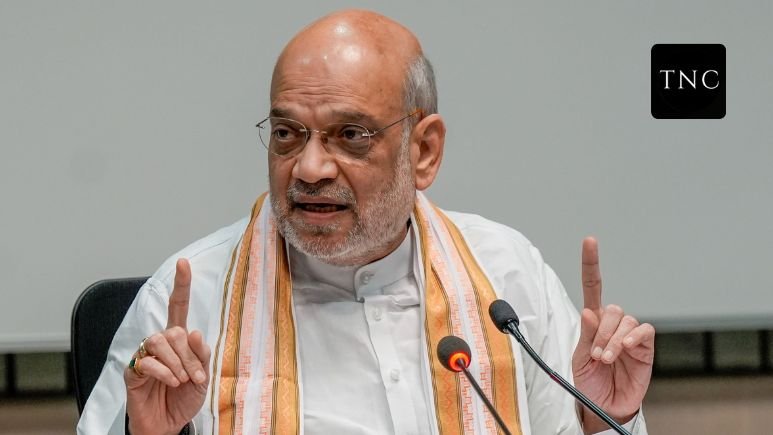

The crowd had thinned by the time the speech ended in Kolkata. A tea seller near the rally grounds wiped down his steel glasses, glancing at a half-lit poster of Amit Shah. “One law for everyone,” he murmured, repeating the phrase he had just heard. For him, it wasn’t about constitutional theory. It was about something simpler: Would this change his daughter’s future? Would it affect how families like his live, marry, inherit?
Across the street, a group of college students argued, some calling it reform, others calling it a political strategy timed perfectly for elections.
The debate over the Uniform Civil Code (UCC) has moved from legal textbooks into election speeches. In the run-up to the 2026 West Bengal Assembly Elections, the Bharatiya Janata Party has promised to implement the UCC within six months if voted to power.
At its core, the UCC seeks to replace religion-based personal laws with a single framework governing marriage, divorce, inheritance, and adoption.
But what was once a constitutional aspiration under Article 44 has now become a political flashpoint that raises deeper questions about identity, equality, and federal power.
And importantly, this is no longer hypothetical. Some Indian states have already begun experimenting with versions of the UCC, transforming the debate from “if” to “how.”
For decades, the UCC lived in the realm of intent, debated, postponed, and politically sensitive. That changed when states began taking the lead.
Uttarakhand became the first to implement a version of the UCC in 2025, mandating registration of marriages, divorces, and even live-in relationships. Shortly after, Gujarat followed with its own framework, introducing equal inheritance rights and restrictions on practices like polygamy.
Now, Madhya Pradesh is preparing to roll out a similar law, signaling a growing momentum across BJP-ruled states.
This staggered, state-led rollout marks a strategic shift. Instead of waiting for a nationwide law which would require broader political consensus the UCC is being tested region by region.
In West Bengal, the promise carries a different weight. It is not just about legal reform; it is a campaign signal.
The BJP’s manifesto frames the UCC as a tool for equality and national unity. Critics, however, argue that personal laws are deeply tied to religious identity and fear that uniformity could come at the cost of diversity.
This tension is not new. What is new is the timing.
Election manifestos often promise development jobs, welfare, infrastructure. But the UCC sits at the intersection of law and identity, making it far more consequential. By placing it at the center of the campaign, the BJP is reframing the election narrative itself.
Beyond politics, the UCC raises a fundamental question: Can a country as diverse as India truly operate under a single set of personal laws?
Supporters argue it ensures gender equality and removes discriminatory practices. Opponents warn of cultural erasure and legal overreach.
The truth may lie somewhere in between where implementation, not intent, determines the outcome.
The Uniform Civil Code is no longer just a constitutional ideal it is becoming a lived experiment, state by state.
What happens in places like Uttarakhand, Gujarat, and potentially West Bengal will shape whether the UCC becomes a unifying reform or a dividing line in India’s political landscape.
Also Read / The MP Who Lost His Microphone: How AAP Quietly Sidelined Raghav Chadha.













Leave a comment