

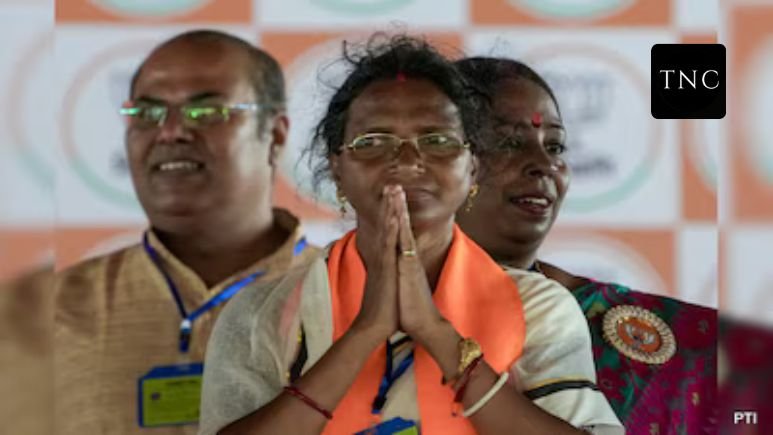

The courtroom had barely settled into silence when Ratna Debnath leaned forward and spoke in a voice sharpened by grief, not politics.
Outside the courthouse in Kolkata, television crews shouted questions over each other. Police barricades rattled as protesters pushed forward. But inside, the mother of the RG Kar victim remained fixed on a single demand: accountability.
Not sympathy. Not compensation. Accountability.
Her daughter a young doctor whose rape and murder inside Kolkata’s RG Kar Medical College shocked the country in 2024 had already become the face of India’s fury over women’s safety and institutional failure. Now, nearly two years later, the case has exploded again after suspensions of senior IPS officers and renewed allegations that parts of the system tried to bury the truth.
For Debnath, the suspensions are not the end of the story. They are proof that the story was never fully told.
The Case That Refused to Fade
The RG Kar case was never just another criminal investigation. It became a referendum on power in West Bengal on policing, political influence, and public trust.
When the young resident doctor was found murdered inside the state-run hospital in August 2024, outrage spread far beyond Kolkata. Doctors marched through the night. Medical associations shut down services. Students filled the streets carrying candles and handwritten placards demanding justice.
What kept the anger alive was not only the brutality of the crime. It was the growing suspicion that officials had mishandled evidence, delayed action, and protected influential figures from scrutiny.
Now, the suspension of three IPS officers, including former Kolkata Police Commissioner Vineet Goyel, has revived those accusations with new force.
Debnath has openly backed the suspensions, arguing they validate what the family alleged from the beginning that there was a coordinated effort to weaken the investigation and control the narrative.
The political consequences have been enormous.
Her transformation from grieving mother to political figure reshaped West Bengal’s 2026 election campaign. Ratna Debnath entered politics on a platform centered almost entirely on justice and women’s safety, eventually winning the Panihati assembly seat in a major upset.
But the evolution of her public role reveals something deeper about modern India: victims’ families increasingly believe justice is impossible without political power.
When Grief Becomes Political
India has seen this pattern before.
A violent crime erupts into national outrage. Public protests force governments into defensive mode. Investigations expand. Committees form. Arrests follow. Yet families often spend years fighting institutions that appear more concerned with damage control than transparency.
The RG Kar case fits that pattern almost perfectly.
Debnath repeatedly accused political parties of attempting to use the tragedy for electoral gain. Earlier this year, she alleged that multiple parties approached her with money and election offers before she eventually chose to contest on a BJP ticket.
That shift changed the tone of the case.
What began as a demand for criminal justice evolved into a larger political weapon against the ruling establishment. Prime Minister Narendra Modi himself invoked the case during campaign rallies, accusing the state government of failing women.
The danger, however, is that political battles can distort the search for truth as easily as bureaucratic silence can.
Every new suspension, court filing, or allegation now lands in an environment saturated with partisan warfare. Supporters call it justice finally arriving. Critics call it selective accountability.
Meanwhile, the central question remains painfully simple: who failed the victim, and how deep did those failures go?
A Crisis of Institutional Trust
The repeated court proceedings and allegations of interference have exposed a deeper crisis facing Indian institutions: public trust is collapsing faster than official credibility can recover.
The RG Kar case became symbolic because it touched nearly every anxiety urban Indians already carry:
- Women are unsafe even in professional spaces.
- Families distrustful of police investigations.
- Political parties weaponizing tragedy.
- Courts overloaded by high-profile battles.
- Citizens relying on street protests to force action.
That is why this case continues to resonate long after the initial headlines faded.
When multiple court benches reportedly recuse themselves from hearing connected matters, public suspicion naturally intensifies.
When grieving parents allege cover-ups, interference, and pressure from powerful actors, the story no longer belongs to one family alone. It becomes a test of whether institutions can still command public faith.
And once that faith breaks, restoring it is harder than winning any election.
The RG Kar case is no longer only about one horrific crime.
It is about what happens when citizens begin to believe that justice depends less on institutions and more on how loudly they can fight.
Ratna Debnath’s journey from mourning mother to political symbol tells the story of a country where grief increasingly enters the ballot box because too many people no longer trust the system to work on its own.











Leave a comment