

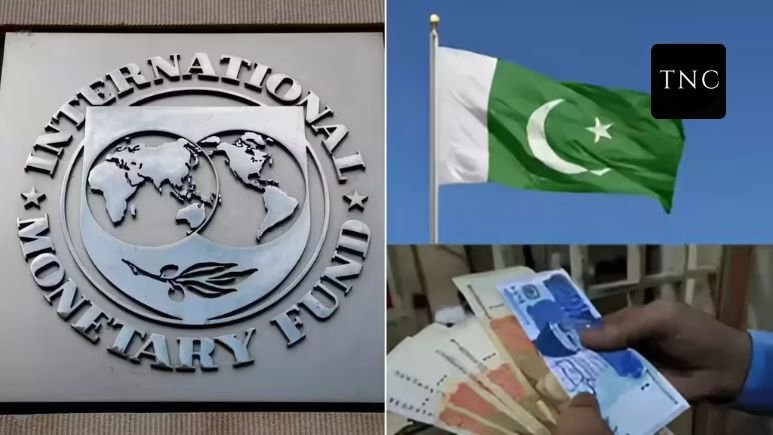

The counting room inside Pakistan’s central bank was unusually quiet Tuesday morning. Currency traders stared at flickering reserve numbers on their terminals as confirmation finally arrived from Washington: another tranche of International Monetary Fund money had landed.
For officials in Islamabad, the $1.3 billion injection was more than an accounting update. It was breathing space.
Pakistan’s economy has spent years lurching from one emergency to the next foreign reserve crises, inflation spikes, soaring energy costs, floods, political instability. This latest IMF disbursement, split between a traditional bailout facility and a climate resilience programme, buys the country time. But it also sharpens an uncomfortable question hanging over South Asia’s fifth-most populous nation:
How many rescues can an economy survive before rescue itself becomes the system?
Pakistan confirmed Wednesday that it had received roughly $1.1 billion under the IMF’s Extended Fund Facility and another $220 million under the Resilience and Sustainability Facility, aimed at climate adaptation and economic reform.
The payment is part of a broader IMF support framework worth more than $8 billion spread across multiple programmes. Officials say the money will stabilize foreign exchange reserves, reassure lenders, and help Pakistan navigate climate threats that have repeatedly devastated its economy.
But beneath the technical language of “macroeconomic stability” and “structural reform” lies a harsher reality: Pakistan remains trapped in a cycle where international lenders repeatedly step in to prevent collapse, while ordinary citizens absorb the pain.
The IMF’s logic is straightforward. Pakistan needs fiscal discipline, tighter monetary policy, broader tax collection, and reforms to its energy sector. Without those measures, lenders fear the country risks defaulting on its external obligations. The Fund has praised Pakistan for meeting several economic targets, including improvements in reserves and fiscal management.
Yet those reforms carry political and social consequences.
Higher fuel levies. Expensive electricity. Elevated interest rates. Reduced subsidies.
Each measure may look rational on a spreadsheet in Washington. On the streets of Lahore or Karachi, they translate into smaller meals, shuttered businesses, and rising frustration among a population already battered by inflation.
That tension explains why Pakistan’s IMF relationship has become so controversial internationally. Critics argue the country has become dependent on emergency financing instead of building durable economic competitiveness. India, for instance, has repeatedly raised concerns over repeated IMF support packages for Islamabad, questioning whether earlier programmes delivered lasting structural change.
The climate funding portion adds another layer to the story.
Pakistan remains one of the countries most vulnerable to climate disasters despite contributing only a tiny fraction of global emissions. Catastrophic floods in recent years destroyed crops, displaced millions, and inflicted billions in economic damage. IMF-backed climate financing is designed to help countries like Pakistan prepare for future shocks through infrastructure reforms, financial risk planning, and resilience measures.
That creates a paradox shaping the global economy in 2026: poorer nations are increasingly borrowing money to survive climate disasters they did little to create.
And lenders are no longer separating climate policy from financial stability.
For Pakistan, the immediate math is simple. The country needs dollars. Its reserves remain fragile, debt obligations remain heavy, and external financing pressure has not disappeared. Saudi Arabia recently extended additional financial support as Islamabad scrambled to stabilize reserves.
The deeper issue is whether this moment becomes another temporary patch or the beginning of a genuine economic reset.
Because IMF programmes do not fail overnight. They fail slowly. Through political hesitation. Weak tax systems. Elite resistance. Short-term fixes replacing long-term restructuring.
Pakistan’s challenge is no longer just securing bailout money. It is proving that the next crisis will not require another one.
The IMF’s $1.3 billion lifeline gives Pakistan room to breathe, not permission to relax. The country has avoided immediate financial danger again. But unless structural reforms outlast the bailout cycle, Pakistan risks becoming a permanent emergency case in the global economy.
Also Read / Pakistan Blinked: The Risky Bet Behind Islamabad’s Decision to Wait Out the LNG Crisis.











Leave a comment