

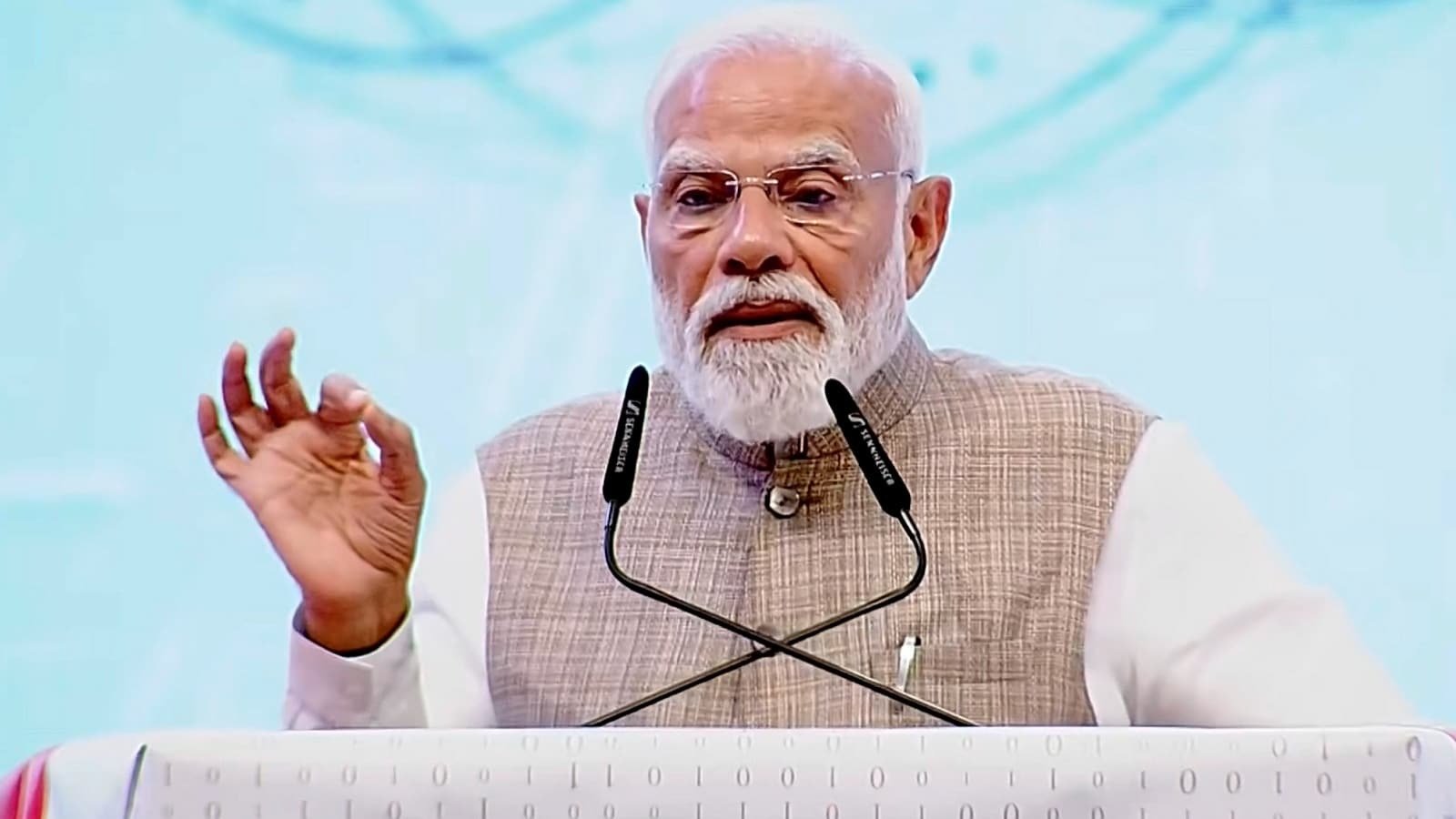

Prime Minister Narendra Modi has described the NEET paper leak as a matter of national responsibility, emphasizing that ensuring fair and transparent examinations is essential for protecting the future of millions of students. Speaking at a public event focused on education and governance, the Prime Minister said that maintaining the integrity of competitive examinations is not just the responsibility of one institution but of the entire nation.
His remarks come amid continuing discussions over examination security and the need for stronger systems to prevent question paper leaks and other forms of malpractice. The Prime Minister stressed that students who prepare honestly for years deserve an examination process that is transparent, secure, and trustworthy.
Fair Examinations Are Essential
Prime Minister Modi said that competitive examinations such as the National Eligibility-cum-Entrance Test (NEET) play a vital role in shaping the careers of aspiring doctors across India. Any compromise in the examination process can affect the confidence of students and their families.
He noted that millions of candidates dedicate years of hard work to preparing for these examinations. Therefore, ensuring fairness is a shared responsibility involving government agencies, educational institutions, law enforcement authorities, technology experts, and society as a whole.
According to the Prime Minister, protecting students’ interests should remain the highest priority.
Strong Message Against Paper Leaks
During his address, PM Modi emphasized that those responsible for examination malpractice should face strict legal action. He said that organized paper leak networks damage the credibility of India’s education system and unfairly disadvantage deserving students.
The government, he added, remains committed to identifying weaknesses in the examination system and introducing reforms that reduce opportunities for fraud.
He also highlighted the importance of using technology to strengthen examination security while improving transparency throughout the recruitment and admission process.
Government Focuses on Examination Reforms
The government has already introduced several initiatives aimed at improving examination management. Officials continue to evaluate additional measures that could further enhance security and reduce the possibility of future leaks.
Some of the proposed improvements include:
- Advanced digital monitoring systems
- Better encryption of examination papers
- Stronger coordination among agencies
- Enhanced cybersecurity measures
- Faster investigation of malpractice cases
- Improved verification procedures at examination centres
Education experts believe that combining technology with stricter administrative procedures could significantly improve examination security.
Students Seek Greater Confidence
Following previous controversies surrounding examination leaks, many students have called for greater transparency in the examination process.
Candidates often spend months or even years preparing for highly competitive entrance examinations. Incidents involving leaked question papers can create uncertainty, anxiety, and frustration among students who have worked hard to earn admission based on merit.
Many education experts believe that rebuilding public confidence requires not only stronger security measures but also faster communication and timely investigations whenever irregularities occur.
Importance of Technology in Examination Security
Experts increasingly recommend adopting advanced technologies to safeguard national-level examinations.
Possible technological solutions include:
- Artificial intelligence-based monitoring
- Secure digital distribution systems
- Biometric verification
- Encrypted question paper transmission
- Real-time surveillance at examination centres
- Data analytics to detect unusual examination patterns
These innovations could help reduce opportunities for organized fraud while improving operational efficiency.
National Responsibility Beyond Government
One of the central messages of the Prime Minister’s speech was that examination integrity cannot depend solely on government agencies.
He stated that educational institutions, parents, coaching centres, students, and civil society all have roles to play in promoting ethical practices and discouraging cheating.
By encouraging honesty and accountability at every level, the country can create a stronger and more reliable education system.
Legal Action Against Offenders
Authorities continue to investigate cases involving examination malpractice.
Law enforcement agencies have taken action against individuals suspected of participating in organized paper leak operations. Officials have indicated that investigations will continue wherever evidence of wrongdoing exists.
The government has reiterated that strict legal provisions are available to punish those involved in compromising examination integrity.
Experts Welcome Reform Discussions
Education specialists have welcomed the renewed focus on examination reforms.
Many believe India’s growing number of competitive examinations requires modern security infrastructure capable of addressing increasingly sophisticated methods of fraud.
Experts suggest continuous review of examination systems, regular security audits, and improved staff training to strengthen public confidence.
They also recommend greater collaboration between technology companies, educational institutions, and government agencies.
Impact on Future Competitive Examinations
The discussion surrounding NEET is expected to influence the administration of other national-level examinations as well.
Recruitment tests, university entrance examinations, and professional certification assessments may also benefit from improved security protocols and technological upgrades.
A stronger examination framework could help ensure equal opportunities for all candidates while protecting the credibility of India’s education system.
Looking Ahead
The Prime Minister’s remarks signal the government’s continued commitment to improving examination governance and restoring confidence among students.
Future reforms are expected to focus on enhancing transparency, adopting modern technology, strengthening legal enforcement, and improving coordination among various institutions responsible for conducting examinations.
Students and parents will be closely watching the implementation of these measures in the coming months.
Conclusion
Prime Minister Narendra Modi’s statement describing the NEET paper leak as a national responsibility highlights the importance of protecting the integrity of India’s education system. With millions of students relying on competitive examinations to build their careers, maintaining fairness and transparency remains a national priority.
As authorities continue to strengthen examination security and pursue reforms, the ultimate objective is to ensure that every deserving student receives an equal opportunity to succeed based on merit. Continued collaboration among government agencies, educational institutions, technology experts, and society will be essential in achieving that goal.










Leave a comment