

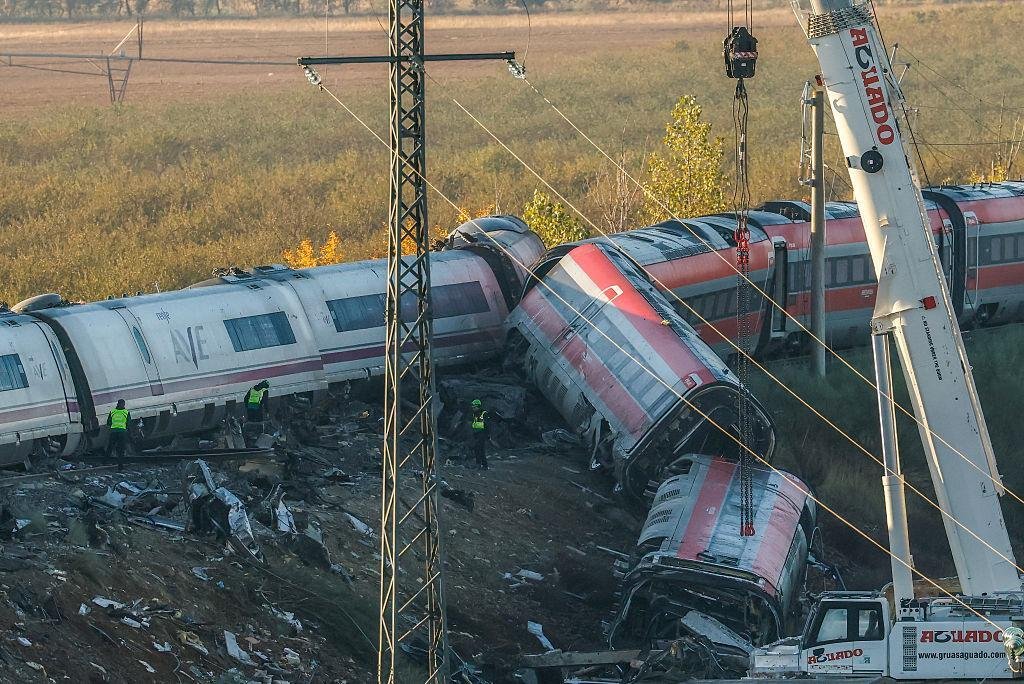

A devastating railway accident in Spain has left 69 people dead and more than 100 injured, sending shockwaves across the country and beyond.
The Spain train crash 2026 occurred on October 28 near Urda, in Toledo province, when a high-speed passenger train collided with another train that had stopped on the tracks.
The disaster has raised serious questions about railway safety, signalling systems and the decisions made before the collision.
As families mourn their loved ones, Spanish authorities are investigating how such a tragedy could happen on one of Europe’s major high-speed railway networks.
What Happened in Spain’s Deadly Train Crash?
The accident occurred at approximately 8:30 a.m. local time on the Madrid–Seville high-speed railway line.
A Renfe AVE passenger train collided with the rear of a stationary Iryo train near Urda, south of Madrid.
The force of the collision severely damaged several carriages and caused parts of the trains to derail.
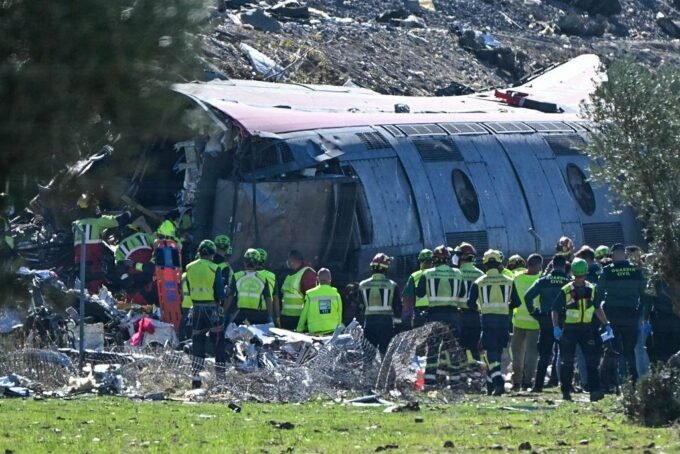
Emergency responders rushed to the scene as passengers struggled to escape the wreckage.
Rescue teams faced difficult conditions while searching damaged carriages for survivors and victims.
The accident quickly became one of Europe’s deadliest railway disasters in recent years.
Death Toll Reaches 69 as Families Await Answers
Spanish authorities confirmed that 69 people had died in the collision.
The victims included Spanish citizens and foreign nationals.
By November 2, authorities had identified 66 of the 69 victims.
Among those killed were four American citizens, alongside people from Canada, Japan, France, Argentina, Mexico, Portugal, Tunisia and the Czech Republic.
The identification process involved forensic examinations, fingerprints and DNA testing.
For many families, the days following the disaster have been filled with uncertainty and grief.
Authorities have continued working to identify the remaining victims and notify their relatives.
How Did the Two High-Speed Trains Collide?
Investigators are examining a sequence of events involving a technical failure and railway traffic-control decisions.
According to Spain’s Transport Minister Óscar Puente, a computer communications problem caused several trains on the line to stop.
The railway control centre subsequently authorised trains to resume movement.
However, one Iryo train reportedly remained stationary ahead of the approaching Renfe service.
The Renfe train was allowed to continue without a speed restriction and later struck the stopped train.
Officials are investigating why the movement was authorised and whether the control centre had accurate information about the trains’ positions.
Although preliminary findings suggest a serious operational error, the investigation has not reached its final conclusion.
Rescue Teams Work Through the Wreckage
The emergency response involved firefighters, police officers, medical personnel and military rescue teams.
More than 800 military and police personnel participated in rescue operations, according to reports.
Heavy cranes were brought to the crash site to lift damaged train carriages.
Rescuers searched through twisted metal and overturned sections of the trains.
Ambulances transported injured passengers to hospitals across the surrounding region.
Local residents and volunteers also helped by providing water and assistance to survivors.
The scale of the operation reflected the severity of the collision.
Spain Declares Three Days of National Mourning
Spanish Prime Minister Pedro Sánchez expressed his condolences to the families affected by the tragedy.
The government announced three days of national mourning.
Officials promised a thorough investigation and support for victims and their relatives.
The accident has deeply affected communities across Spain, especially those connected to the victims.
Messages of sympathy have also arrived from international leaders and organisations.
For the families, however, the most important questions remain how the collision happened and whether it could have been prevented.
Second Major Railway Disaster in Spain This Year
The October collision came only months after another serious high-speed railway accident in Spain.
In January 2026, a crash near Adamuz in Córdoba province killed 46 people.
Both incidents involved high-speed trains operating on Spain’s railway network.
The two disasters have intensified public concerns about safety standards, infrastructure maintenance and emergency procedures.
Spain has long been recognised for its extensive high-speed railway system.
However, the recent accidents have placed greater pressure on authorities to review how the network operates.
Railway Workers Demand Stronger Safety Measures
Railway unions have raised concerns about infrastructure investment and safety management.
Following the October disaster, train drivers organised industrial action to demand improvements.
Workers have called for stronger safety procedures, better maintenance and greater attention to operational risks.
Investigators will need to determine whether the collision resulted from human error, technical problems, procedural failures or a combination of factors.
Until the investigation is complete, it would be premature to assign final responsibility.
What Happens Next in the Investigation?
Authorities are examining railway communications, signalling information and decisions made by traffic controllers.
Investigators will also review the trains’ movements and available technical evidence.
Their findings may lead to changes in operating procedures, training or railway safety systems.
The government faces pressure to explain the accident clearly and prevent similar tragedies.
Public confidence will depend on a transparent investigation and meaningful action based on its conclusions.
Conclusion
The Spain train crash 2026 has become a national tragedy, claiming 69 lives and leaving families across several countries in mourning.
The collision near Urda has exposed serious questions about railway operations and the decisions made before the accident.
As investigations continue, attention remains focused on accountability, passenger safety and preventing another disaster.
Beyond the statistics are families who have lost loved ones and survivors whose lives have changed forever.
Also Read | Spain High-Speed Train Collision: At Least 68 Dead, Dozens Injured in Tragic Railway Disaster








Leave a comment