


The ceiling fans inside the Assam Assembly moved slowly against the heavy Guwahati heat as lawmakers traded accusations across the aisle. On one side sat ministers defending what they called a “historic social reform.” Across from them, opposition leaders warned of state overreach and political theatre. Outside the building, television vans lined the road while activists argued over a question that has stalked Indian politics for decades: how far should the state go in regulating personal relationships?
That question returned to the center of the national debate after the Assam government moved to introduce a new Uniform Civil Code-style bill aimed at banning polygamy and making the registration of live-in relationships mandatory. The proposal immediately triggered sharp reactions celebrated by supporters as a step toward gender justice and attacked by critics as an intrusion into private life and religious freedom.
The proposed legislation is not just another state bill. It signals how India’s long-running debate over a Uniform Civil Code is shifting from campaign rhetoric into legislative experiments at the state level. Assam now joins a growing political movement attempting to redraw the legal boundaries around marriage, cohabitation, inheritance, and family structures.
At the heart of the bill are two politically explosive provisions.
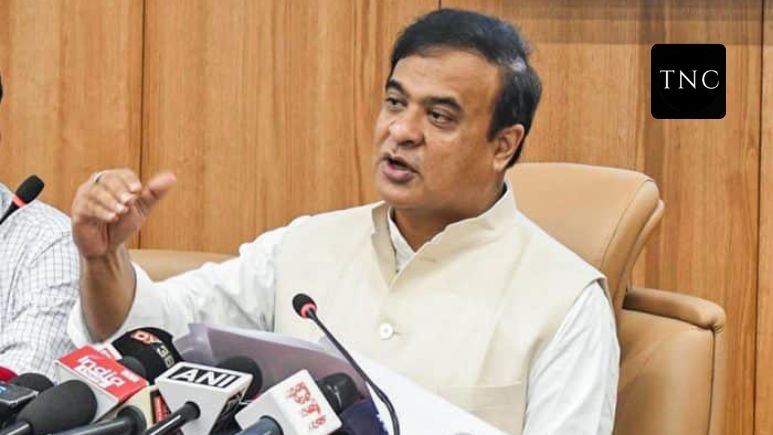
The first seeks to prohibit polygamy. Supporters argue the practice disproportionately harms women by weakening financial security and legal protections inside marriages. Assam Chief Minister Himanta Biswa Sarma has repeatedly framed the move as a reform measure rather than a religious intervention, positioning it as part of a broader push for what the government calls “equal civil rights.”
The second proposal may prove even more controversial: mandatory registration for live-in relationships. Couples living together outside marriage would reportedly have to formally notify authorities. Backers claim the system would help protect women abandoned after long-term relationships and create legal documentation in disputes involving maintenance, domestic abuse, or child custody.
Critics see something else entirely.
Civil liberties advocates argue the state is moving into deeply personal territory traditionally shielded from government scrutiny. Opposition parties have accused the administration of weaponising social reform for political gain ahead of future elections. Several leaders vowed to oppose the legislation when it comes up for debate in the Assembly.
The clash reflects a larger national tension. India’s Constitution mentions the possibility of a Uniform Civil Code under the Directive Principles, but the country’s legal system still operates through a patchwork of religion-based personal laws governing marriage, divorce, inheritance, and adoption. For decades, political parties avoided aggressive reforms in this area, fearing backlash from religious communities.
That caution is fading.
In recent years, the political conversation around the UCC has become more assertive, particularly among BJP-ruled states. Uttarakhand’s implementation of a UCC framework earlier intensified the momentum. Assam’s bill appears designed to push that momentum further by targeting practices the government believes are incompatible with constitutional equality.
Yet the politics are far more complicated than slogans about reform.
Polygamy rates in India are statistically low across communities, according to multiple surveys, but the issue carries enormous symbolic weight in public discourse. Live-in relationships, meanwhile, exist in a legal grey zone socially visible in urban India, legally recognised in some court judgments, yet still culturally contested in many parts of the country.
That contradiction is exactly why the Assam proposal has become such a flashpoint.
For supporters, the bill represents modernization and an attempt to align personal laws with contemporary ideas of equality and accountability. For opponents, it represents surveillance, centralisation of power, and the erosion of private freedoms under the language of reform.
The battle unfolding in Assam may ultimately matter far beyond the state itself. If the legislation survives political and legal challenges, it could become a template for other states exploring their own versions of a Uniform Civil Code.
And that means the debate is no longer theoretical.
It is moving into courtrooms, assembly halls, and living rooms across India one law at a time.
Assam’s proposed UCC bill is about far more than polygamy or live-in relationships. It is part of a larger political effort to redefine how the Indian state governs family, faith, and personal freedom in the 21st century.
Also Read / The Man Who Didn’t Walk Away: How Himanta Biswa Sarma Is Quietly Redrawing Assam’s Political Identity.














Leave a comment