

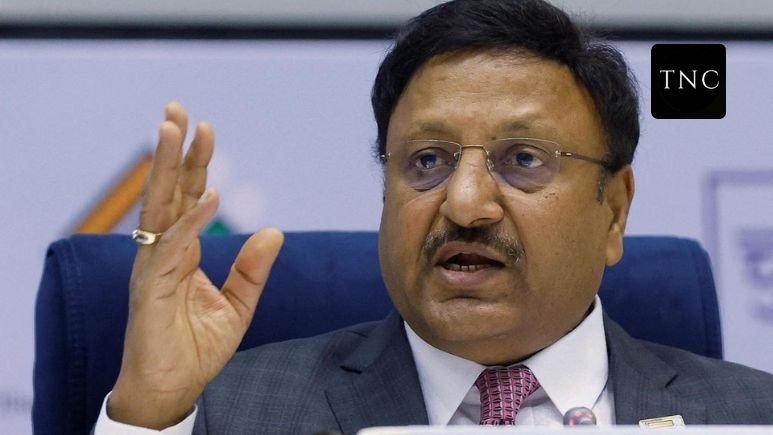

In a significant leadership announcement, HDFC Bank has approved the appointment of former Chief Election Commissioner (CEC) and ex-Finance Secretary Rajiv Kumar as its Part-time (Non-Executive) Chairman, marking a new chapter for India’s largest private-sector lender. The appointment comes after months of uncertainty following the resignation of the bank’s former chairman, Atanu Chakraborty, earlier this year. However, Kumar’s appointment will become effective only after receiving approval from the Reserve Bank of India (RBI).
The decision is being viewed as an important step toward strengthening HDFC Bank’s governance and restoring stability at the board level after a period of leadership transition.
HDFC Bank Ends Leadership Uncertainty
HDFC Bank’s board approved Rajiv Kumar’s appointment during a board meeting held on June 29. Alongside the chairmanship, the board also appointed him as an Additional Independent Director for a four-year term beginning June 30, subject to shareholder approval. His tenure as Part-time Chairman is proposed for three years, starting from the date approved by the RBI.
The appointment fills the vacancy created after former chairman Atanu Chakraborty resigned unexpectedly in March, citing differences over “values and ethics.” His departure unsettled investors and briefly weighed on HDFC Bank’s share price before veteran banker Keki Mistry stepped in as interim chairman.
Who Is Rajiv Kumar?
Rajiv Kumar is a retired Indian Administrative Service (IAS) officer with more than four decades of experience in public administration, finance, and governance.
Throughout his career, he has held several high-profile positions, including:
- Finance Secretary, Government of India
- Secretary, Department of Financial Services
- Chief Election Commissioner of India
- Senior policymaker involved in banking and financial sector reforms
During his tenure as Finance Secretary, Kumar played an important role in banking-sector recapitalisation, governance reforms, financial inclusion initiatives, and efforts to address stressed assets in public-sector banks. Later, as Chief Election Commissioner, he supervised major electoral exercises across the country.
Why This Appointment Matters
HDFC Bank is India’s largest private-sector bank by market capitalization and serves millions of retail and corporate customers. Leadership stability is critical for maintaining investor confidence, ensuring regulatory compliance, and guiding the bank’s long-term strategy.
Analysts believe Rajiv Kumar’s extensive experience in public policy, financial regulation, and institutional governance makes him well suited for the role of non-executive chairman.
His appointment is expected to strengthen oversight while supporting the bank’s management as it navigates a rapidly evolving financial and regulatory environment.
Governance in Focus
The leadership change comes after several months of scrutiny surrounding the bank’s governance.
Following Atanu Chakraborty’s resignation, HDFC Bank commissioned an independent legal review. According to reports, the review found no evidence supporting the allegations that had prompted his resignation. The appointment of Rajiv Kumar is widely seen as part of the bank’s efforts to reinforce governance and move beyond the episode.
Strong governance remains a key priority for financial institutions, particularly at a time when investors and regulators expect greater transparency and accountability.
HDFC Bank’s Growth Journey
HDFC Bank continues to be one of India’s most influential financial institutions, with operations spanning retail banking, corporate lending, digital banking, wealth management, and payment services.
Following the merger with Housing Development Finance Corporation (HDFC), the bank has focused on expanding its customer base, strengthening technology infrastructure, and improving operational efficiency.
Industry experts believe experienced board leadership will play an important role as the bank continues integrating its businesses and pursuing long-term growth.
Challenges Ahead
Despite its strong market position, HDFC Bank faces several challenges in the coming years, including:
- Managing post-merger integration
- Expanding digital banking services
- Maintaining asset quality
- Meeting evolving regulatory requirements
- Responding to increased competition from fintech companies and private lenders
The board’s oversight, combined with the executive leadership team, will be instrumental in addressing these priorities.
Looking Ahead
If approved by the RBI, Rajiv Kumar’s appointment will mark the beginning of a new phase in HDFC Bank’s leadership. His experience in financial administration and institutional governance is expected to contribute to the bank’s strategic direction and reinforce stakeholder confidence.
Investors, customers, and the broader financial sector will closely watch the transition as HDFC Bank continues its growth trajectory in India’s competitive banking industry.
Conclusion
The appointment of former Chief Election Commissioner and Finance Secretary Rajiv Kumar as HDFC Bank’s proposed Part-time Chairman represents a significant leadership move for India’s largest private-sector lender. While the appointment remains subject to RBI and shareholder approvals, it is widely viewed as a step toward strengthening governance and ensuring stability after months of board-level uncertainty.
As HDFC Bank enters its next phase of growth, experienced leadership at the board level is expected to support its long-term vision, maintain investor confidence, and guide the institution through an increasingly dynamic financial landscape.












Leave a comment