

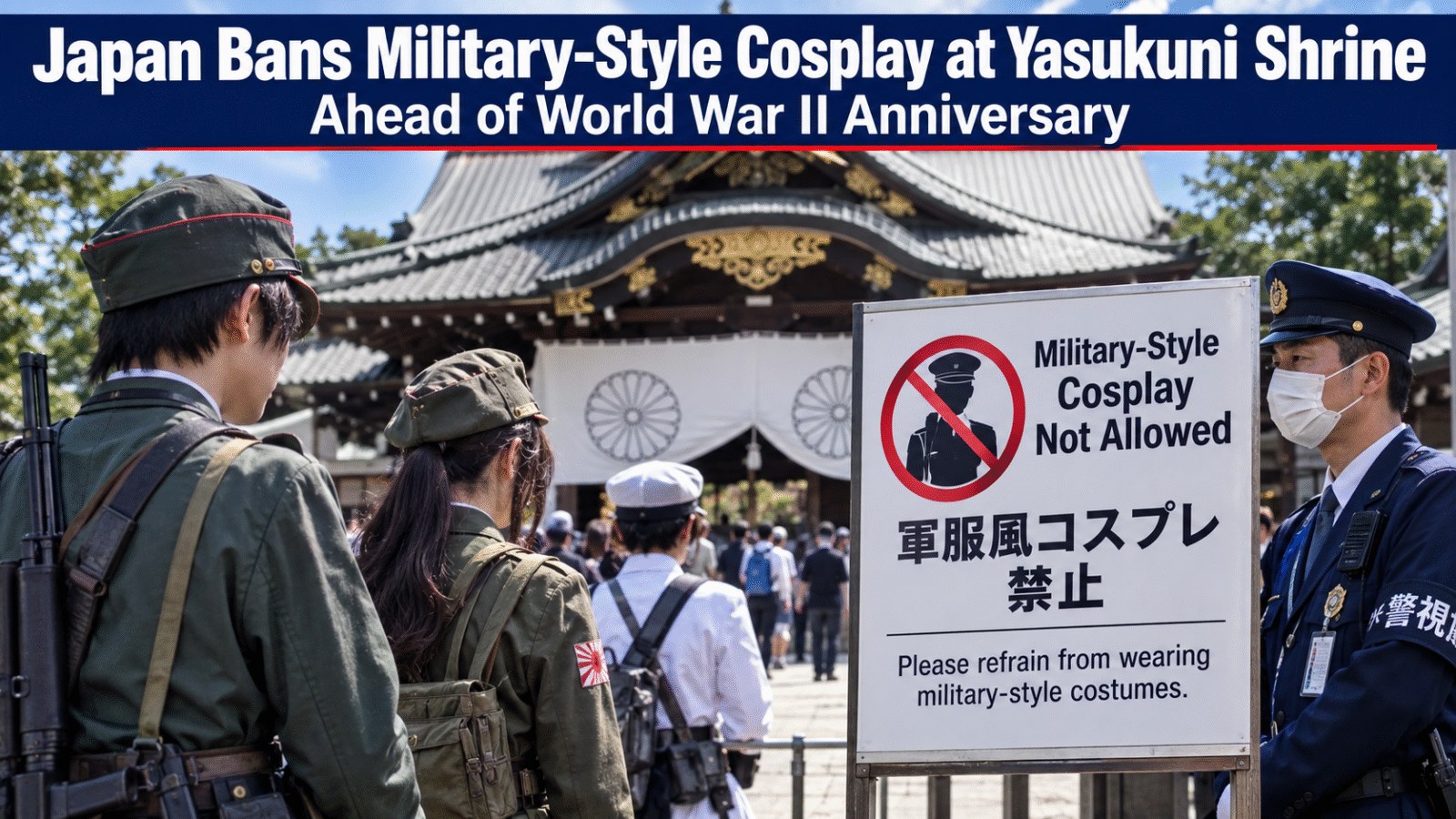

The Yasukuni Shrine in Tokyo has officially banned military-style cosplay on its grounds, a decision aimed at maintaining the shrine’s solemn and sacred atmosphere. This ban, effective year-round, coincides with the anniversary of Japan’s defeat in World War II, known as VJ Day.
The shrine honors approximately 2.5 million Japanese soldiers and civilians who lost their lives in conflicts during the 19th and 20th centuries. The ban is particularly significant as it reflects the shrine’s role as a symbol of Japan’s militaristic past and wartime actions, especially in the eyes of neighboring countries such as China and South Korea.
Among those honored at Yasukuni are 14 individuals who were tried and convicted as Class-A war criminals by the Allied powers after World War II. The shrine’s statement emphasized the need for decorum and the importance of a peaceful environment for worship.
The ban has sparked mixed reactions, with some critics arguing it could hinder serving members of Japan’s Self-Defense Forces from paying their respects at the shrine. However, the shrine clarified that serving personnel and military members from abroad are exempt from the new dress code
Why the Ban Was Introduced
The Japan Bans Military-Style Cosplay at Yasukuni Shrine decision was announced shortly before ceremonies marking the anniversary of Japan’s surrender in World War II on August 15.
According to shrine officials, the new rule aims to ensure that memorial events remain respectful for veterans, families of the war dead, and visitors paying tribute. Officials also expressed concern that military-style cosplay could distract from the purpose of the ceremonies or create misunderstandings among international visitors.
The restriction applies specifically to costumes resembling military uniforms used for cosplay, photography, or entertainment purposes.
What Is the Yasukuni Shrine?
The Yasukuni Shrine is a Shinto shrine located in central Tokyo.
It was established in 1869 to honor those who died while serving Japan in conflicts dating back to the 19th century. Today, the shrine commemorates more than two million people who died in wars involving Japan.
However, the shrine has remained controversial because it also enshrines several convicted Class-A war criminals from World War II. Visits by Japanese politicians have frequently drawn criticism from China, South Korea, and other neighboring countries.
Despite the controversy, many Japanese families continue to visit the shrine to remember relatives who died in military service.
Annual WWII Anniversary Draws Thousands
Every year, the anniversary of Japan’s surrender on 15 August 1945 attracts thousands of visitors to the Yasukuni Shrine.
The day marks the end of World War II and remains one of Japan’s most significant historical commemorations. Memorial ceremonies, religious rituals, and private tributes are held throughout the day.
Police security is often increased because political groups, veterans, tourists, and media organizations gather in large numbers.
Officials expect another large turnout this year.
Military-Style Cosplay Under New Rules
The new regulation specifically targets military-themed cosplay rather than ordinary clothing.
Visitors wearing replica military uniforms, historical battle costumes, or outfits designed for cosplay events may be refused entry during the anniversary period.
Shrine officials clarified that the rule is intended to preserve dignity rather than restrict freedom of expression.
Security personnel have been instructed to explain the policy respectfully to visitors arriving in prohibited attire.
Public Reactions
The announcement has generated mixed reactions online.
Many people welcomed the decision, arguing that memorial sites should remain respectful and free from activities associated with entertainment or social media content.
Others questioned whether the restriction should extend beyond the anniversary period or whether clearer guidelines would be helpful.
Despite differing opinions, many observers agreed that maintaining the solemn atmosphere during remembrance ceremonies is important.
Historical Sensitivities
The Yasukuni Shrine continues to carry historical and diplomatic significance.
Relations between Japan and several neighboring countries have often been influenced by differing interpretations of wartime history.
Official visits to the shrine by senior Japanese politicians have sometimes led to diplomatic protests.
Because of these sensitivities, events at the shrine are closely followed by international media every year.
Security Measures Strengthened
Tokyo authorities have also increased security around the shrine.
Police officers are expected to monitor large crowds, manage traffic, and ensure that commemorative events proceed peacefully.
Additional surveillance and crowd-control measures have been prepared to prevent disruptions during the anniversary ceremonies.
Visitors have been encouraged to cooperate with security officials throughout the event.
Respecting Memorial Traditions
Religious leaders associated with the shrine emphasized that remembrance ceremonies should focus on honoring those who lost their lives.
They encouraged visitors to observe shrine customs respectfully while avoiding behavior that could distract from memorial services.
Photography remains permitted in designated areas, but visitors are expected to follow instructions issued by shrine staff.
The new cosplay restriction forms part of broader efforts to preserve the site’s traditional atmosphere.
Tourism and International Interest
The Yasukuni Shrine is also visited by international tourists interested in Japanese history.
Many visitors come to learn about Japan’s wartime past, cultural traditions, and religious practices.
Travel experts believe the new rule is unlikely to affect tourism significantly because it applies mainly during the anniversary period and focuses on specific types of costumes.
Most visitors are expected to continue accessing the shrine without difficulty.
Looking Ahead
Authorities will monitor the implementation of the new regulation during this year’s commemorative events.
Officials may review the effectiveness of the policy after the anniversary to determine whether similar measures should remain in place for future ceremonies.
Observers believe the priority will continue to be balancing public access with respect for historical remembrance.
Conclusion
The decision that Japan Bans Military-Style Cosplay at Yasukuni Shrine reflects efforts to maintain dignity during one of the country’s most important annual remembrance events. By introducing the restriction ahead of the World War II anniversary, shrine officials hope to create a respectful environment for families, veterans, and visitors paying tribute to those remembered at the site.
Read Also | Pakistan’s Interior Minister Mohsin Naqvi travelled to Tehran for talks with senior Iranian leaders.













Leave a comment