

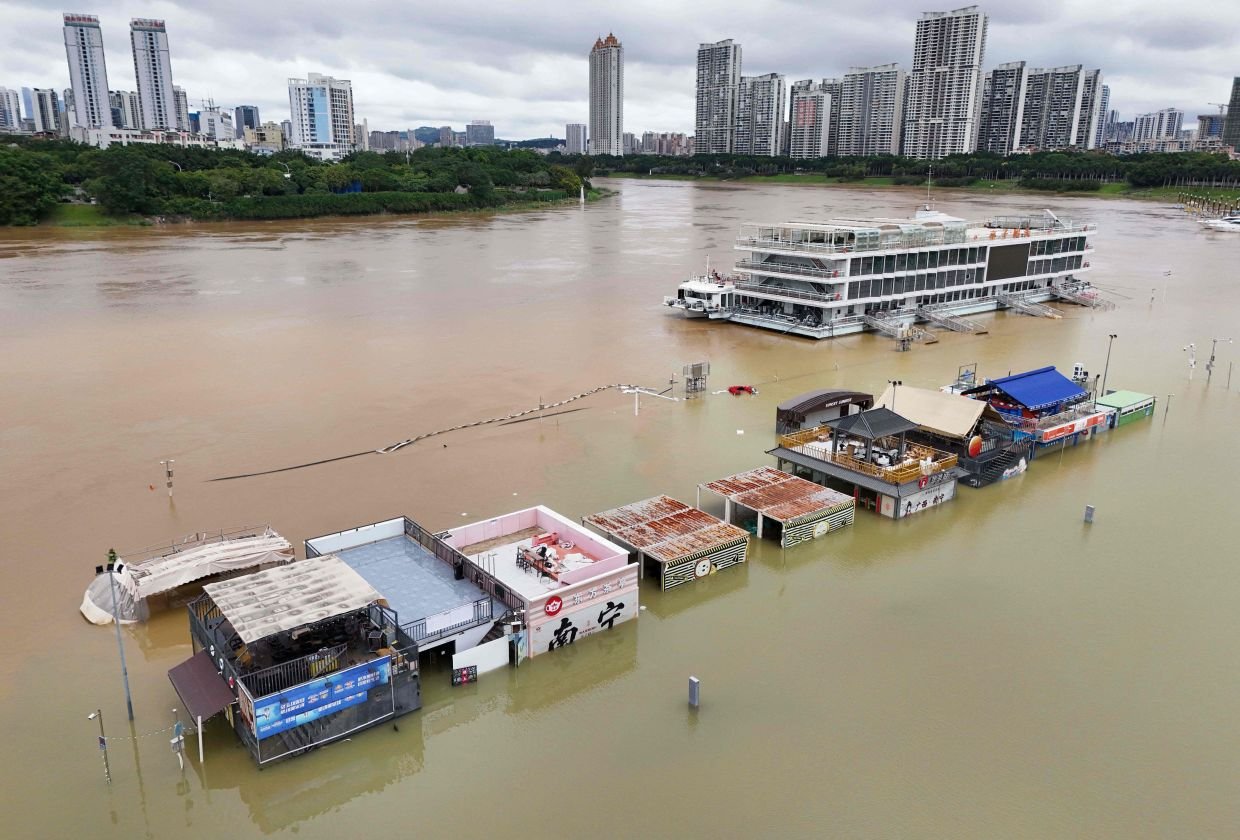

Typhoon Dolphin Triggers Severe Flooding in Shanghai, bringing heavy rain, powerful winds, and widespread disruption across eastern China. Authorities have launched large-scale emergency operations as floodwaters have inundated roads, residential neighborhoods, and transport networks in Shanghai and nearby provinces.
The storm made landfall after intensifying over the East China Sea, prompting weather agencies to issue high-level warnings. Thousands of emergency workers have been deployed to assist residents, restore essential services, and monitor flood-prone areas.
Officials continue to urge people to remain indoors unless travel is necessary, as weather conditions remain dangerous in several districts.
Typhoon Dolphin Makes Landfall
Typhoon Dolphin reached eastern China with strong winds and intense rainfall, creating hazardous conditions across Shanghai and neighboring regions.
Meteorological authorities reported that the storm brought several hours of continuous heavy rain, overwhelming drainage systems in many low-lying areas. Streets quickly filled with water, disrupting normal life across the city.
Flood warnings were issued before landfall, allowing emergency agencies to prepare evacuation plans and deploy rescue teams.
The storm continues moving inland while gradually weakening, but rainfall remains a significant concern.
Evacuations Ordered
Authorities ordered evacuations in areas considered to be at high risk of flooding.
Residents living near rivers, coastal regions, and low-lying neighborhoods were advised to move to designated emergency shelters before conditions worsened.
Local officials coordinated transportation and temporary accommodation for affected families.
Emergency shelters have been supplied with food, drinking water, medical assistance, and other essential resources.
Transport Services Disrupted
Typhoon Dolphin has significantly affected transportation throughout eastern China.
Numerous domestic and international flights have been delayed or cancelled because of strong winds and poor visibility. High-speed rail services have also been suspended on selected routes as a precaution.
Bus services have been diverted where roads remain flooded.
Authorities continue monitoring transport infrastructure before restoring normal operations.
Emergency Response Underway
Rescue teams have been working around the clock to assist affected communities.
Firefighters, police officers, medical teams, and disaster response personnel have rescued stranded residents and helped relocate vulnerable families.
Boats have been deployed in severely flooded neighborhoods where vehicles could no longer operate safely.
Power restoration teams are also working to repair damaged electrical infrastructure.

Impact on Daily Life
The storm has disrupted everyday life for millions of residents.
Schools in several districts have suspended classes, while many businesses have temporarily closed because of severe weather conditions.
Shopping centers and public facilities have adjusted operating hours to prioritize public safety.
Residents have been encouraged to avoid unnecessary travel until weather conditions improve.
Economic Impact
Typhoon Dolphin may have a significant economic impact on eastern China.
Flooding has affected transportation, logistics, retail businesses, and manufacturing operations in some industrial areas.
Agricultural land in nearby provinces has also experienced heavy rainfall, raising concerns about crop damage.
Economists believe the full financial impact will become clearer after damage assessments are completed.
Weather Forecast
Meteorologists expect heavy rain to continue in some inland regions even after the typhoon weakens.
Although wind speeds are forecast to decrease gradually, flood risks may remain elevated because rivers and drainage systems are already under pressure.
Authorities continue monitoring weather conditions and issuing updated warnings.
Residents have been advised to follow official weather bulletins.
Climate Experts Monitor Trends
Climate experts note that intense tropical storms continue affecting parts of East Asia each year.
While individual storms cannot be directly linked to climate change without detailed scientific analysis, researchers continue studying whether warmer ocean temperatures contribute to stronger rainfall events and increased flooding risks.
Improving flood management and disaster preparedness remains an important priority for many coastal cities.
Safety Advice for Residents
Emergency authorities have issued several important safety recommendations:
- Stay indoors whenever possible.
- Avoid driving through flooded roads.
- Follow evacuation instructions immediately.
- Keep emergency supplies available.
- Monitor official weather updates regularly.
- Report emergencies using local emergency services.
These measures are intended to reduce risks while recovery efforts continue.
Recovery Efforts Expected
Once weather conditions improve, authorities will begin assessing damage across affected districts.
Cleanup operations, infrastructure repairs, and restoration of public services are expected to continue over the coming days.
Government agencies will also inspect bridges, roads, public buildings, and flood protection systems before reopening affected facilities.
Recovery may take several weeks in the hardest-hit locations.
Conclusion
Typhoon Dolphin Triggers Severe Flooding in Shanghai, leaving thousands of residents affected by rising water levels, transport disruptions, and emergency evacuations. Rescue teams remain active as authorities work to protect communities and restore essential services.
Read Also | Iran Denies Direct Talks With US, Says Foreign Minister Abbas Araghchi












Leave a comment