

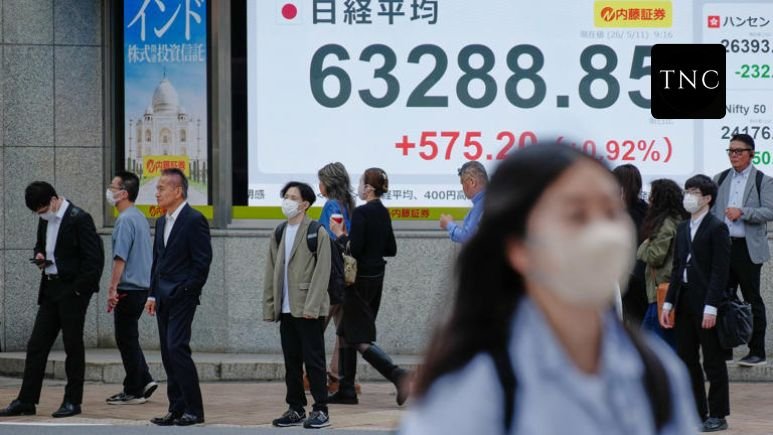

The trading floor in Tokyo lit up in green before most commuters had finished their first coffee. Screens flashed numbers traders had never seen before. The benchmark Nikkei 225 barreled past 65,000 for the first time in history, fueled by a sudden wave of optimism that a dangerous geopolitical standoff in the Middle East might finally cool down.
Just weeks ago, investors were bracing for the opposite. Oil prices had surged above $100 a barrel after escalating tensions involving Iran and the Strait of Hormuz, the narrow shipping corridor that carries nearly a fifth of the world’s oil supply. Markets from Mumbai to New York shuddered under the fear of prolonged conflict, rising inflation, and another global energy shock.
Then came an unexpected shift.
Fresh signals from US President Donald Trump suggesting that negotiations with Iran were moving in a “constructive” direction triggered a sharp reversal across global markets. Crude oil prices plunged more than 5 percent, dragging Brent crude back below the psychologically important $100 mark. Investors rushed back into equities, betting that the worst-case scenario a prolonged disruption in oil supply might be avoided after all.
Japan became the clearest beneficiary of that relief rally.
The Nikkei 225 surged nearly 3 percent on Monday, smashing through the 65,000 barrier as traders piled into export-heavy Japanese stocks. Lower oil prices offered immediate breathing room for energy-importing economies like Japan, where rising fuel costs had threatened corporate profits and consumer spending alike.
The rally spread quickly across Asia.
Indian markets opened sharply higher, with the Sensex jumping nearly 900 points and the Nifty approaching the 24,000 level. Investors also pushed the rupee stronger while bond yields eased, signaling a broader return in risk appetite. Oil marketing companies and banking stocks led gains as traders recalibrated expectations for inflation and interest rates.
The turnaround was especially striking because markets had been heading in the opposite direction only days earlier.
Last week, fears of military escalation had battered global equities. Oil prices spiked, the rupee touched record lows, and investors fled emerging markets amid concerns that higher energy costs would reignite inflation and force central banks into tighter monetary policy. Analysts warned that a prolonged closure of the Strait of Hormuz could trigger one of the worst supply disruptions in modern energy markets.
That anxiety has not disappeared completely.
Trump has continued to strike a cautious tone, making clear that sanctions and maritime restrictions on Iran remain in place until a formal agreement is reached. Investors understand that one failed negotiation or military flare-up could quickly reverse Monday’s optimism. Oil markets, in particular, remain highly sensitive to every headline emerging from Washington and Tehran.
But for now, Wall Street, Tokyo, and Mumbai are all reacting to the same calculation: lower oil prices mean lower inflation pressure, fewer rate hike fears, and stronger prospects for economic growth.
That single equation was powerful enough to send Japan’s stock market into uncharted territory.
The Bottom Line: Global markets are no longer trading only on earnings or economic data. They are trading on geopolitics on tanker routes, ceasefire whispers, and diplomatic signals from Washington and Tehran. Monday’s rally showed how quickly fear can turn into euphoria when the world believes the oil shock may finally ease.
Also Read / Japan’s Election Day Brings Hope for Prime Minister Takaichi.













Leave a comment