

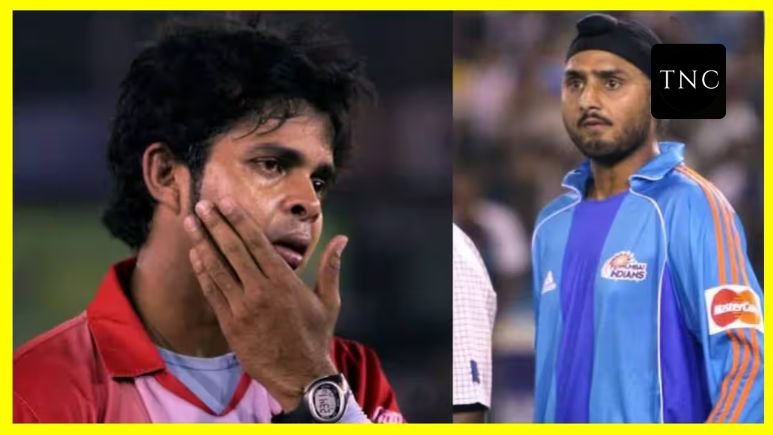

The cameras had already begun to pan away when the scene unfolded. Players were lining up after the match, sweat drying under the Mohali lights, when S. Sreesanth broke into tears. Nearby stood Harbhajan Singh, expression hard, while confusion rippled through the stadium. It was 2008, the first season of the Indian Premier League, and Indian cricket had just produced one of its most infamous off-field moments: the “Slapgate” incident. Nearly two decades later, it still refuses to die.
This week, the controversy returned to the headlines after Sreesanth alleged that Harbhajan profited from the old scandal through a commercial campaign, claiming the former spinner earned close to ₹1 crore and later asked him to promote it on social media. Sreesanth also said he has blocked Harbhajan on Instagram, signaling that whatever peace once existed between them may now be over.
Why does this matter? Because the feud is no longer about one slap. It is about memory, image, and the modern economy of outrage. In today’s sports culture, old controversies do not disappear. They are recycled, monetized, clipped into reels, turned into ads, and fed back to the public as nostalgia.
Back in 2008, the punishment was swift. Harbhajan was suspended for the remainder of the IPL season after striking Sreesanth following a match between Mumbai Indians and Kings XI Punjab. At the time, it was seen as a disciplinary embarrassment for a league trying to establish credibility.
But time changes scandals. What once damaged reputations can later become entertainment. That shift appears to be what angered Sreesanth most. His complaint was not simply that the incident happened. It was that the incident, from his perspective, was repackaged for profit while the emotional cost remained his.
There is a larger lesson here for athletes and celebrities. Public apologies often close headlines, not wounds. Fans may move on. Brands may move on. Teammates may pose together at reunions. But the people inside the controversy often carry a different timeline.
Indian cricket has always excelled at storytelling: rivalries, comebacks, redemption arcs. Yet some stories resist neat endings. The Slapgate saga survives because it combines ego, fame, humiliation, and unfinished resentment, the ingredients of a drama that never fully resolves.
In sports, the scoreboard forgets quickly. Human beings usually do not.
Also Read / The Pitch Was the Most Dangerous Player on the Field: The Match That Should Have Stopped Sooner.













Leave a comment