

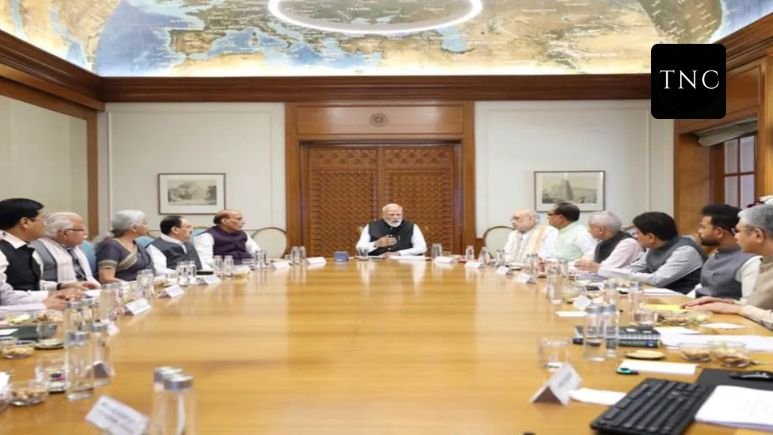

The phones began ringing before sunrise in the South Block. A senior bureaucrat, still scanning overnight intelligence briefs, paused at a line that had grown alarmingly familiar: shipping routes through West Asia were tightening again. Oil tankers delayed. Insurance premiums rising. Another advisory about Indian workers stranded in a conflict zone.
Across ministries, the same question echoed: How long before this crisis stops being distant and starts hurting at home?
By mid-morning, the government had its answer. A coordinated response was no longer optional. It was urgent.
Why This Story Matters
India’s decision to set up an inter-ministerial panel led by Defence Minister Rajnath Singh is not just bureaucratic reshuffling. It is a signal that the West Asia conflict has crossed from geopolitics into everyday economics.
The stakes are stark: fuel prices, fertilizer supply, trade routes, and the safety of millions of Indians in the Gulf. As tensions escalate, India is preparing for a scenario where disruption is not temporary but prolonged and structural.
The Anatomy of a Crisis Response
The government is building something akin to a war room without calling it one.
At the center sits the inter-ministerial panel, pulling together defence, external affairs, petroleum, and commerce. Its mandate is simple but sweeping: anticipate shocks before they hit.
Because the risks are already visible.
Energy sits at the top of the list. West Asia supplies a major share of India’s crude oil. Any prolonged conflict threatens not just prices, but availability. Officials have already warned of a potential energy and fertilizer crunch if the situation worsens.
Then there are supply chains. Key maritime routes and arteries of global trade are under pressure. Delays ripple outward, affecting everything from industrial inputs to household essentials.
And beyond economics lies human risk. Thousands of Indian workers remain in the region. The government has begun preparing evacuation and safety mechanisms, even as it reassures citizens that fuel and LPG supplies remain stable for now.
What makes this moment different is the scale of coordination. Alongside this panel, the government has also created multiple empowered groups to monitor food, fuel, and logistics. The message is clear: this is no longer a foreign policy issue alone, it is a whole-of-government challenge.
A Strategic Shift in Real Time
There is another layer to this story, one less visible, but equally important.
India is not just reacting. It is recalibrating.
In high-level meetings, officials have been instructed to study the conflict itself: the technology used, the speed of escalation, the vulnerabilities exposed. The goal is to translate distant warfare into domestic preparedness.
This marks a subtle but significant shift. For decades, India’s West Asia policy was built on balance, maintaining ties with all sides. Now, it must also account for volatility.
And volatility demands readiness.
What looks like a distant war is quietly reshaping India’s economy, security planning, and governance.
The inter-ministerial panel is not just about managing a crisis it’s about acknowledging a new reality: in an interconnected world, no conflict stays regional for long.
The question is no longer whether the shock will arrive.
It’s whether the system is ready when it does.
Also Read / The Price of Distance: How a War Thousands of Miles Away Is Reshaping Everyday Deliveries.











Leave a comment