

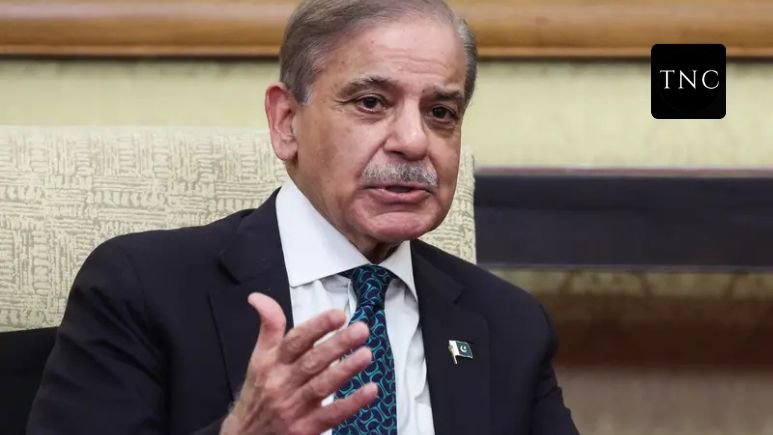

The glass didn’t shatter but it trembled.
Inside Pakistan’s embassy compound in Tehran, a junior diplomat froze mid-sentence as a low, thunderous boom rolled through the building. The walls quivered. Outside, sirens cut through the afternoon heat. A few streets away, smoke rose in uneven columns where missiles had struck.
Phones lit up at once Islamabad calling, staff counting heads, security teams scanning the perimeter. No one was hurt. But the message had already landed.
This was no longer someone else’s war.
The reported strike near Pakistan’s embassy in Tehran carried out amid ongoing Israeli and U.S. attacks on Iranian targets has dragged a new player into an already volatile conflict. Pakistan’s unusually blunt warning to Israel signals a dangerous shift: the war is no longer confined to Iran and Israel. It is beginning to test the boundaries of diplomacy, neutrality, and regional restraint.
At stake is not just the safety of diplomats, but the fragile architecture that keeps conflicts from spiraling into global crises.
Pakistan’s reaction was swift and deliberately provocative.
Officials warned that any harm to its diplomats would trigger a forceful response, rejecting the idea that it would remain passive in the face of escalation.
The language was not diplomatic. It was strategic.
Because this wasn’t just about one explosion.
It was about proximity.
The strikes reportedly hit central Tehran, close enough to diplomatic zones to rattle embassies and raise alarms across the international community.
In war, geography is never accidental. When bombs fall near embassies, they redraw invisible lines about who is involved, who is at risk, and who might be next.
At the same time, Pakistan occupies a complicated position. It is not merely an observer. It has quietly emerged as a mediator between Iran and global powers, attempting to keep diplomatic channels alive even as missiles fly.
That dual role mediator and potential stakeholder makes this moment especially volatile.
Meanwhile, the broader conflict continues to intensify. Iran and Israel have exchanged hundreds of strikes, targeting cities, military infrastructure, and strategic assets, with casualties mounting on both sides.
Each new attack widens the circle of risk.
And embassies, once considered neutral ground, are now within that circle.
There is also a deeper signal beneath Pakistan’s warning: a rejection of what smaller or mid-tier powers often perceive as selective restraint. The phrase “we’re no Qatar,” echoed in multiple reports, reflects frustration with a global order where some states absorb shocks quietly while others set the rules.
In that sense, this isn’t just about Israel or Iran.
It’s about credibility.
If a country cannot guarantee the safety of its diplomats abroad, its influence weakens. If it overreacts, it risks being pulled into a war it cannot control.
That tension between deterrence and escalation is now playing out in real time.
The strike near Pakistan’s embassy didn’t cause casualties. But it did something more dangerous: it blurred the line between observer and participant.
And in modern warfare, once that line disappears, the conflict rarely stays contained.
Also Read / The Midnight Calls: How Pakistan Stepped Into the Middle East Fire as Everyone Else Stepped Back.











Leave a comment