

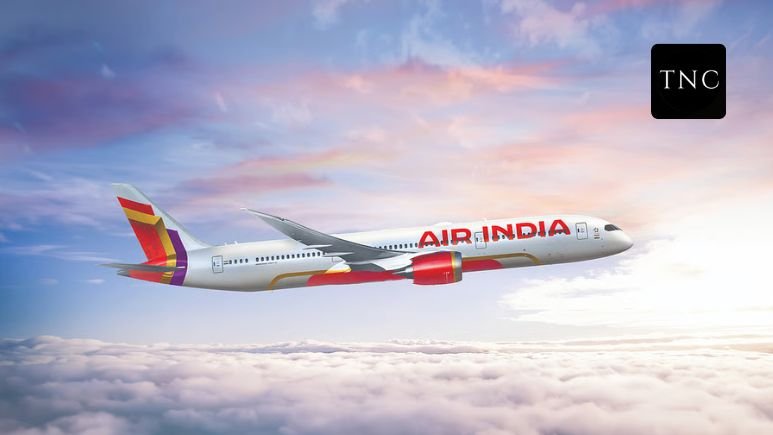

Somewhere over Saudi airspace, nearly seven hours into what should have been a routine long-haul flight, the hum inside Air India’s newest aircraft changed. Passengers noticed it first as a faint, unfamiliar noise metallic, out of rhythm. A few exchanged glances. A flight attendant paused mid-aisle, listening.
Then came the announcement. Calm, measured, rehearsed but unmistakable: the aircraft would be turning back.
For the 200-plus passengers on board Flight AI111, London suddenly felt very far away.
On March 26, an Air India Airbus A350-900 en route from Delhi to London made a precautionary return after a suspected technical issue mid-air. The aircraft had been airborne for nearly seven hours before landing safely back in Delhi.
No injuries were reported. But the incident is not isolated; it is part of a growing pattern of technical snags involving one of the airline’s newest and most critical long-haul aircraft. And that raises a bigger question: what do these repeated mid-air turnbacks reveal about operational reliability in India’s rapidly modernizing aviation sector?
The decision to turn back was not dramatic, it was procedural.
Modern aviation is built on redundancy and caution. Pilots are trained to treat even minor anomalies as potential risks. In this case, reports suggest unusual noises were detected, prompting the crew to abort the journey mid-air.
The aircraft landed safely. That’s the system working exactly as designed.
But the pattern is harder to ignore.
This same A350 aircraft registered VT-JRF had already been involved in another incident earlier in March, when it was diverted to Shannon, Ireland, during a New York–Delhi flight.
Go back further, and the concerns deepen:
- A separate A350 suffered engine damage after ingesting a foreign object on the ground earlier this year.
- Other Air India flights across aircraft types have reported technical glitches, diversions, and precautionary returns in recent months.
Individually, each event is manageable. Collectively, they point to strain.
Air India is in the middle of an aggressive transformation: new aircraft orders, expanded international routes, and a push to reclaim its global reputation. The A350 is central to that ambition, deployed on high-profile routes like Delhi–London and New York.
But scaling up an airline is not just about acquiring new planes. It’s about integrating maintenance systems, crew training, ground operations, and real-time diagnostics.
And that’s where friction often shows.
Even the most advanced aircraft can become operational liabilities if maintenance cycles, supply chains, or technical troubleshooting lag behind deployment speed. Aviation experts often call this the “teething phase” but passengers experience it as uncertainty.
Still, one fact stands out: in every recent case, the aircraft landed safely.
That is not luck. That is aviation discipline.
Air travel is safest not when nothing goes wrong but when something does, and the system responds correctly.
The Air India A350 didn’t fail mid-air. It did what it was supposed to do: detect a problem, turn back, and land safely.
But as these incidents stack up, the real test isn’t safety, it’s consistency.
Because in aviation, trust isn’t built on one safe landing.
It’s built on thousands of uneventful flights.










Leave a comment