

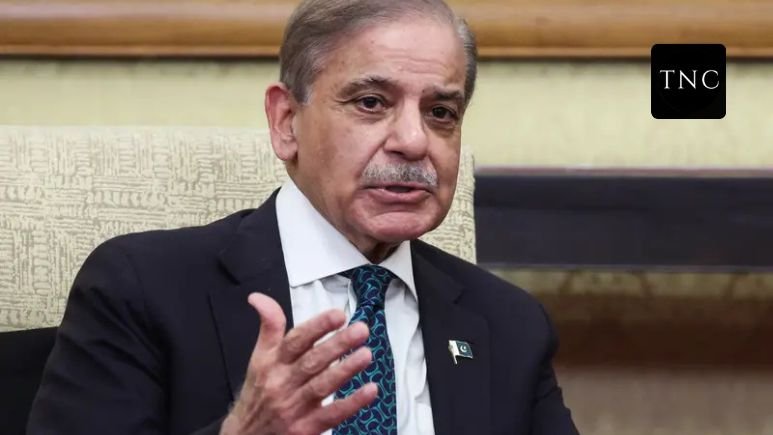

The call came in just after midnight in Islamabad. Aides shuffled in and out of the Prime Minister’s office, whispering updates from Riyadh, Tehran, Washington. On the other end of one line was Saudi Crown Prince Mohammed bin Salman. On another, messages relayed from Iran.
Prime Minister Shehbaz Sharif leaned forward, voice measured but urgent. The message was simple: the war had gone too far. Missiles were flying across the Gulf, oil routes were choking, and the region was edging toward something far worse. Pakistan, he said, was ready to step in if anyone was still willing to listen.
Hours later, a public statement followed. The language was diplomatic “de-escalation,” “unity,” “dialogue” but the stakes were unmistakable.
At a moment when the Middle East conflict involving Iran threatens to spiral into a wider regional crisis, Pakistan is attempting a delicate balancing act: acting as mediator while maintaining alliances on both sides.
Sharif’s call with Saudi Arabia’s most powerful leader was not routine diplomacy. It was part of a broader push to position Pakistan as a backchannel between Iran, the United States, and Gulf powers.
The gamble is bold. Pakistan shares a border with Iran, maintains deep military ties with Saudi Arabia, and has longstanding if complicated relations with Washington. That combination gives it something rare in geopolitics: access to everyone, and trust from almost no one.
Pakistan’s move isn’t just about diplomacy. It’s about survival.
The country imports nearly 90% of its oil through Gulf routes now under threat, and the ongoing conflict has already disrupted supply chains and driven up fuel prices.
Every escalation in the Strait of Hormuz hits Pakistan directly at petrol pumps, in inflation numbers, and on the streets.
At the same time, Islamabad is bound to Saudi Arabia through a mutual defense understanding. It has publicly reiterated “unequivocal support” for the Kingdom, even as it reaches out to Iran.
This is the paradox: Pakistan is backing one side while trying to talk to the other.
Recent developments show just how fragile that position is:
- Pakistan has offered to host U.S.-Iran peace talks, presenting itself as neutral ground.
- Its military leadership is quietly acting as a communication bridge between Washington and Tehran.
- At the same time, Saudi Arabia, its closest Gulf ally is reportedly pushing for continued pressure on Iran.
This isn’t mediation in the traditional sense. It’s more like crisis management in real time keeping doors open while the building is still on fire.
There’s also ambition behind the effort. Pakistan hasn’t played a defining global diplomatic role in decades. If it succeeds even partially it could elevate Islamabad’s standing on the world stage, echoing its role in past Cold War diplomacy.
But the risks are immediate and concrete:
- A misstep could alienate Saudi Arabia or Iran
- Domestic sectarian tensions could flare
- Economic instability could deepen if the war drags on
In short, Pakistan isn’t choosing sides. It’s trying to prevent a choice altogether.
Pakistan is stepping into a role few countries want and even fewer can manage mediation in a war where every side distrusts the other.
If it succeeds, it gains global relevance.
If it fails, it risks being pulled into the very conflict it’s trying to contain.
For now, the phones in Islamabad keep ringing and the outcome may depend on who finally picks up.
Also Read / A New Middle East Calculation: Why Gulf States Quietly Shifted From Restraint to Resolve.








Leave a comment