


At 6:50 a.m. in New York, someone or several someones placed a cluster of trades worth nearly $600 million. Oil futures were dumped. Equity bets surged. There was no scheduled economic data, no central bank speech, no geopolitical breakthrough on the calendar. Just a quiet pre-market window and a set of wagers that, within minutes, would look uncannily prescient.
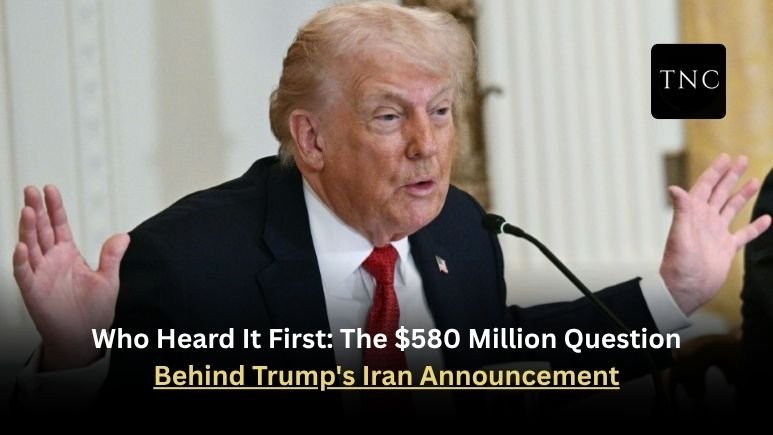
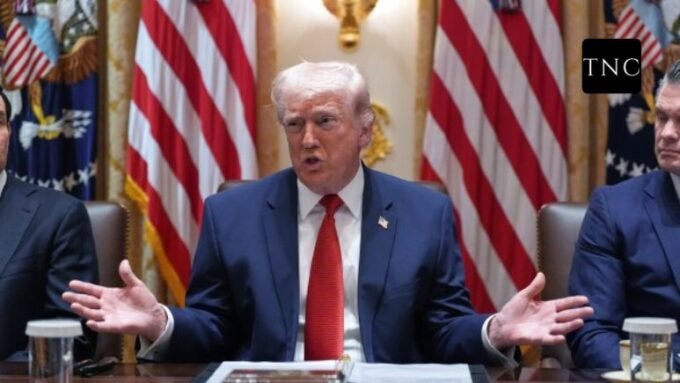
Fifteen minutes later, Donald Trump posted online: talks with Iran were “productive.” Planned strikes would pause. Oil prices fell. Stocks jumped. The trades paid off almost instantly.
By afternoon, Tehran denied any talks had taken place.
This is no longer just a story about diplomacy between the United States and Iran. It’s about timing who knows what, and when and whether geopolitical messaging is bleeding into financial markets in ways that raise uncomfortable questions about fairness, transparency, and power.
Recent reporting has highlighted a pattern: sudden policy shifts, dramatic announcements, and market-moving statements often arriving at moments that maximize impact. Trump’s latest Iran remarks paired with a last-minute delay of military strikes triggered global market swings and renewed scrutiny over whether information is being unevenly distributed or strategically timed.
Start with the sequence. Days earlier, Trump had issued a blunt ultimatum: Iran had 48 hours to reopen the Strait of Hormuz or face attacks on critical infrastructure.
Then, abruptly, the deadline shifted. Five more days. The justification: “productive conversations.” Iran publicly rejected that claim.
Markets reacted anyway and violently. Oil dropped double digits. Stocks surged.
This is where timing becomes everything.
Financial markets are hypersensitive to geopolitical signals, especially those tied to energy supply. The mere suggestion of de-escalation in the Middle East can send oil prices tumbling and equities climbing. Traders know this. Algorithms know this. But what they cannot legally know is non-public, market-moving information.
That’s why the $580 million in pre-announcement trades stand out. The size was unusual. The timing—minutes before the statement was tighter still. And the direction of the bets aligned almost perfectly with what followed.
There is, as of now, no proof of insider trading. Large funds often make probabilistic bets. Sometimes they get lucky. But even seasoned market participants described the activity as “really abnormal.”
Layer on the contradictions. The U.S. signals progress. Iran denies talks. Intermediaries hint at indirect communication.
In that fog, narrative itself becomes a market driver. A single post can reshape expectations about war, oil flows, and global risk all in seconds.
And that may be the deeper shift. Modern geopolitics isn’t just conducted in back rooms and formal briefings. It’s broadcast in real time, often without verification, directly into the bloodstream of global finance.
When timing is this precise, perception starts to matter as much as reality.
The controversy isn’t just about whether anyone cheated the market. It’s about a system where a single, unscheduled message can move billions and where some players may be better positioned to act on it than others.
In that world, the real question isn’t what was said about Iran. It’s who heard it first.
Also Read / The Fog of War: Why Questions Are Growing Around Trump’s Claims About the Iran Conflict.











Leave a comment