


Japan’s Economy Expands but Misses Growth Forecasts
Japan’s economy grew at an annualized rate of 1.1% in the second quarter of 2026, marking the third consecutive quarter of expansion but falling short of market expectations for 2% growth.
The preliminary GDP data, released by the Cabinet Office on Monday, August 17, 2026, showed quarter-on-quarter expansion of just 0.3%, missing the 0.5% consensus forecast and marking a notable deceleration from the revised 1.9% annualized rate posted in the first quarter.
While the economy remained on a growth path, the slower pace has raised fresh concerns about the sustainability of Japan’s economic recovery amid persistent inflationary pressures and weakening domestic demand.
Private Consumption Stagnates for First Time in Eight Quarters
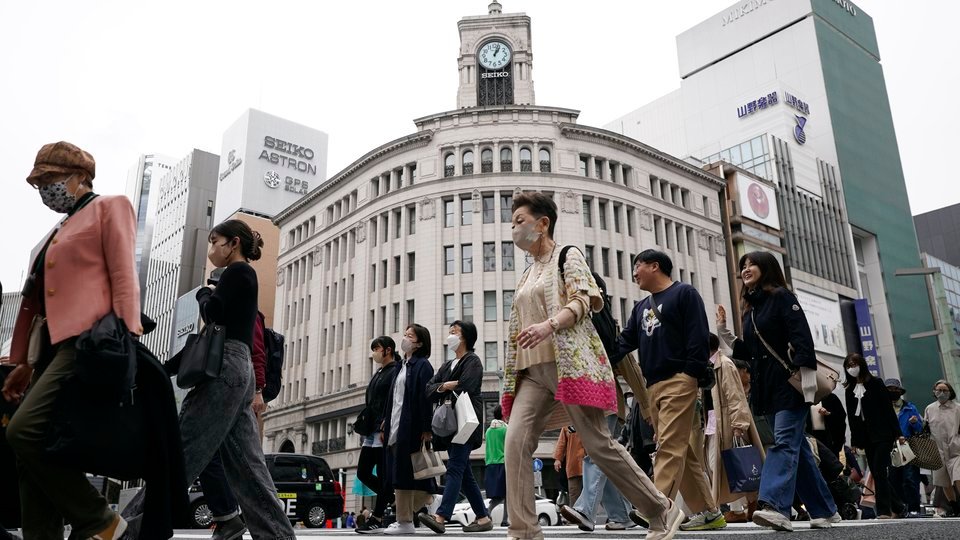
The most alarming aspect of the Q2 GDP report was the performance of private consumption, which accounts for more than half of Japan’s economic output.
Household spending, a critical driver of economic activity, stagnated at 0.0% quarter-on-quarter and actually contracted by 0.02%, marking the first decline in eight quarters.
This outcome was particularly disappointing as economists had forecast a 0.5% increase in consumer spending for the quarter.
The stagnation in private consumption came amid persistent inflationary pressures that continued to weigh on household spending.
Shoppers grappled with the rising cost of living, particularly as energy prices spiked following the escalation of the Middle East conflict.
While strong sales of automobiles and air conditioners provided some support driven by temporary demand ahead of policy and regulatory changes in April-June these gains were offset by lower spending on electricity and non-durable goods.
Corporate Investment Declines Amid Geopolitical Uncertainty
Capital expenditure, another key component of domestic demand, fell further in Q2 2026, deepening the decline observed in the previous quarter. Business investment dropped by 1.2%, worse than the 1.0% decline in Q1 and significantly below forecasts for a 0.4% gain.
The contraction in corporate spending reflected weaker business sentiment and heightened uncertainty over the economic outlook, particularly in light of ongoing geopolitical tensions in West Asia.
The fallout from the Iran war and broader Middle East conflict raised energy costs for Japanese businesses, complicating investment decisions and dampening corporate confidence.
Companies were reported to be retreating from aggressive expansion plans, opting instead for more cautious approaches as they navigated the uncertain global economic environment.
This trend has significant implications for Japan’s long-term growth potential, as sustained business investment is essential for productivity improvements and economic dynamism.
Exports Provide Partial Offset to Weak Domestic Demand
Despite the weakness in domestic demand, Japan’s external sector provided some cushion to overall GDP growth. Net trade contributed positively to the Q2 GDP figure, adding 0.5 percentage points to growth as exports increased by 0.5% while imports fell by 1.5%.
This reversal from Q1, when imports had risen by 0.3%, helped offset some of the drag from weaker household and corporate spending.
The resilience in exports was attributed to continued demand for Japanese manufactured goods, particularly automobiles and machinery, in key markets including the United States and Asia. However, analysts cautioned that the export sector’s contribution to growth may not be sufficient to sustain the economy if domestic demand continues to weaken. Moreover, rising import costs associated with higher energy prices could eventually erode the competitiveness of Japanese exports and weigh on corporate profitability.
Government Spending Supports Growth Through Stimulus Measures
In contrast to the stagnation in private consumption and the decline in business investment, government spending picked up in Q2 2026, providing some support to overall economic activity.
The increase in public expenditure was driven by massive economic support measures implemented by the Japanese government to cushion the economy from external shocks and domestic headwinds. These measures included fiscal stimulus packages aimed at supporting households and businesses affected by rising energy costs and inflationary pressures.
While government spending helped prevent a more pronounced slowdown, economists noted that reliance on fiscal support is not a sustainable long-term strategy for growth. The effectiveness of such measures in stimulating private sector activity remains limited if underlying issues such as weak consumer confidence and elevated cost pressures are not addressed.
Implications for Bank of Japan Monetary Policy
The weaker-than-expected Q2 GDP data has complicated the outlook for Bank of Japan (BOJ) monetary policy, particularly regarding the timeline for potential interest rate hikes.
The central bank has been navigating a delicate balance between supporting economic growth and addressing inflationary pressures, and the Q2 data suggests that the economy may not be ready for tighter monetary conditions.
Economists noted that the stagnation in private consumption and the decline in business investment could lead the BOJ to adopt a more cautious approach to policy normalization.
With domestic demand showing signs of weakness and external risks remaining elevated, the central bank may opt to maintain its accommodative stance for longer than previously anticipated.
However, persistent inflationary pressures could eventually force the BOJ’s hand, creating a challenging policy dilemma in the coming quarters.
Outlook for Q3 and Beyond
Looking ahead, analysts cautioned that Japan’s economic growth may soften further in Q3 2026 as Middle East war-related price pressures continue to squeeze household finances and corporate budgets.
Private consumption is expected to remain subdued, particularly as the temporary boost from durable-goods purchases fades and cost pressures persist.
The trajectory of the economy will largely depend on the evolution of global energy prices, the resolution of geopolitical tensions, and the effectiveness of government support measures in stimulating domestic demand.
While Japan’s economy has demonstrated resilience by achieving three consecutive quarters of growth, the underlying weaknesses in consumer spending and business investment raise concerns about the sustainability of the recovery.
Read Also | Belgium’s Biggest Wildfire Threatens to Spread Toward Germany














Leave a comment