

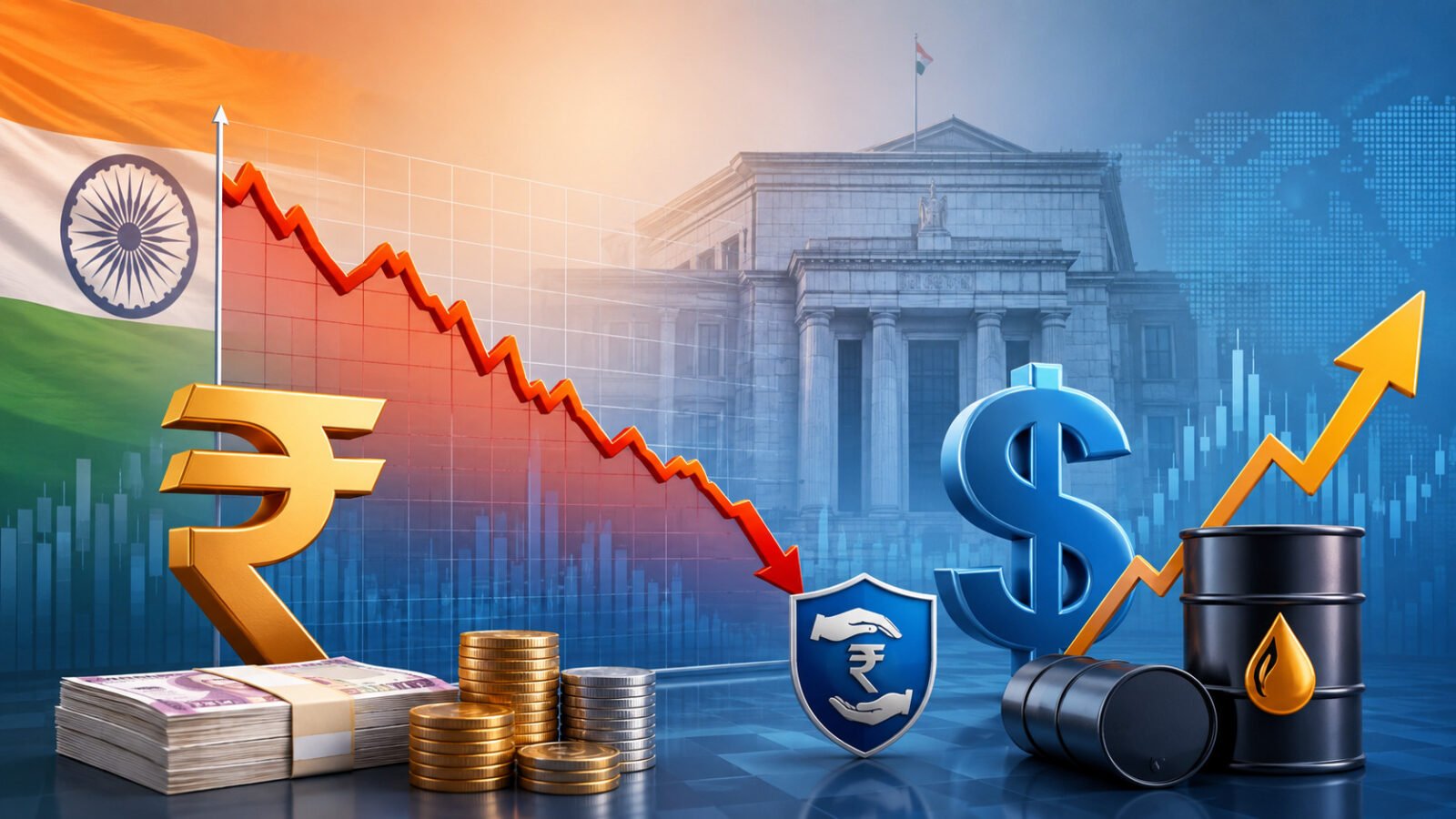

Rupee weakens to ₹95.56
The Indian rupee fell to ₹95.56 against the US dollar in early trade on Monday, August 31, as rising crude oil prices and a stronger dollar weighed on sentiment. The currency opened 13 paise lower than its previous close and traded under pressure through the morning session.
The decline was driven by a combination of external and domestic factors. Higher oil prices increase India’s import bill, while expectations of a US Federal Reserve rate hike have boosted the dollar and reduced appetite for emerging-market assets.
Forex traders said the rupee remained range-bound because the Reserve Bank of India (RBI) is actively intervening to prevent sharp depreciation. Without such support, the currency could have faced a steeper fall.
Rising crude oil prices
Crude oil prices have moved higher in recent days as markets assess fresh US sanctions on Iran, tanker attacks near Oman and falling US oil inventories. Brent crude rose above $92 per barrel, while WTI traded near $85.
India imports most of its oil needs, so higher prices directly affect the trade deficit and the rupee. When the import bill rises, more dollars are needed to pay for shipments, increasing demand for the greenback and putting pressure on the local currency.
Sustained elevated crude prices can also raise inflation expectations. That may force the RBI to keep interest rates higher for longer, which can affect growth and investment sentiment.
Stronger US dollar and Fed rate expectations
Market participants have increased their bets on a US Federal Reserve rate hike in September. This has pushed US Treasury yields higher and triggered a broad-based rally in the dollar.
A stronger dollar makes emerging-market currencies less attractive because investors can earn higher returns in US assets. It also raises the cost of dollar-denominated debt for companies and governments in developing economies.
The dollar index traded near 99.6, supporting the greenback against most major currencies. The rupee, like many Asian peers, was pulled lower as the dollar strengthened.
FII outflows add to pressure
Foreign institutional investors (FIIs) sold Indian equities worth over ₹5,000 crore on Friday, adding to market weakness. Sustained selling by foreign investors reduces capital flows into the domestic market and weighs on investor sentiment.
When FIIs pull money out of Indian stocks, they often convert rupees into dollars, increasing demand for the US currency. This can accelerate depreciation if not offset by other inflows.
Despite the outflows, India has attracted significant foreign currency deposits from non-resident Indians in recent weeks. These inflows have helped stabilise the rupee to some extent, but they have not fully offset the pressure from oil and equity markets.
RBI intervention limits sharp moves
The RBI has been intervening in the forex market to smooth volatility and prevent disorderly moves in the rupee. Traders said the central bank’s presence has made market participants cautious about pushing the currency significantly lower.
Intervention is typically done through dollar sales by state-owned banks acting on behalf of the RBI. These operations increase dollar supply in the market and support the rupee during periods of stress.
However, the RBI cannot indefinitely defend a particular level. Its actions are aimed at curbing excessive volatility rather than reversing the underlying trend. If external pressures persist, the currency may still drift lower over time.
Importer dollar demand
Demand from importers for dollars has also supported the greenback. Companies need foreign currency to pay for oil, electronics, machinery and other goods. This demand tends to rise at month-end as firms settle payments.
When importer demand is strong and FII inflows are weak, the rupee can face downward pressure. The balance between these flows often determines the direction of the currency in the short term.
Traders said the rupee remained firmly range-bound between ₹95.50 and ₹96.00, with oil prices and RBI intervention expected to remain key near-term drivers.
Impact on markets and economy
A weaker rupee has mixed effects on the economy. It makes exports more competitive because Indian goods become cheaper for foreign buyers. However, it also raises the cost of imports, which can fuel inflation and hurt companies that rely on imported inputs.
Oil marketing companies, airlines and firms with high dollar debt are particularly sensitive to rupee depreciation. Their costs rise when the currency weakens, which can affect profit margins.
On the other hand, IT services and pharmaceutical exporters may benefit from a lower rupee because their earnings in dollars translate into more rupees. This can support their stock prices even when the broader market is under pressure.
Outlook for the rupee
The rupee is likely to remain under pressure in the near term as long as crude prices stay elevated and the dollar remains strong. Any escalation in geopolitical tensions could push oil higher and increase volatility in the forex market.
Market participants will also watch US economic data and comments from Federal Reserve officials for clues on the timing and size of the next rate move. A confirmed rate hike in September could further strengthen the dollar and test emerging-market currencies.
Domestically, the RBI’s foreign exchange reserves and intervention strategy will be closely monitored. If the central bank continues to smooth volatility, sharp moves in the rupee may be limited even if the underlying trend is negative.
What to watch next
Investors and businesses should track:
- Crude oil prices: Any sustained move above $95 per barrel could increase pressure on the rupee.
- US Fed policy: Clear signals on rate hikes will influence dollar strength and capital flows.
- FII flows: A return of foreign buying in Indian equities could support the currency.
- RBI action: Continued intervention may cap sharp depreciation but may not reverse the trend.
For now, the rupee’s fall to ₹95.56 reflects a combination of higher oil prices, a stronger dollar and cautious investor sentiment. While RBI support has prevented a steeper decline, the currency remains vulnerable to external shocks.
Also Read | HDFC Bank Raises $1.75 Billion in Biggest Overseas Fundraising Since 2008














Leave a comment