

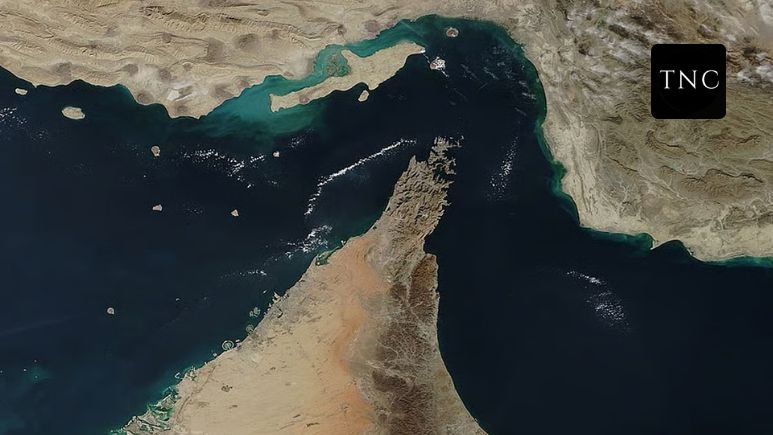

The tanker slowed to a crawl just miles from the narrow mouth of the Strait. On the bridge, the captain stared at a radar screen cluttered with uncertainty blips that moved, vanished, then reappeared. Orders crackled over the radio: proceed, but only along designated lanes. Another message contradicted it and avoided the area altogether. Somewhere ahead, unseen, lay the risk of mines. Behind, a convoy of ships had already turned back.
For a moment, the crew did nothing. Engines idled. The world’s most critical shipping lane had reopened at least on paper but out here, hesitation ruled the water.
This is the paradox now defining the Strait of Hormuz: officially open, practically uncertain. Despite announcements from Iran that commercial vessels can pass, maritime data shows uneven, cautious movement, with some ships proceeding, others retreating. The confusion matters far beyond the Gulf. Roughly a fifth of global oil flows through this narrow corridor, and even partial disruption ripples through fuel prices, supply chains, and geopolitics worldwide.
The reopening of the strait is less a switch flipped and more a fragile experiment in motion.
On one side, political messaging signals progress. Iranian officials have declared the waterway “completely open,” prompting immediate reactions in global markets, including falling oil prices.
On the other, the reality at sea tells a different story. A U.S. naval advisory warns that the threat of mines is “not fully understood,” urging caution and even avoidance of certain routes. Ships are being funneled into controlled corridors, often under supervision, limiting the sense of true freedom of navigation.
The result is a split-screen reality:
- Movement exists, but it is tightly managed and selective.
- Confidence is missing, and that matters more than access.
Shipping companies are not reacting to political declarations, they are reacting to risk. War-risk insurance remains high, crews are wary, and intelligence about threats remains incomplete. Even economists warn that traffic will not normalize without concrete guarantees of safety.
Data underscores the hesitation. Since the conflict began, traffic through the strait plunged dramatically by as much as 95% and has only partially recovered despite reopening signals. In earlier days of the blockade, ships still slipped through, exposing both the limits of enforcement and the complexity of controlling such a vital corridor.
Meanwhile, geopolitics continues to cast a long shadow. The U.S. naval presence, Iran’s conditional stance on keeping the strait open, and the fragile ceasefire all feed into a climate where any misstep could shut the route again overnight. Analysts now describe the situation not as a resolution, but as a “rolling crisis” one that could take months to stabilize.
Even markets reflect this tension. Oil prices dropped on reopening news, but remain elevated compared to pre-conflict levels, signaling that traders, like ship captains, don’t fully trust the calm.
The Strait of Hormuz is open but not free.
Until ships move without hesitation, without escorts, and without fear of unseen threats, the reopening is more symbolic than real. In global trade, perception is power. And right now, the world’s most important shipping lane is still navigating doubt.
Also Read / Why a Pakistani Tanker’s Voyage Through Hormuz Matters?












Leave a comment