

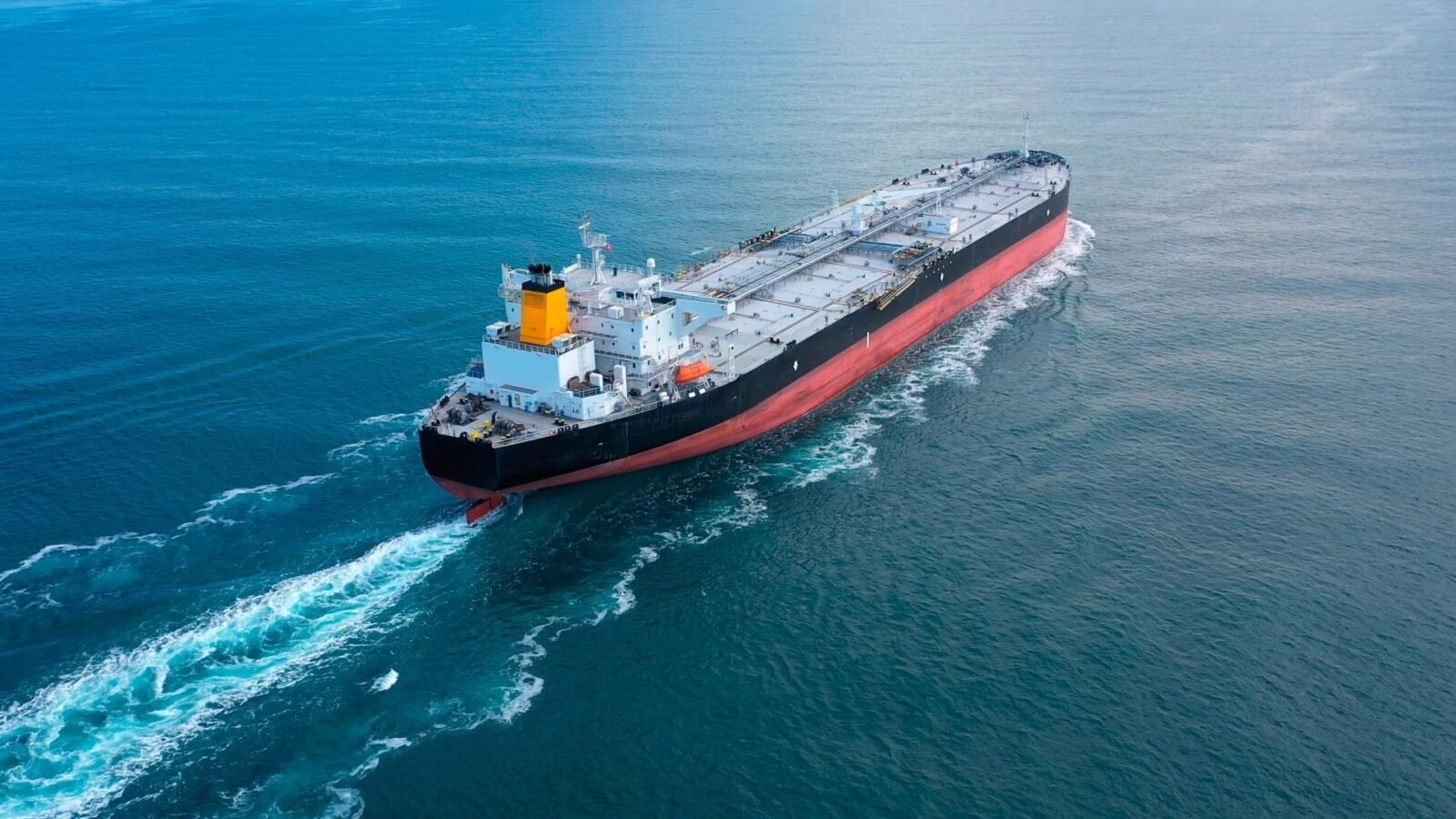

A crude oil tanker carrying six Indian sailors was struck by a projectile while travelling through the Persian Gulf on November 10, raising fresh concerns about the safety of commercial shipping in the Middle East.
The vessel, identified as MT Fujairah Energy, was travelling from Al Ruwais to Dubai when the incident occurred.
Four crew members sustained injuries, including one Indian national who suffered minor injuries and was taken ashore for medical examination.
The remaining five Indian sailors were reported safe.
The Indian sailors Persian Gulf tanker attack comes amid continuing regional tensions and growing threats to merchant vessels.
What Happened to the Oil Tanker?
According to Union Minister for Ports, Shipping and Waterways Sarbananda Sonowal, the Liberia-flagged tanker was hit by a projectile on Tuesday, November 10.
The vessel was travelling through the Persian Gulf when the incident occurred.
The tanker is classified as a Very Large Crude Carrier, commonly known as a VLCC.
Such vessels are designed to transport enormous quantities of crude oil across international shipping routes.
The exact type of projectile involved in the incident has not been publicly confirmed.
Authorities have also not identified who was responsible for the strike.
Four Crew Members Injured
The attack injured four people aboard the vessel.
One of the injured crew members was an Indian national.
According to Sonowal, the Indian sailor suffered minor injuries and was safely taken ashore for further medical examination.
The minister confirmed that the remaining 18 crew members, including five other Indian nationals, were safe and accounted for.
The condition of the three other injured crew members was not immediately detailed.
Officials have not announced any fatalities in this incident.
Indian Government Closely Monitoring the Situation
The Indian government has confirmed that it is closely monitoring developments involving the tanker.
Sarbananda Sonowal said authorities were maintaining communication with the vessel’s management company.
The government’s immediate priorities include crew safety, medical assistance and the well-being of Indian seafarers.
Officials are also working to ensure that the affected sailors receive necessary support.
The incident has renewed attention on the risks faced by Indians working aboard commercial vessels in conflict-affected waters.
Why Is the Persian Gulf Dangerous for Ships?
The Persian Gulf is one of the world’s most important maritime regions.
Large quantities of crude oil and natural gas are transported through its waters.
However, ongoing tensions involving Iran, the United States and other regional powers have increased security concerns.
Commercial vessels face threats from projectiles, drones, mines and other forms of maritime attack.
These incidents can damage ships, interrupt trade and place civilian crews in danger.
Shipping companies must therefore assess security conditions before planning routes through sensitive areas.
Why Is the Strait of Hormuz Important?
The Strait of Hormuz connects the Persian Gulf with the Gulf of Oman and the wider Arabian Sea.
It is one of the world’s most strategically important shipping passages.
Oil and gas shipments from several major producing countries normally travel through this route.
Any disruption can affect international energy markets.
Countries that depend on imported fuel, including India, closely monitor developments in the region.
Attacks on tankers can also increase shipping insurance costs and create uncertainty for international businesses.
Indian Seafarers Face Growing Risks
Indian sailors form an important part of the global maritime workforce.
They work aboard oil tankers, cargo vessels and other commercial ships operating across international waters.
Many travel through the Middle East as part of their regular assignments.
However, the ongoing regional conflict has exposed some crews to serious danger.
India’s Ministry of External Affairs has previously raised concerns about Indian nationals affected by attacks on commercial vessels.
The government has repeatedly emphasised the need to protect civilian shipping and restore safe navigation.
The latest incident demonstrates why these concerns remain urgent.
Earlier Attacks Raise Security Concerns
The MT Fujairah Energy incident follows other reported attacks on vessels in the region.
In a separate incident in October, the tanker MT Louise 1, carrying 27 Indian seafarers, was reportedly struck by limpet mines near the Strait of Hormuz.
The incident caused a fire aboard the vessel.
Authorities subsequently confirmed that its crew members were safe.
Repeated attacks have increased pressure on shipping operators to strengthen safety procedures.
They also highlight the importance of emergency communication systems and evacuation planning.
What Does the Attack Mean for Global Trade?
Commercial shipping is essential for transporting oil, gas, food and manufactured goods.
When vessels face security threats, shipping companies may need to adjust routes or increase protective measures.
These changes can raise operating costs and delay deliveries.
Oil markets may also react to concerns about supply disruptions.
However, one tanker incident does not automatically mean that international oil supplies have stopped.
The wider economic impact depends on the scale and frequency of attacks, damage to infrastructure and the ability of vessels to continue operating safely.
What Happens Next?
Authorities are expected to continue monitoring the affected tanker and its crew.
Medical support for the injured sailors remains an immediate concern.
Further information may clarify the vessel’s condition, the projectile involved and the circumstances surrounding the incident.
Until investigators establish responsibility, claims identifying the attacker should be treated cautiously.
The Indian government is likely to remain in contact with shipping operators as regional security conditions develop.
Conclusion
The Indian sailors Persian Gulf tanker attack has highlighted the growing risks faced by civilian crews operating in conflict-affected waters.
Four crew members were injured when MT Fujairah Energy was struck by a projectile, including one Indian national who suffered minor injuries.
Fortunately, the other five Indian sailors were reported safe.
As tensions continue across the Middle East, protecting commercial vessels and their crews remains an important international priority.
The safety of seafarers must remain central to efforts to restore stability in the region.
Also Read | 39 Dead in Senegal Boat Tragedy! Migrant Vessel Capsizes on Dangerous Atlantic Route








Leave a comment