

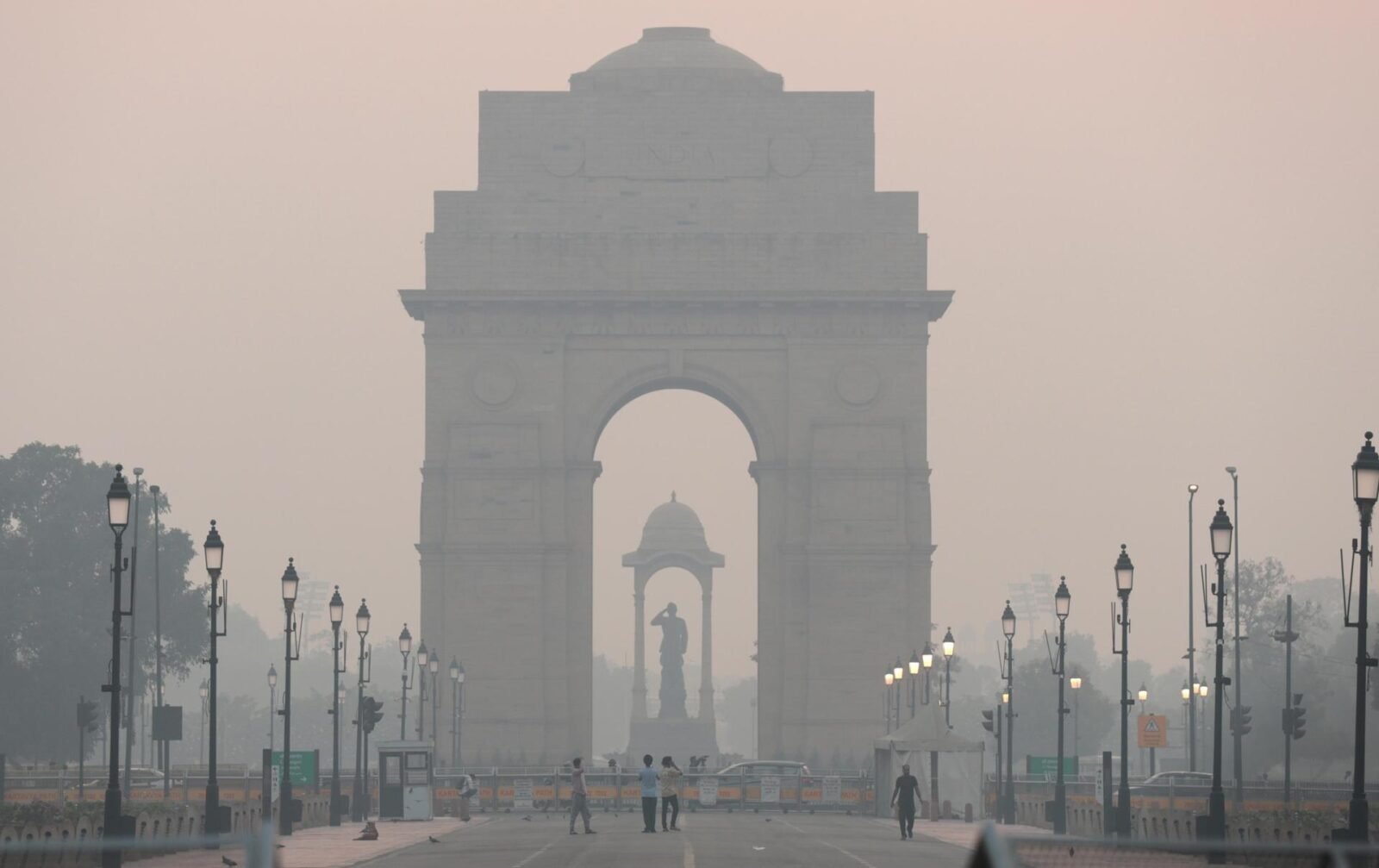

Delhi woke up under a thick blanket of smog on Monday, November 9, following Diwali celebrations across the national capital.
The city’s air quality remained dangerously polluted, raising serious concerns about public health, firecracker use and environmental safety.
Delhi air pollution after Diwali 2026 reached alarming levels, with the capital recording an average Air Quality Index (AQI) of 376 on November 8.
This marked Delhi’s most polluted Diwali in five years.
Despite restrictions on firecrackers, smoke from celebrations added to the city’s existing pollution problems.
Delhi Records AQI of 376 During Diwali
According to the Central Pollution Control Board (CPCB), Delhi’s average AQI reached 376 on Diwali.
This falls within the very poor category, which covers AQI readings between 301 and 400.
The situation remained concerning the following morning.
At 10 am on November 9, Delhi’s AQI stood at 371, indicating that pollution levels had improved only slightly.
Several monitoring stations recorded readings above 400, placing those locations in the severe category.
The figures highlighted how widespread the pollution problem had become.
Thick Smog Covers Delhi After Firecracker Celebrations
Residents across Delhi woke up to hazy skies and reduced visibility.
Areas around India Gate and several residential neighbourhoods experienced heavy smog.
Firecrackers were reportedly used in different parts of the capital despite restrictions.
Smoke from the celebrations combined with existing pollution, making the air more difficult to breathe.
Some residents reported throat irritation, itchy eyes and discomfort while spending time outdoors.
The situation once again highlighted the environmental challenges surrounding Diwali celebrations in Delhi.
Which Areas Recorded Severe Pollution?
Pollution levels varied across Delhi’s monitoring stations.
On November 9, several locations recorded AQI readings above 400.
According to reports, Delhi Technological University recorded an AQI of 439.
Other affected locations included Jahangirpuri, Burari, Bawana, Punjabi Bagh and Rohini.
Of the 51 monitoring stations reporting data at 10 am, 14 were in the severe category.
Another 33 recorded very poor air quality, while four remained in the poor category.
These readings demonstrated that pollution was affecting large parts of the city.
Why Does Delhi’s Air Quality Worsen During Diwali?
Firecrackers contribute to short-term increases in air pollution by releasing smoke and fine particles.
However, they are not Delhi’s only pollution source.
Vehicle emissions, construction dust, industrial activity and agricultural residue burning also contribute to poor air quality.
During winter, lower temperatures and weak winds can prevent pollutants from dispersing quickly.
As a result, polluted air remains trapped closer to the ground.
When Diwali celebrations occur during this period, additional emissions can make an already difficult situation worse.
This combination of seasonal conditions and human activities creates recurring pollution problems.
What Are PM2.5 Particles?
One of the major concerns during Delhi’s pollution crisis is PM2.5.
These are extremely small airborne particles measuring 2.5 micrometres or less in diameter.
Because of their tiny size, they can travel deep into the lungs.
Exposure may cause breathing difficulties, coughing and irritation.
Long-term exposure is associated with more serious health risks, including heart and respiratory diseases.
Children, older adults and people with existing heart or lung conditions may be particularly vulnerable.
Reducing exposure becomes important when pollution reaches very poor or severe levels.
Were Firecracker Restrictions Followed?
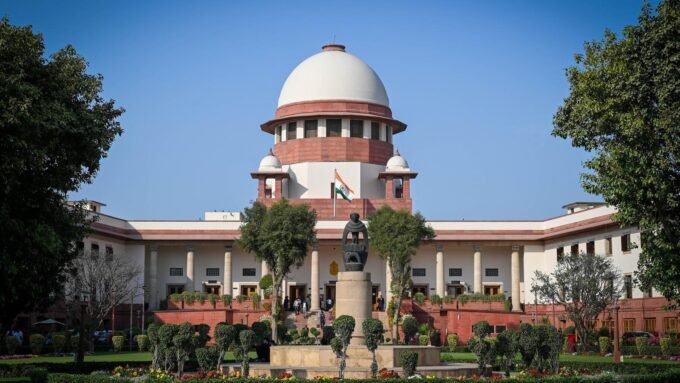
The Supreme Court had permitted only approved green firecrackers during specified hours.
However, reports indicated that fireworks were used outside the permitted conditions in some areas.
Green firecrackers are designed to produce fewer emissions than conventional alternatives, but they are not pollution-free.
The continued use of fireworks raised questions about enforcement and public awareness.
Authorities face the challenge of balancing festive traditions with environmental protection.
The pollution crisis has renewed discussions about how celebrations can become safer and more sustainable.
What Measures Are Authorities Taking?
Delhi authorities have implemented pollution-control measures under the Graded Response Action Plan, commonly known as GRAP.
Depending on pollution levels, restrictions may affect construction activities, diesel generators and certain vehicles.
Authorities have also encouraged schools to consider online classes during periods of serious pollution.
Air quality monitoring continues across the capital.
The effectiveness of these measures depends on enforcement, weather conditions and reductions in pollution from different sources.
How Can Delhi Residents Protect Themselves?
During periods of very poor air quality, residents should monitor official AQI updates.
People with respiratory conditions should follow medical advice and avoid unnecessary exposure.
Reducing strenuous outdoor activities can help limit the amount of polluted air inhaled.
A well-fitting N95 mask may provide additional protection when outdoor exposure cannot be avoided.
Keeping windows closed during particularly polluted periods and using suitable indoor air filtration can also help.
Anyone experiencing serious breathing difficulties should seek medical attention.
Is Delhi’s Air Pollution Becoming a Yearly Crisis?
Delhi has experienced serious pollution problems during the winter season for several years.
Diwali celebrations often coincide with weather conditions that make the problem worse.
The city’s average Diwali AQI of 376 in 2026 was its highest for the festival since 2021.
Environmental experts continue to emphasise that short-term restrictions alone cannot solve the problem.
Long-term improvements require cleaner transportation, better waste management, reduced industrial emissions and stronger dust-control measures.
Regional cooperation is also necessary because air pollution does not stop at state borders.
Conclusion
Delhi air pollution after Diwali 2026 has once again highlighted the serious environmental challenges facing the national capital.
With AQI reaching 376 during Diwali and several neighbourhoods recording severe pollution, the situation remains a major public health concern.
Firecracker smoke, vehicle emissions, seasonal pollution and unfavourable weather have all contributed to the crisis.
While Diwali represents light, happiness and celebration, the growing pollution problem raises an important question about protecting the environment.
Also Read | Massive Fire Engulfs Kia Showroom in Delhi’s Saket! People Rescued, Six Cars Damaged







Leave a comment