

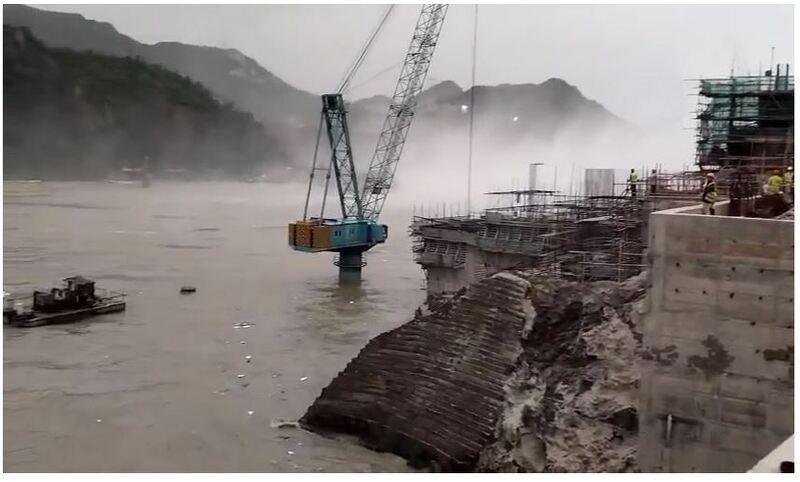

A sudden rock collapse at Pakistan’s Tarbela Dam Fifth Extension Project caused water to rush into an under-construction tunnel and powerhouse area on Monday, November 9, 2026.
The incident triggered an emergency response, forcing authorities to suspend construction and evacuate workers.
The Tarbela Dam rock collapse raised concerns about worker safety, construction delays and water levels in the nearby Indus River.
However, Pakistan’s Water and Power Development Authority (WAPDA) confirmed that all workers were safely evacuated and no casualties were reported.
Officials also clarified that the main dam had not collapsed.
What Happened at Tarbela Dam?
The incident occurred during excavation work at the Tarbela Fifth Extension Hydropower Project, also known as T-5.
According to WAPDA, a weak section of rock collapsed while workers were excavating the second bench of a connecting tunnel.
The collapse allowed water from an intake pit to enter the tunnel and the under-construction powerhouse area.
Water quickly spread through the affected construction zones, creating dangerous conditions for workers.
Emergency procedures were activated, and construction activities were stopped.
The incident attracted attention after videos showing the sudden water surge circulated online.
Workers Evacuated After Sudden Water Surge
Worker safety became the immediate priority following the collapse.
Authorities directed everyone at the affected construction site to move to safer locations.
WAPDA confirmed that all workers were evacuated successfully.
No deaths or injuries were reported.
Haripur Deputy Commissioner Waseem Ahmed also confirmed that emergency teams responded to the incident.
The successful evacuation prevented a potentially serious workplace tragedy.
However, the incident highlighted the risks associated with large construction projects involving underground excavation and water infrastructure.
Did Pakistan’s Tarbela Dam Collapse?
Following the incident, rumours circulated online suggesting that the main Tarbela Dam or its fifth tunnel had collapsed.
WAPDA rejected these claims.
The authority clarified that the main tunnel, under-construction powerhouse, tailrace culvert and switchyard had not sustained damage.
The rock collapse occurred in a connecting tunnel excavation area, allowing water from the intake pit to enter nearby construction zones.
This distinction is important.
A localised construction-site flooding incident is not the same as a failure of the main dam structure.
Officials also reported no immediate threat of widespread downstream flooding.
Water Removal Operations Begin
After workers were evacuated, authorities began assessing the affected construction areas.
WAPDA reported that the intake pit had been completely drained.
The authority also confirmed that no additional water was entering the downstream construction sites.
Dewatering operations began at the under-construction powerhouse.
Dewatering involves removing accumulated water so that engineers can inspect structures and restore safe working conditions.
Senior WAPDA officers, project engineers and contractors were assessing the situation.
The full impact on construction schedules remained uncertain.
Indus River Water Alert Issued
Although officials ruled out an immediate major flooding threat, authorities warned residents about increased water releases into the Indus River.
The Provincial Disaster Management Authority issued an alert to relevant district administrations.
Officials advised people living near the river to remain cautious.
Residents were urged to avoid swimming, boating and bathing in the Indus until conditions were considered safe.
Authorities also encouraged families to keep children and livestock away from dangerous river currents.
These precautions were intended to reduce risks from increased water flow.
What Is the Tarbela Fifth Extension Project?
The Tarbela Dam Fifth Extension Project is a major hydropower development in Pakistan.
Located on the Indus River, Tarbela Dam plays an important role in electricity generation and water management.
The T-5 expansion is designed to add 1,530 megawatts of electricity generation capacity.
It includes three generating units, each capable of producing 510 megawatts.
Once completed, the project is expected to increase Tarbela’s total installed generating capacity from 4,888 megawatts to 6,418 megawatts.
The expansion aims to provide additional electricity while making better use of existing water infrastructure.
Why Is the Project Facing Concerns?
The latest incident comes after earlier construction difficulties at the Tarbela extension project.
A previous cofferdam collapse caused flooding and delays.
An official inquiry subsequently identified problems involving design changes and project oversight.
According to reported estimates, the project’s cost increased from approximately 82 billion Pakistani rupees to 317 billion rupees.
Before the latest incident, completion had already been pushed back to June 2028.
The new rock collapse has raised further questions about construction safety and project management.
However, officials have not yet confirmed whether it will cause additional delays.
Why Does the Tarbela Project Matter?
Pakistan relies on hydropower as an important part of its electricity supply.
Large projects such as Tarbela can support power generation without relying entirely on imported fossil fuels.
The Fifth Extension Project is backed by international financing, including support from the World Bank and Asian Infrastructure Investment Bank.
Any major construction delay could affect the expected delivery of additional electricity.
For this reason, restoring safe working conditions and completing technical assessments will be important.
Conclusion
The Tarbela Dam rock collapse caused a sudden water surge into construction areas and forced the suspension of work at Pakistan’s Fifth Extension Hydropower Project.
Fortunately, all workers were safely evacuated, and authorities reported no casualties.
WAPDA confirmed that the main dam and key project structures remained undamaged.
With dewatering operations underway and investigations continuing, officials must now determine how the incident will affect the project.
The event highlights the importance of engineering safety, emergency preparedness and regular monitoring at major infrastructure sites.
Also Read | 27 Flights Targeted! Bomb Threat Chaos Sweeps Across Europe












Leave a comment