


Middle East Tensions Reach a Dangerous New Level
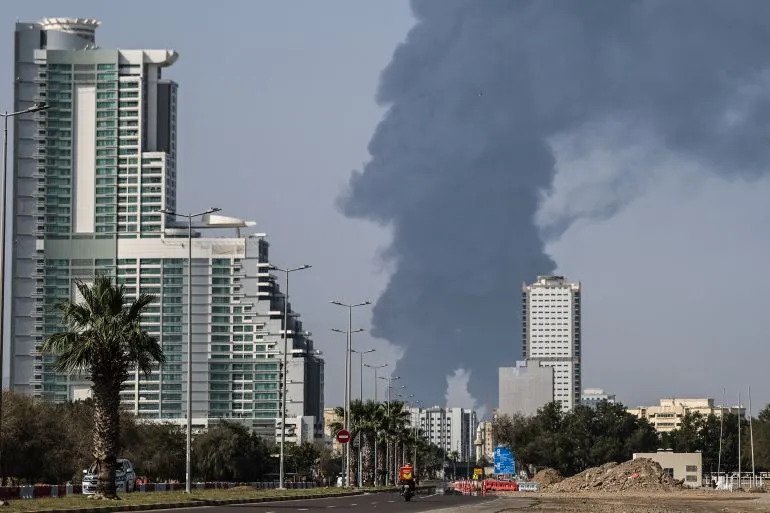
The Middle East has entered another period of heightened instability after Iran reportedly launched attacks targeting United States military installations in Jordan, Kuwait, and Bahrain. The strikes mark one of the most significant escalations in the region in recent years, raising concerns about a broader regional conflict involving multiple countries.
According to initial reports, the attacks targeted military facilities associated with US forces stationed across the Gulf region. While authorities continue to assess the extent of the damage and casualties, governments across the Middle East and beyond are closely monitoring the rapidly evolving situation.
The latest developments have intensified fears of retaliatory military action and renewed concerns over the security of global energy supplies, international shipping routes, and diplomatic stability.
Reports of Coordinated Strikes
Early information suggests that multiple US military sites in Jordan, Kuwait, and Bahrain were targeted within a relatively short period, indicating a coordinated operation.
Although official investigations are ongoing, security analysts believe the attacks may have involved missiles, drones, or other long-range strike capabilities. Military officials are working to verify operational details, assess infrastructure damage, and determine whether additional threats remain.
The US Department of Defense has stated that it is evaluating the situation alongside regional allies while maintaining defensive readiness across its military bases in the Middle East.
Why These Bases Are Strategically Important
The targeted countries host several important US military facilities that support operations across the Middle East.
Jordan
Jordan serves as a key security partner for the United States, providing logistical support, intelligence cooperation, and operational access for regional missions.
Kuwait
Kuwait hosts major American military assets that play a vital role in troop deployment, equipment storage, and regional coordination.
Bahrain
Bahrain is home to the headquarters of the US Navy’s Fifth Fleet, making it one of Washington’s most strategically significant military locations in the Gulf.
Any attack on these facilities carries serious military and geopolitical implications beyond the immediate region.
Rising Regional Tensions
The reported strikes come after weeks of growing tensions involving Iran, the United States, and several regional actors.
Military activity has increased across multiple fronts, while diplomatic efforts have struggled to prevent further escalation. Analysts warn that continued exchanges between the two sides could trigger a wider regional conflict involving additional countries.
Governments throughout the Gulf have increased security measures around military installations, airports, ports, and energy infrastructure as a precaution.
International Reactions
World leaders have responded with concern, urging restraint from all parties involved.
Several governments have called for:
- Immediate de-escalation
- Protection of civilian populations
- Diplomatic engagement
- Respect for international law
- Prevention of further regional conflict
International organizations are also closely monitoring the situation amid fears that prolonged military exchanges could destabilize the broader Middle East.
Impact on Global Oil Markets
The Gulf region remains one of the world’s most important energy-producing areas.
Following reports of the attacks, energy markets reacted cautiously as investors assessed the possibility of disruptions to oil production and transportation.
Although no major interruption to oil exports has been confirmed, uncertainty surrounding regional security could contribute to increased volatility in global energy prices.
Market analysts note that prolonged instability in the Gulf has historically influenced crude oil prices and shipping insurance costs.
US Response Under Review
US officials have stated that military commanders are reviewing available intelligence and evaluating appropriate response options.
Possible measures could include:
- Strengthening regional air defenses
- Increasing surveillance operations
- Enhancing force protection
- Coordinating with allied governments
- Pursuing diplomatic channels alongside military preparedness
Officials have emphasized that protecting American personnel remains a top priority.
Regional Security Concerns Grow
Neighboring countries have heightened their security posture as the situation develops.
Military installations, government facilities, airports, and critical infrastructure across the Gulf are operating under increased security protocols.
Experts warn that even limited military exchanges risk unintended escalation if additional attacks or retaliatory operations occur.
Diplomatic Efforts Continue
Despite rising tensions, diplomats from several countries continue efforts to reduce the risk of a broader confrontation.
International mediators are encouraging direct communication between the involved parties to prevent misunderstandings that could further escalate military activity.
Many foreign ministries have also issued travel advisories for citizens living in or visiting parts of the Middle East.
Global Economic Implications
Beyond regional security, the crisis could have wider economic consequences.
Potential impacts include:
- Higher oil and gas prices
- Increased shipping costs
- Financial market volatility
- Disruptions to international trade
- Higher insurance premiums for Gulf shipping routes
Businesses and investors are closely monitoring developments, particularly those connected to energy, aviation, and maritime transportation.
What Happens Next?
The coming days are expected to be critical as investigators gather more information regarding the attacks and governments determine their next steps.
Several key questions remain unanswered:
- What was the full extent of the damage?
- Were there casualties among military personnel?
- Will additional military action follow?
- Can diplomatic efforts prevent further escalation?
The answers to these questions will shape the next phase of the crisis and influence regional stability.
Conclusion
The reported targeting of US military installations in Jordan, Kuwait, and Bahrain represents a serious escalation in Middle East tensions. While investigations continue and governments assess the situation, the incident has already heightened concerns about regional security, global energy markets, and international diplomacy.
As the situation remains fluid, further official statements and verified information are expected to provide greater clarity. Observers worldwide will be watching closely to see whether diplomatic efforts can reduce tensions or whether the crisis develops into a broader regional confrontation.












Leave a comment