

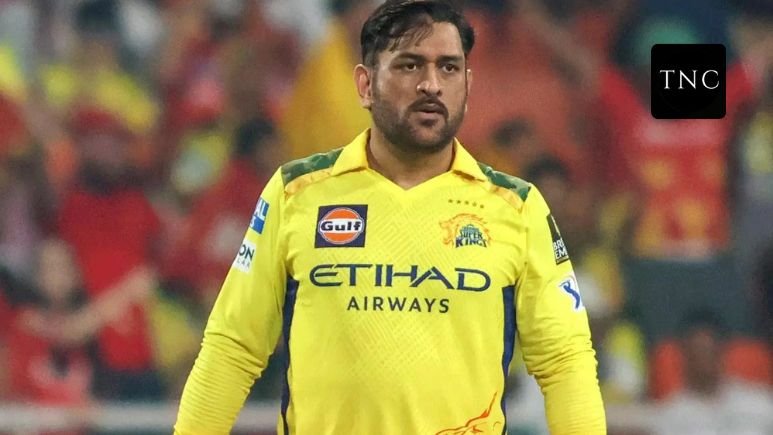

The floodlights at Chepauk had barely dimmed when the noise began again. Thousands of fans stayed back long after Chennai Super Kings’ loss to Sunrisers Hyderabad, not for the match result, but for a glimpse of one man. Phones rose into the humid Chennai night. Chants rolled across the stands. Then came MS Dhoni not padded up to bat, not walking out as captain, but simply present. That alone was enough to trigger another wave of emotion.
For years, Dhoni has occupied a space in Chennai that goes beyond sport. He is memory, identity, reassurance. But as CSK’s IPL 2026 campaign drifted toward collapse, former India batter Sanjay Manjrekar asked a question many in Indian cricket have quietly avoided: has the franchise become too emotionally dependent on its biggest icon?
Speaking candidly after CSK’s latest defeat, Manjrekar argued that the franchise mishandled what he described as the “Dhoni phenomenon.” His blunt assessment that it no longer matters whether Dhoni plays or not cut through the carefully protected mythology surrounding the five-time IPL-winning captain.
The remarks arrive at a delicate moment for Chennai Super Kings. Dhoni, now 44, has not played a single match this season due to recurring injuries, including a calf strain during preseason training. Yet his shadow has hovered over every selection call, every captaincy discussion, every post-match analysis.
Manjrekar believes that constant uncertainty hurt the team more than it helped. In his view, CSK allowed nostalgia to overpower practicality. Instead of focusing on rebuilding around younger players and current performances, the franchise remained emotionally tethered to the possibility of one final Dhoni chapter.
That criticism touches a nerve because Dhoni’s legacy inside CSK is unmatched. Under his leadership, the franchise became the IPL’s most consistent powerhouse. Calm finishes, tactical clarity, and unwavering authority turned him into the face of the league itself. Even Manjrekar acknowledged that a prime Dhoni would likely have carried this current CSK squad into the playoffs.
But cricket has little patience for sentiment.
CSK’s 2026 season exposed the tension between legacy and transition. The franchise struggled for consistency, slipped down the table, and appeared trapped between honouring its past and preparing for its future. Younger leaders such as Ruturaj Gaikwad were forced to operate under the enormous weight of Dhoni’s lingering presence, a dynamic Manjrekar previously described as unhealthy for the team environment.
His criticism also reflects a broader truth about Indian cricket culture. Few athletes command the devotion Dhoni does. For many fans, criticism of him feels almost personal. Manjrekar himself has previously spoken about the “sycophancy” surrounding Dhoni, arguing that emotional loyalty often overwhelms objective cricket discussion.
Still, even critics separate the player Dhoni once was from the difficult questions surrounding the end of his career. His achievements remain untouched: World Cup-winning captain, IPL architect, one of India’s sharpest cricketing minds. What is changing is the conversation around how sporting institutions handle ageing legends.
Icons can define a franchise, but they cannot indefinitely delay its future. Chennai Super Kings built an empire around Dhoni. Now the franchise faces its hardest challenge yet learning how to move forward without the certainty of the man who built it.
Also Read / GT vs SRH: Ahmedabad Braces for an IPL Collision Between Power and Precision.











Leave a comment