

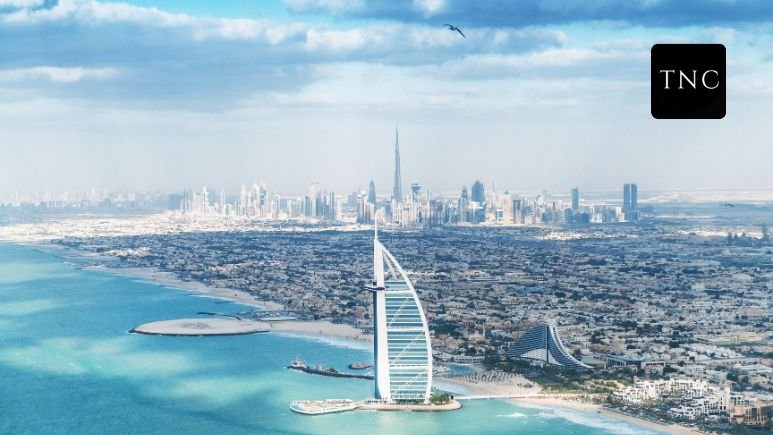

At 9:40 a.m., the sales office in Downtown Dubai is unusually quiet. The espresso machine hums, untouched. A broker scrolls through WhatsApp messages three clients from London, one from Mumbai each asking the same question: “Should we wait?”
Two months ago, these same investors were bidding above the asking price for off-plan apartments. Now, one deal collapses mid-call. Another buyer asks for a discount. Outside, cranes still puncture the skyline, but inside, the urgency is gone.
Dubai’s property market, once one of the hottest in the world, has hit its first real test since the pandemic boom. As geopolitical tensions tied to the Iran war ripple across the Middle East, home prices have begun to fall, sales are slowing, and investor confidence is wavering.
In March alone, property prices dropped 5.9%, marking the first decline since 2020, while total residential sales value fell nearly 20%.
This isn’t just a local housing story. It’s a signal of how quickly global capital, sentiment, and risk perception can shift and how even a city built on resilience is not immune to geopolitics.
For years, Dubai sold a simple promise: stability in a volatile region. That promise is now under strain.
The numbers tell a sharper story beneath the surface. Transactions have dropped sharply by over 30% in volume within weeks of the conflict escalation. Investor demand, once driven by foreign buyers and expatriates, is cooling as uncertainty grows.
The cause is less about affordability and more about psychology.
Dubai’s real estate boom prices surged nearly 60% between 2022 and early 2025 was fueled by global wealth seeking safe havens. But war does something markets hate: it introduces unpredictability. Missile strikes, airspace disruptions, and shipping risks have pierced the long-held belief that Dubai operates outside regional conflict.
The impact is cascading:
- Investor hesitation: Buyers are delaying decisions, waiting for geopolitical clarity.
- Liquidity pressure: Developers are offering incentives and flexible payment plans to sustain demand.
- Market correction: Prices are adjusting after an overheated cycle, not collapsing outright.
There’s also a deeper shift underway. The Iran war has disrupted oil routes, spiked energy prices, and shaken global markets, triggering inflation and financial instability across regions. That kind of macro shock doesn’t just hit commodities it reshapes where money flows.
Historically, crises in the Middle East have redirected capital to perceived “safer” markets like London or New York. This time may follow a similar pattern, especially if instability lingers.
Yet, the decline isn’t uniform. Analysts suggest this is more of a pause than a crash, a reset driven by sentiment rather than structural weakness. Dubai still retains key advantages: tax benefits, global connectivity, and a strong luxury segment that tends to recover quickly.
Dubai’s property dip isn’t just about falling prices, it’s about fading certainty.
When confidence leaves a market, even temporarily, momentum breaks. And in a city built on momentum, that matters more than any single percentage drop.
Also Read / Satellite Images Reveal Thick Smoke Over Dubai After Iranian Drone and Missile Strikes.













Leave a comment